







Thousands of Victorian teenagers are preparing to sit a revamped high-stakes exam to gain a place at one of the state’s select-entry government schools, as many turn to tutors amid tougher than ever competition.
The Education Department has received more than 6400 applications for students to sit the exam next Saturday, 700 more than in 2025. A combined 1000 year 9 places are offered across the four select-entry high schools.
Examiners have changed the test this year, merging the previous five sections into three and reordering them. This is to ensure the exam is fair, valid and reliable, an Education Department spokesperson says.
“No student will be disadvantaged as a result of these changes,” the spokesperson said. “The content and standards students are assessed against have not changed.”
The advised timings for each section – mathematics and quantities reasoning, reading and verbal reasoning, and writing – show the whole exam could take students about 10 minutes less to do than last year, according to the Australian Council for Educational Research (ACER) website, which also says the exam is “designed in such a way that not all candidates may finish all of the questions”.
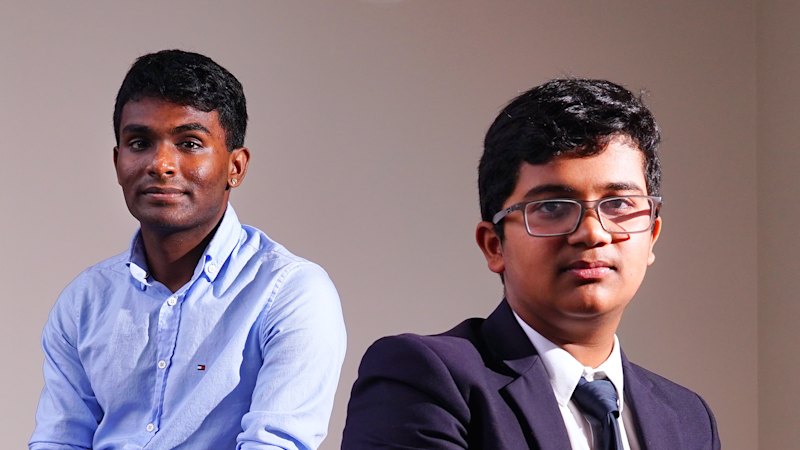
Many students have been preparing for more than a year, often with the help of a tutor, such as Point Cook P-9 student Madhav Rajesh, who hopes to go to Melbourne High School or Suzanne Cory High School, where his sister went.
“I would say some of my strengths are I’m able to identify what the question is, I can work well under pressure, and I have the confidence,” Madhav said.
Under tight time pressures, however, he needs to abandon his tendency for perfectionism.
“I have been preparing maths for a long time, and I feel skipping a question, or acknowledging I can’t do it in the allocated time; that’s demotivating to me because I can’t get the answer,” Madhav said. “So I keep trying to do the answer, no matter how long it takes. That’s something I need to improve on.”
His tutor, Devang Krishna, said several thousand more students would sit the exam than when he did it a decade ago.
“I did about three to six months of preparation,” he said. “I’ve seen kids prepare for three years today, and that’s why I do worry. It’s a lot for a 13-year-old, but that’s just how it is unfortunately.
“The best kids, in my opinion, are so much better than kids from five to 10 years ago, purely because they’re supported so much better.”
Krishna works as a doctor at Frankston Hospital, and tutors students for six to 12 months at weekends. “I do have long days, but I know it’s worth it,” he said. “It’s a good feeling. I get the messages, and it’s all in caps saying what they got and full of emojis.”
He finds his work mostly involves filling in gaps the students haven’t learnt in early years at school, such understanding fractions or writing a persuasive argument.
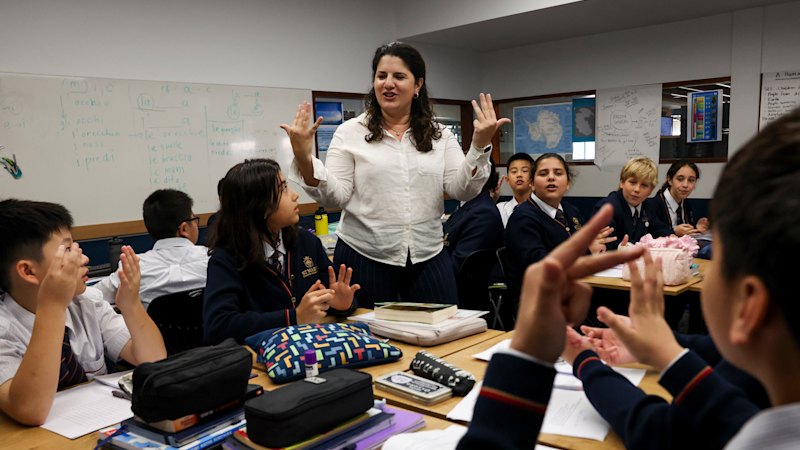
Tutor Sophia Ao sat the test in 2017 and now helps students prepare, including through mock exams where she rents a community hall and has students sit in formation and complete a printed exam.
“Most of them have about a year to a year and half of tutoring,” she said.
Since 2023, when ACER took over the exam writing, Ao has noticed the maths questions are more focused on logical reasoning and based tightly around what students are expected to have learnt from the curriculum.
She said this meant it tested for aptitude rather than whether a student had accelerated beyond their year level.
“In the past, you would have had to go to a tutor to learn year 9 or 10 maths, whereas now the ACER test helps level out the playing field to at least some extent for students who are just naturally gifted and talented and also work very hard,” Ao said.
“Before it was really just whoever had seen the most problems and studied up to the highest level of maths possible in the textbook. That’s not the best measure of aptitude or who is going to really do well at these schools.”
Madhav said he hoped his hard work would pay off. “I would be overjoyed [to get in]. I have been preparing for so long,” he said.
But either way, he said, the skills he gained in preparation were valuable. “It’s taught me resilience and discipline. Vital skills I can bring into the real world.”
Start the day with a summary of the day’s most important and interesting stories, analysis and insights. Sign up for our Morning Edition newsletter.


