


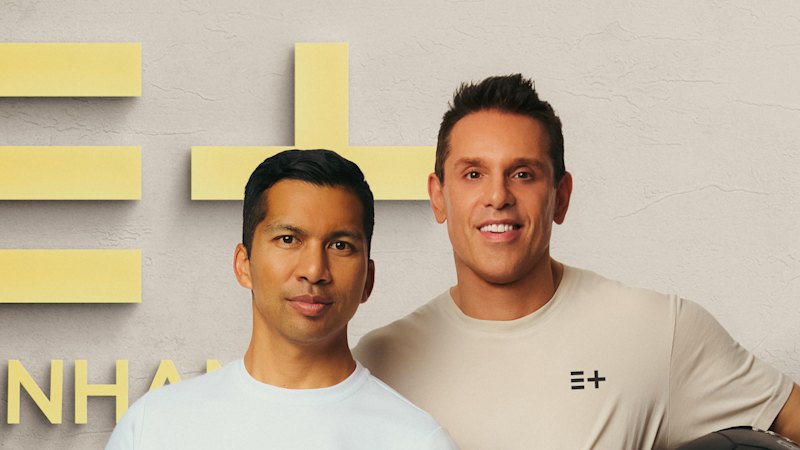

Las Vegas: The Enhanced Games were initially dismissed as a joke, condemned as dangerous and mocked as a steroid-fuelled circus when first announced.
Backed by billionaire investors and featuring Olympic medallists using performance-enhancing drugs under medical supervision, the inaugural Games will kick off with a bang in Las Vegas on Sunday local time (Monday morning AEST), just over two years since Australian swimmer James Magnussen said he would “juice to the gills” for the right price.
Here’s what you need to know before the Games begin.
What are the Enhanced Games?
A privately funded sporting event where athletes are openly permitted to use performance-enhancing drugs under medical supervision. There is no anti-doping testing in the traditional sense. “Enhanced believes in an objective, evidence-based approach to competition, one that celebrates athletic excellence and unlocks athletes’ full potential,” the Games’ website says.
When and where are the Games?
The one-day event will be staged at Resorts World Las Vegas on Memorial Day weekend. A purpose-built venue has been constructed, which features a four-lane 50-metre pool, sprint track and weightlifting stage. Preliminary events and a “blue carpet” begin from 8.30am on Monday AEST, with the main events starting at 11am AEST. The main program is expected to run for about 3.5 hours before press conferences and an after party at nearby Zouk Nightclub.
Is there entertainment?
Yes. The Killers and Norwegian DJ Alan Walker will perform.
How will it be broadcast?
Australian viewers will be able to watch via YouTube. The broadcast team includes former NFL player Emmanuel Acho, while longevity entrepreneur Bryan Johnson will appear as a “Human Enhancement Analyst” explaining athletes’ enhancement protocols.
Are tickets being sold?
Tickets are not being sold publicly but about 2500 spectators will attend, with organisers keeping the guest list tightly under wraps. More than 200 media representatives from 25 countries are covering the event, including this masthead.
Who is behind it and funding the Games?
The Games were founded by Melbourne-born businessman Aron D’Souza, who previously gained notoriety through his involvement in the Hulk Hogan privacy lawsuit that bankrupted Gawker Media. Investors include billionaire Peter Thiel, the Winklevoss twins (of Facebook fame), biotech investor Christian Angermayer and Donald Trump Jr through venture capital firm 1789 Capital. Enhanced Group Inc recently listed on the New York Stock Exchange.
Are Australians involved?
Yes. Former Australian swimmer James Magnussen was the first athlete to publicly sign with the Games, while former Olympian Brett Hawke is leading the swimming program. Olympic gold medallist Kyle Chalmers turned down a multimillion-dollar offer to be involved.
What events are on the program?
The program is small. There will be seven men’s swimming events (50m freestyle, 50m butterfly, 50m breaststroke, 50m backstroke, 100m freestyle, 100m butterfly and 100m breaststroke) plus two women’s swimming races (50m freestyle and 100m freestyle). Athletics features the men’s and women’s 100m sprint, while weightlifting includes similar Olympic events, as well as a deadlift competition headlined by Icelandic strongman and Games of Thrones actor Hafþór Júlíus Björnsson.
How much money is on offer?
Breaking a world record in the 50m freestyle or the 100m sprint — the marquee events — pays $US1 million ($1.4 million). Other world records pay $US250,000 ($375,000). Winners of each event will pocket $US250,000 ($375,000), as well as $US125,000 ($175,000) for second, $US75,000 ($105,000) for third and $50,000 ($70,000) for fourth. Organisers say the total athlete compensation for the Games could be up to $25 million.
Last year, Greek swimmer Kristian Gkolomeev reportedly earned $US1 million ($1.4 million) after swimming faster than the previous 50m freestyle world record during filming for a documentary.
What drugs can athletes use?
Athletes can only use substances approved by the US Food and Drug Administration and prescribed by a doctor. That potentially includes testosterone, anabolic steroids, EPO and growth hormone. Illegal recreational drugs, such as cocaine and heroin, for example, remain prohibited. Athletes are not required to publicly reveal what they are taking, although organisers encourage transparency. The dosage of drugs being taken is not excessive, according to organisers.
Who are the biggest names competing?
The headline drawcard is American Fred Kerley, the 2022 world 100m champion and an Olympic silver and bronze medallist who appeared on Netflix’s Sprint TV series. He is serving a two-year ban for missed drugs tests. In the pool, Britain’s Ben Proud, an Olympic silver medallist, will battle it out with Gkolomeev and Magnussen in the 50m freestyle. Keep an eye on men’s 50m butterfly world record holder Andrii Govorov and 2016 Olympic 100m breaststroke bronze medallist Cody Miller.
Are any athletes competing without drugs?
Yes. American swimmer Hunter Armstrong has said he will compete without performance-enhancing drugs because he hopes to return to conventional competition. Sprinter Tristan Evelyn has also described herself as “non-enhanced”.
What has been the reaction from anti-doping authorities?
The World Anti-Doping Agency has labelled the Enhanced Games “a dangerous and irresponsible concept” that puts athlete health at risk. The International Olympic Committee has also condemned the event. US Anti-Doping Agency chief Travis Tygart labelled it “a dangerous clown show that puts profit over principle”.
What have Australian athletes said about it?
Retired Olympic champion Ariarne Titmus said she wouldn’t compete at the Enhanced Games for $10 million, while 50m freestyle world record Cameron McEvoy has said he isn’t taking the event seriously.
How are they actually making money?
The Games have a broadcast agreement in the US with streaming platform Roku, but a major part of the business model centres on selling supplements and enhancement-related products online. Investors believe the anti-ageing and longevity market could become enormously lucrative.
Is it legal to host?
Yes. The event operates under Nevada law as a private sporting event, and the substances permitted are legally prescribed in the United States.
Are the athletes being drug tested?
Not for anti-doping purposes. Most athletes have been taking part in a clinical health study in the United Arab Emirates as part of their training camp. Athletes are required to disclose what they are taking to the Enhanced Games medical team, but viewers won’t know. None of that data is shared with WADA or any sporting federation.
Will swimmers wear “supersuits”?
Potentially. The polyurethane suits banned from the 2009 swimming world record boom are permitted, although organisers say athletes have struggled to source original versions and have instead created custom-made alternatives, which will give them a competitive advantage over regular Olympians.
What have medical professionals said?
Experts have warned that combining anabolic steroids, growth hormone and peptides carries serious short- and long-term risks, including heart complications, blood clots, liver damage and potential fertility issues.
Organisers argue their medical screening processes provide safeguards. However, critics say screening detects only what an athlete has already done to their body, not what may come next.
Will the Enhanced Games happen again?
Likely. No date or venue has been locked in yet.
 Tom Decent is the chief sports writer for The Sydney Morning Herald.Connect via X or email.