


The Economist
Traders of oil futures are a sunny bunch. On April 17, after Iran’s foreign minister declared the Strait of Hormuz “completely open”, the price of Brent crude fell by 10 per cent, to $US90 ($126) a barrel. Within hours Iran reversed course and attacked an Indian tanker. The next trading day the global benchmark rose by just 5 per cent. It has gone back up above $US100 since but remains around $US15 below its high in late March, even though an American blockade has trapped even more oil in the Gulf.
About fifty days into the Iran war the world has lost 550 million barrels of Gulf crude – nearly 2 per cent of last year’s global output. Every month Hormuz stays closed, the world misses out on 7 million tonnes of liquefied natural gas (LNG), worth 2 per cent of its annual supply. Yet in Western countries, which host the largest futures markets, pain remains limited. Petrol is a bit pricier, but most households can still afford to drive. Trucks keep trucking. Planes continue to fly. Fuel stocks remain close to pre-war levels.
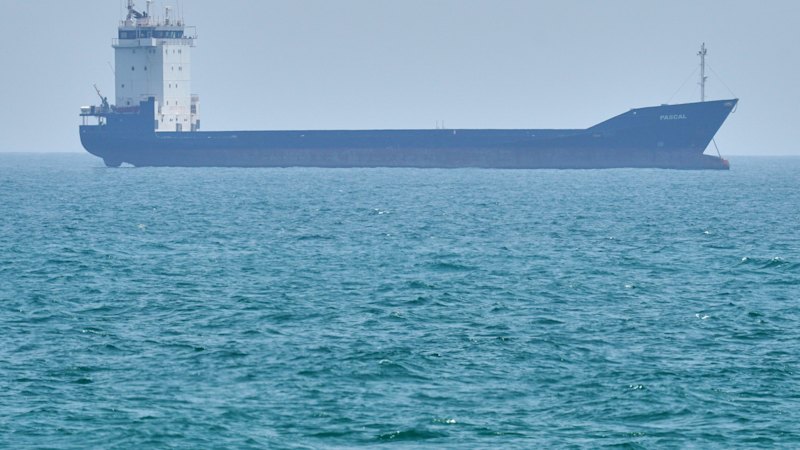
This comforting picture is deeply misleading. By April 20 the last few oil tankers to cross Hormuz before the war began reached their destinations, in Malaysia and California. There is no buffer left to protect the world from the supply shock, at a time of the year when demand from holiday drivers starts to pick up.
AP
To gauge how close the world is to energy catastrophe, The Economist has collected a dashboard of indicators. It shows grave harm has already been done. Worse, without a reopening costs could soar, triggering events that cause the fuel system to seize up. A reopening of the strait now would – just – avoid calamity. But some additional pain is already inevitable.
Three factors are pushing the world towards the cliff edge. Oil cargoes available to buy are drying up. Refineries are slashing output of fuel. And demand remains artificially high, especially in Europe. Something big must give somewhere large for energy markets to balance.
Take trade first. One reason the largest supply shock in petroleum history has not triggered global panic is that a near-record amount of oil was already at sea when the war started. As American warships set sail for the Gulf in February, countries there cranked up exports. After the latest deliveries, those excess seaborne stocks are now exhausted. So are most cargoes of Iranian and Russian oil, which were loitering at sea but found buyers after America eased sanctions on the two countries. Total volumes on water have fallen at record speed. For jet fuel and petrol they are well below historical norms, and possibly close to the minimum required for seaborne trade to function.
This leaves Asia, which used to receive four-fifths of Gulf exports, in a particular bind. Commercial inventories in a few other Asian countries are running out. South Korea is due to taper releases from its strategic reserves in the coming days. Japan’s will be exhausted in May. Crude stocks in Asia excluding China fell by 67 million barrels, or 11 per cent, in the month to April 19, according to Kayrros, a firm that estimates inventories using satellite imaging.
A shortfall of raw materials has forced Asian refiners to cut throughput by over 3 million barrels a day, or 10 per cent of their combined capacity. That could accelerate to 5 million barrels a day in May and, if the strait stays shut, 10 million barrels a day in July, says Neil Crosby of Sparta Commodities, a data firm. China could help by releasing some of the 1.3 billion barrels of crude it holds in reserve. Instead it has suspended exports of refined products. A trader familiar with its energy strategy reckons it will not open the taps before a lasting truce. All this compounds shortages created by the loss of Gulf exports of finished fuel, on which Asia also relies.
Refined-fuel prices are already high. In Asian spot markets, petrol nears $US120 a barrel, diesel $US175 and jet fuel $US200, up from $US80, $US93 and $US94, respectively, before the war. Demand is adjusting, partly by government decree. Seven countries have imposed work-from-home mandates and at least five are rationing vehicle fuel. High prices are doing their bit, too. Small miners, fisheries and other firms without adequate diesel stocks are working part-time. Unable to afford naphtha, another oil product, some plastic makers have shut units. The combination of state and self-imposed rationing may cause Asian crude demand to shrink by nearly 3 million barrels a day in April, compared with February.
Europe has so far avoided demand destruction, as governments try to preserve citizens’ purchasing power. Of the 27 European Union countries, 16 are using taxpayer money or cutting fuel taxes to shield consumers from higher prices. European refiners have thus barely slashed production. But, like their Asian counterparts, they, too, must buy crude at a much higher cost than Brent futures suggest.
A better gauge is Dated Brent, the price for real cargoes delivered in the next few weeks. The spread between the two – usually $US1-US$2 – widened greatly in April, reflecting fears of near-term shortages, according to Platts, which produces the benchmark. It has narrowed since but remains bigger than usual (and does not include eye-watering freight rates and other costs).
Raw material at $US130 to $US150 a barrel has pushed European refiners’ margins into the red, reckons Benedict George of Argus Media, a price-reporting agency. Extreme backwardation – when commodity spot prices are much higher than those for futures – crush their profits: they must pay up for crude now but sell their products at lower futures prices. Before long they will need to cut output.
If Europe keeps subsidising consumption, markets will get more out of whack. For one thing, prices for products will keep rising. America, where demand tends to jump in a period of summer road trips, will push them further. Competition for LNG, the shortage of which was mostly absorbed by Asian consumers’ self-deprivation and a switch to coal, will also increase when Europe starts restocking gas for the winter.
Fast-depleting stocks make matters worse. Europe’s reserves of jet fuel cover some 50 days of consumption, their typical level. But modelling by Michelle Brouhard of Kpler, a data firm, for The Economist shows that European stocks will fall precipitously if Hormuz flows do not normalise by June. Those in other importing regions may disappear even faster. The outlook could worsen if America, seeking to tame domestic prices, emulates China and bans exports of refined products, which have risen by nearly half since the start of the war.
Futures markets are in denial about all this. Even if Hormuz reopened today, it would take months for Gulf crude output, shipping and refining to resume in full. Saad Rahim of Trafigura, a trader, thinks a cumulative loss of 1.5 billion Gulf barrels, or 5 per cent of annual global output, is almost unavoidable. If the strait stays closed, it could easily reach double that. The last time oil demand fell by 10 per cent in short order was during the COVID-19 lockdowns of 2020, a shock that also brought about a fall in world gross domestic product of more than 3 per cent. The time to avoid a similar tumble is running out.
The Economist
The Business Briefing newsletter delivers major stories, exclusive coverage and expert opinion. Sign up to get it every weekday morning.
