









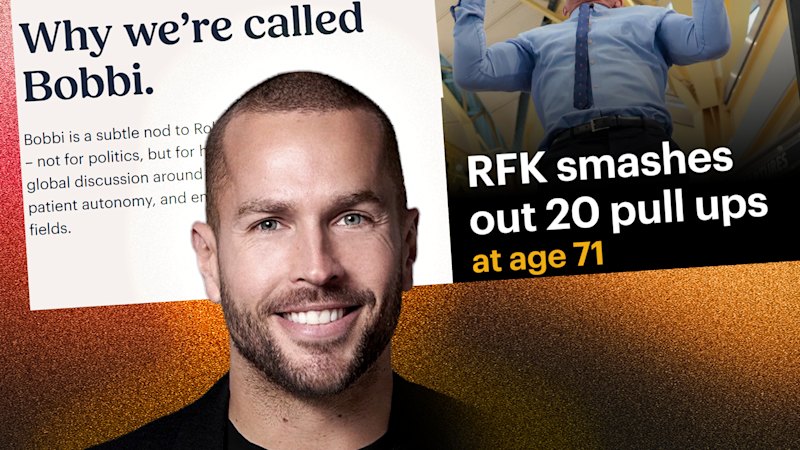
Bobbi, a new Australian online doctor shop, has an unusual namesake: the United States health secretary notorious for pushing views on vaccinations at odds with those of the medical mainstream.
“Bobbi is a subtle nod to Robert F. Kennedy Jr – not for politics, but for his role in sparking global discussion around preventative health, patient autonomy, and emerging medical fields,” the company’s website reads. It’s accompanied by a photo of the then-71-year-old health secretary doing pull-ups.
Founded last year by Nick Bell, a judge on the last season of Ten’s entrepreneur reality show Shark Tank Australia, Bobbi shares more than a general outlook with Kennedy. The pair have a particular focus on peptides, the burgeoning class of injectable drugs that backers believe can bestow wellness benefits including better workouts, heightened sex drive and glowing skin.
Despite their popularity, and the success of GLP-1 drugs such as Ozempic (which are types of peptides), medical experts and regulators have viewed this latest wellness craze with concern.


Unlike Ozempic, many peptides lack long-term clinical data about their effectiveness, and documented health risks to some range from severe allergic reactions and infections in the short term to a heightened chance of kidney damage and cancer.
But on social media, they are aggressively spruiked by influencers, making them incredibly seductive in a culture that venerates physical attractiveness, wellness and longevity.
Kennedy has promised to remove restrictions on several popular peptides.
Bobbi, meanwhile, is selling them directly to consumers online as part of a business model pushing the boundaries of Australia’s health regulation, operating in what some medical experts call a “Wild West”.
This masthead does not suggest that Bobbi’s business model is breaking the law. After this masthead contacted the company, though, it removed a federal Department of Health logo from its website and Bell pulled down an Instagram post spruiking the purported benefits of “peptidemaxxing” with his company.
Bobbi promises users healthcare “without the friction”, which in practice means it makes it simple to buy peptides. Users fill out an online questionnaire, which is followed by a phone – not video – consultation with a doctor that can be as short as 15 minutes.
One source, who provided this masthead with details of their purchase on condition of anonymity, was then prescribed $500 worth of Mounjaro (a weight-loss medication similar to Ozempic) and CJC-1295, a prescription-only growth hormone peptide.
Bobbi’s products are then discreetly delivered to the consumer by post.
The company is not subtle about this approach.
“Life is beautiful. You can smell colours … 200kg bench press (easy),” Bobbi founder Bell wrote in a recent, now-deleted Instagram post on the “benefits of peptidemaxxing”. The post including a caption urging users to “Get your peptides from @Bobbi.health”.
Prescription-only medication, which includes at least some of the peptides sold by Bobbi, cannot be advertised in Australia. The laws exist to ensure that Australia’s highly efficient healthcare system does not start to resemble the American model, where the government and consumers spend far more money for worse health outcomes, in part because medication choices are often driven by advertising. (Some peptides do not require a prescription.)
Bobbi isn’t alone in using a telehealth model. It has been deployed by dozens of new start-ups in the telehealth age, which allow patients to access drugs for sensitive issues such as weight-loss, balding and erectile dysfunction without ever having to leave the couch.
And it’s a playbook that has proven immensely successful for the winners. This year, telehealth start-up Eucalyptus, known for its online weight-loss services, was sold to New York Stock Exchange-listed giant Hims & Hers for $1.6 billion.
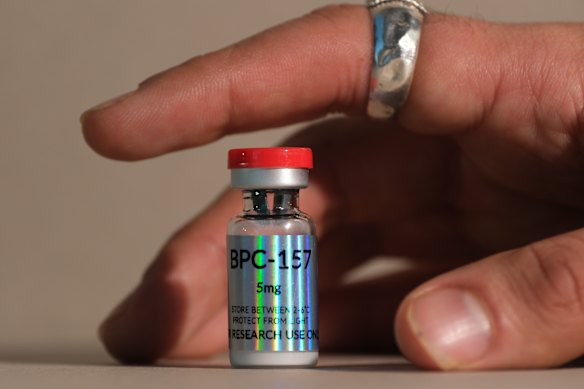
But Eucalyptus sells only mainstream GLP-1 drugs, unlike Bobbi, which makes opaque reference to fixing issues such as low testosterone, hormone health and “the glow stack”, a reference to a string of peptides taken together to improve skin health.
That’s not to say peptides such as CJC-1295 are a black market commodity – they can be prescribed by doctors and made by Australian compounding pharmacies – but that they haven’t been through the same process as mainstream medications.
Major players in the pharmaceutical industry, including Ozempic manufacturer Novo Nordisk and Eli Lilly, the company that makes rival Mounjaro, have not brought niche peptides to the market and remain sceptical about them.
Where companies like Bobbi are trying to create a patient experience without friction, medical experts see risk.
Karen Price, former president of the Royal Australian College of General Practitioners said telehealth start-ups such as Bobbi were taking money from vulnerable people by focusing on profit, rather than health.
“These are people wanting to make a buck out of people’s insecurities and hopes in an unregulated way,” she said.
For-profit telehealth providers have profit-based incentive to make sure customers get what they want. Doctors, on the other hand, sometimes have to say no.
“The important thing to know about these start-ups is how many people they’re turning down. If you’re saying yes to everybody who requests Ozempic, you’re not doing a good job,” Price said.
It isn’t the only time the company may have played on the edge. Until recently, Bobbi’s website bore a logo for the federal Department of Health.
Following questions from this masthead about whether the department had endorsed the company, the logo was quietly removed. The department did not respond to a request for comment.
While doctors are concerned, Bobbi’s model does not appear to clearly breach any rules, and its model, which involves consultations with genuine doctors, provides more safeguards than the widespread, easily accessible and unscrupulous websites selling peptides illegally online.
The Australian Health Practitioner Regulation Agency provides guidance rather than strict rules around telehealth, in a model that is designed to ensure doctors maintain some autonomy around prescription practices.
Asked about Bobbi’s practices, a spokesman for the agency said: “Practitioners are expected to undertake a thorough assessment of all patients before proposing any treatment. This includes injectable weight-loss medications.”
“Safety must come first, regardless of the clinical setting, consumer demand or other commercial considerations. The onus is on practitioners to demonstrate good practice.”
The regulator also said that practitioners must carefully consider whether telehealth is an appropriate method to provide care
A recent case study published by AHPRA suggested that a doctor prescribing weight-loss medication based solely on text, email or online messaging would not be supported by 15 national boards that cover health practitioners in Australia, to limit the risk of patients being prescribed the wrong medication.
Anita Munoz, a Melbourne-based GP said that the current regulatory framework is designed to balance protecting patients with maintaining doctors’ clinical autonomy.
“We must not always respond to conundrums like this with hyper-regulation. Every time we do, the costs of healthcare go up,” she said.
But the current system has left Australia with a patchwork of overlapping federal and state regulators, creating an at-times unwieldy regime.
It’s a regime that Price believes is struggling to keep pace with technological change.
“It’s like the Wild West. We have AI, and new technology which is advancing ahead of our ability to manage and regulate what’s needed,” she said.

Bobbi did not respond to detailed questions sent to the company, and Bell personally via email, phone and social media.
While Bell also did not respond to questions or accept offers for an interview, his frequent social media activity paints a picture of his views on healthcare.
A self-styled “biohacker,” who aims to live until 150 and has spent $700,000 on injections to improve his memory and get stronger, Bell also has his own podcast called Get Harder, on which he interviews a range of figures who are hardly typical guests of a man running a healthcare company.
Recent guests include celebrity chef turned-conspiracy theorist Pete Evans. Another is Tom Cowan, a former American doctor who voluntarily surrendered his medical licence in 2020 after claiming that the COVID-19 virus was caused by 5G telephone towers.
“Very interesting philosophies and theories which are very different to the mainstream medical system,” Bell said of Cowan’s views.
The Business Briefing newsletter delivers major stories, exclusive coverage and expert opinion. Sign up to get it every weekday morning.


