



Like many of you, I’ll begin Anzac Day with a suburban dawn service. Martin Place is grander, but I prefer the sense of community at the local RSL, where I’ll stand beside my neighbours to remember the fallen.
Leaders worry about social cohesion and our struggle to find things that unite us as a country, but neighbourhoods and gatherings like these are the bedrock of the Australian community. We build our sense of belonging through all those little, daily interactions that we take for granted, such as chatting to our neighbours as we put out the bins or catching up over a sausage at the school fete.
On Monday, the Herald will launch a new series celebrating our neighbourhoods, called “Sydney life in the ’burbs”. We will ask writers to reflect on the suburb in which they live, and to tell us about the good and the bad of it; what they love, what they’d change, and why they keep living there.
The series will begin with a beautiful piece by one of our staff writers, Parramatta bureau reporter Mostafa Rachwani. He writes about Bankstown, and how his youthful resentment of what he once regarded as the suburb’s stagnation morphed into a love of its “feverish hope, of lives built from scratch, of cultures fiercely preserved”.
The piece will run online on Monday night and in the print edition on Tuesday. We will build a map, and slowly create a patchwork of stories that create a picture of modern Sydney. These are your suburbs, so we want to include your voices. If you would like to write about your suburb, please email the Herald’s opinion team at smhopinion@smh.com.au with a 100-word brief summarising what you might say.
Anzac Day also has me reflecting on the importance of recording our stories. Both my grandfathers fought in WWII. One would talk to us about Tobruk and El Alamein, but I was young when he died and don’t remember much. My other grandfather wrote his stories down, and my children are now reading about how he hated bully beef and used glow-worms to check his watch in the New Guinea darkness. He lives on through his words.
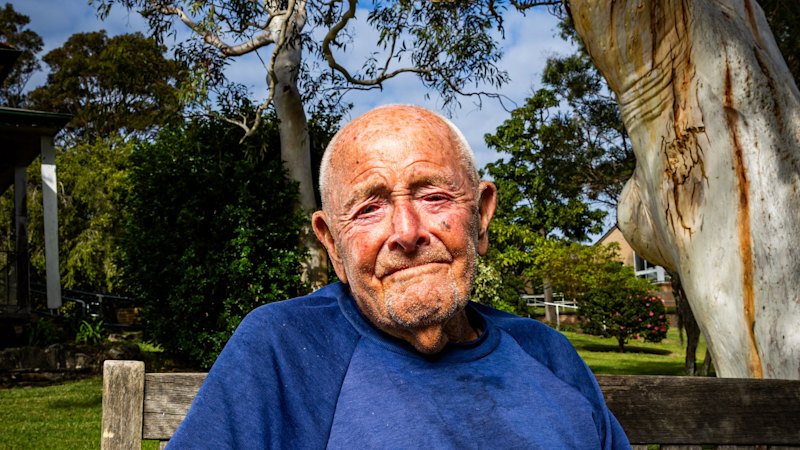
We are losing our World War II veterans – there are only 700 or so left – so opportunities to document their stories are increasingly precious. This week, journalist Anthony Segaert sat down with 100-year-old Fred Whitaker, a veteran of the Pacific theatre, who has a delightful sense of humour and an infectious enthusiasm for this city. He has a deep, abiding passion for the Sydney Harbour Bridge and will mark Anzac Day with a stroll across it (accompanied by his physiotherapist and his walker). You can read the story tomorrow.
Also in tomorrow’s paper, senior writer Tony Wright tells the extraordinary tale of Gough Whitlam’s uncle, Arthur Gordon Whitlam, whose story is documented in the National Archives. It is a tale of military injustice; Whitlam was court-martialled in northern France in 1916 for false accusations he had been stealing revolvers and field glasses from officers and sending them home, and he was not exonerated until 1944.
This afternoon, columnist Malcolm Knox wrote about his recent trip to Gallipoli. As the continuing conflict in the Middle East casts its shadow over our economic security, he notes how Gallipoli serves as a reminder of the horrors of war.
The importance of remembrance was also brought home to me by another event this week, the death of broadcaster and musician James Valentine. Sydney radio can be dominated by loud, brash voices, but Valentine tackled even tricky subjects with a humour and openness that was loved by his listeners. Herald readers adored him, and were touched by Garry Maddox’s moving interview with his wife, Joanne, about Valentine’s decision to embrace voluntary assisted dying, and by this obituary by his close friend Richard Glover.
I hope Valentine’s family will be able to draw comfort from the esteem in which he was held by so many thousands of Sydneysiders.
Get a weekly wrap of views that will challenge, champion and inform your own. Sign up for our Opinion newsletter.
