










The executions tell the world that Hamas does not want safe passage out of Gaza. It wants to bring its fighters back into the areas it used to control.
Loading
Eyewitness accounts are rare because most of the media is barred from Gaza, but the BBC reports that Hamas has mobilised 7000 fighters to resume its control. Reuters estimates Hamas has killed at least 33 people since Monday. Agence France-Presse reports that Hamas has set up a “deterrence force” against opponents.
There are Israeli shootings, as well. The Israel Defence Forces opened fire on Palestinians approaching them in northern Gaza. The IDF told The Associated Press the people did not comply with orders to stop. The Gaza Health Ministry said three died.
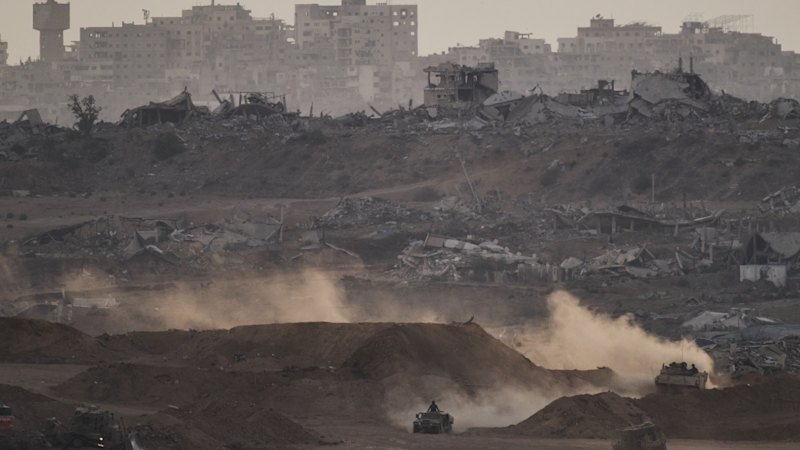
Israel has withdrawn its forces to the lines they held in about August last year, under the terms of the ceasefire, but the IDF still controls about half of Gaza. It is in territory that Hamas believes to be Palestinian soil, and there is every chance of further flashpoints.
There is also a broader threat to the peace. Hamas promised to release the bodies of 28 hostages who died in captivity, but has only released four so far.
The Hostages and Missing Families Forum called on Israeli leaders to suspend the ceasefire agreement until the 28 were returned. “An agreement must be honoured by both sides. If Hamas does not fulfil their part, Israel should not fulfil its part either,” it said. And the government is listening.
Israel said it allowed 600 trucks into Gaza on Sunday as the ceasefire took effect, but it has told the United Nations it will cut this to 300 because Hamas has not met the terms of the ceasefire. There are reports the Rafah crossing in the south of the territory will be closed.
This means punishing Palestinian civilians for the failure of Hamas, but that is not new in this conflict. United Nations emergency relief director Tom Fletcher told the BBC that both sides needed to honour the ceasefire deal.
“That does mean that Hamas has got to get the bodies home, as they promised,” he said. “But it also means that Israel has to keep the crossings open and allow us to deliver the aid that is so desperately needed at scale.”
Loading
Trump led a major achievement in securing the ceasefire on Monday. With luck, the argument over the terms of the agreement will be settled, so the aid trucks can cross into Gaza.
At the same time, the peace plan is clearly in doubt. Yes, the ceasefire holds. The broader peace, however, is a work in progress.
On the list of 20 points in the wider peace plan, the first is that Gaza will be a deradicalised terror-free zone that does not pose a threat to its neighbours. It is, of course, impossible to sure of that right now.
The fourth point is that Hamas releases all hostages, alive and dead – a pledge already broken.
The seventh point is that full aid is immediately sent into Gaza – a big promise now in question.
It is too early to judge whether we are seeing a series of clashes and disputes that break the ceasefire. But the events of the past 24 hours, if they continue, look like the way the peace may fall apart.
Get a note directly from our foreign correspondents on what’s making headlines around the world. Sign up for our weekly What in the World newsletter.


