


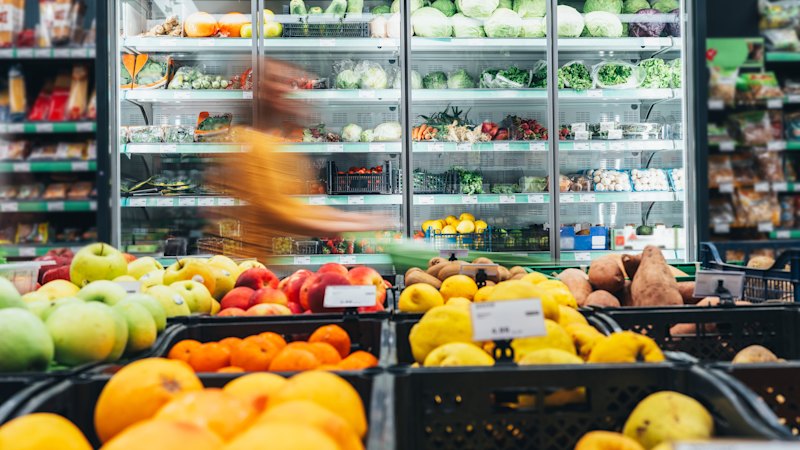

Fresh vegetables, bread, milk and eggs will be among the first items in the grocery basket expected to cost more after the price of fuel and fertiliser doubled because of the US-Israel war on Iran, forcing some farmers to plant fewer crops.
Farming industry leaders said Australians will have to bear some of the rising costs of producing food, as growers mull whether it is worth planting when key supplies are surging in price and returns are uncertain.
National Farmers’ Federation chief executive Michael Guerin said she was observing farmers cut back. “Obviously, if there’s less supply and demand doesn’t slow down, you get the inevitable lift in prices, concerns about availability,” Guerin said. “That full increase in costs and producing food will have to flow through the supply chains of the supermarket.”
In a snap poll of about 100 farmers by the Victorian Farmers Federation on Friday, April 10, growers estimated their fuel and fertiliser bills had blown out by an extra $341,000 per farm on average, and production declines of 30 per cent. Two-thirds have changed planting decisions by delaying or planting less. The effective closure of the Strait of Hormuz has choked a major source of the world’s supply of fuel and fertiliser, where two-thirds of the fertiliser Australia uses is imported from the Gulf states.
Leafy greens like broccoli, cauliflower and cabbage, and capsicum and other fresh produce with shorter growing cycles, will probably be impacted first, said Guerin and fresh produce delivery service Farmers Pick co-founder Josh Ball.
Victorian Farmers Federation president Brett Hosking, who is a grain farmer, said the production of wheat, barley, oats and canola would decline worldwide, affecting the price of bread and cereal.
“What I’m certain will happen is we’ll see less food produced globally this year,” he said. “Supply and demand dictates that prices must go higher.”
The cost of bread and cereal could increase as grain farmers pivot from wheat to crops like legumes and lentils, which are less fertiliser-intensive, said Hosking.
Perishable dairy products like milk and cheese are also highly sensitive to higher input costs. Woolworths will pay an extra 10¢ a litre to farmers who supply milk for Woolworths’ own-brand milk, while dairy giant Lactalis will lift payments by 5¢ a litre to more than 800 suppliers.
Chris Stillard, a farmer from NSW’s Barooga, just north of the Murray River, primarily grows persimmons, but also grows grains like wheat, barley and canola. Every year, he uses about 20 to 30 tonnes of urea, the price of which has more than doubled from $800 per tonne to $1800 or $2000 per tonne.
“[Farmers] don’t know whether they can get [urea] or not,” Stillard said.
“We’re going to have to receive at least a return on that crop because if we don’t, we will not harvest the crop … In the end, someone has to pay more to get that product to market, and if we’re not making a profit, we’ll no longer grow that produce.”
Higher fuel prices will inevitably push up overall inflation, which the federal government and the Reserve Bank are desperate to contain. AMP is forecasting headline inflation to hit 5 per cent. Prime Minister Anthony Albanese, who has visited Singapore, Malaysia and Brunei as part of a “fuel diplomacy” blitz across Asia, signed a statement with the Sultan of Brunei to maintain open trade of critical exports.
Supermarkets v suppliers
Price rises may take a few months to flow through as food growers usually lock in contracts with supermarkets months in advance. Farmers are typically price-takers and have little room to negotiate with grocery retailers, several farming industry group leaders said.
In February 2024, Coles pointed to supplier-initiated price increases as the reason for higher shelf prices following public and political accusations of price-gouging during 2024. Multiple inquiries followed, including a year-long inquiry led by the ACCC which accused the two supermarket giants of being an “oligopoly”, but stopped short of accusing them of price-gouging.
Woolworths is reviewing several requests from suppliers to review the cost of goods. “We’re committed to doing what we can to buffer customers at the checkout and absorbing some of those extra costs in our supply chains,” said a spokesperson.
A spokesperson for Coles acknowledged higher supply chain costs and said it has switched to quicker payment terms and increased the frequency of fuel levies from monthly to fortnightly.
“We are committed to striking a balance between supporting suppliers and continuing to provide value to our customers,” the spokesperson said.
“In the current climate, this means transport providers will be able to recoup more of the rising fuel costs. We know that these are important supports for our transport providers, and helping to ensure we continue to get supply to Australians right across the country.”
A spokesperson for Aldi said it was working to “identify practical solutions”.
Although farmers are expecting lower supply, Victorian Farmers Federation’s Hosking said Australians should not be concerned about food shortages: the nation exports about 70 per cent of the food it grows.
“In some cases, choice will be restricted, and in other cases, it will simply be a price question.”
The Business Briefing newsletter delivers major stories, exclusive coverage and expert opinion. Sign up to get it every weekday morning.
 Jessica Yun is a business reporter covering retail and food for The Sydney Morning Herald and The Age.Connect via X or email.