







Professor Ross Garnaut is the leading voice among Australia’s many economists. Whereas most economists tend to focus on the most immediate and prosaic of our economic problems, Garnaut is more prophetic. He looks at issues further into the future, drawing them to the attention of the public and our politicians.
He has led his profession’s thinking about climate change and what the world must do to limit global warming. How we must switch from using fossil fuels and generating emissions of greenhouse gases to drawing energy – renewable energy – from the sun and moon.
As one of the world’s biggest exporters of fossil fuels, you might expect this global transition to renewable energy to be bad news for our export industries and economy. The day may not be too far distant when our reserves of coal and gas lie unwanted and so valueless. The prices we get for these commodities could be expected to start falling as more renewable energy is produced.
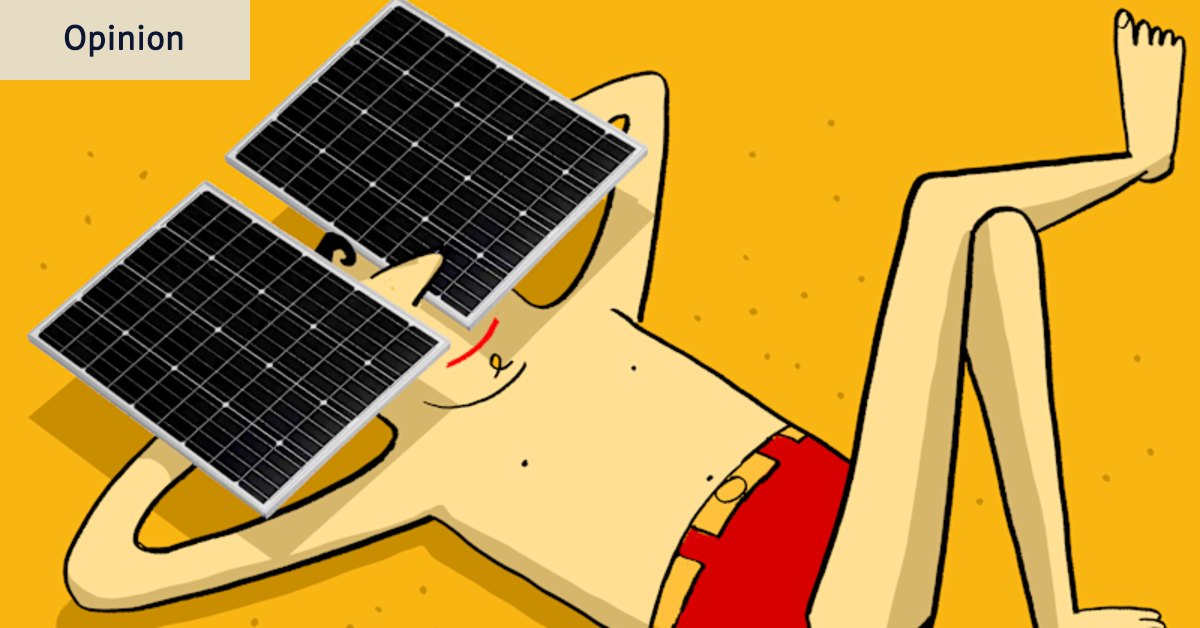
But Garnaut is no pessimist. He sees a bright future for our energy exports. Why? Because, as he was the first to recognise, Australia’s “comparative advantage” in producing coal and gas may become valueless, but we have a new comparative advantage to take its place: an abundance of sun and wind.
Indeed, Garnaut famously predicts that, provided we play our cards right, we can become a renewable energy “superpower,” exporting it to countries that don’t share our new hot and breezy natural endowment, particularly in Asia.
In the main, the renewable energy we sell to other countries is likely to be embedded in steel and aluminium – “green” steel and aluminium – because they’ve been produced using what will be our abundant supply of green, carbon-free electricity.
This move to further process our iron ore and alumina before export means we should end up with a bigger manufacturing industry – something many old-timers have longed for, for decades.
All this is the bright future we’ve known to be open to us – provided we make the changes needed to bring it about.
But in a speech he gave last week, Garnaut reveals his worries. His first is the slow progress we’re making towards becoming a renewables superpower. The federal and most state governments have adopted “superpower” as a slogan, without a full set of policies for its construction. “A chasm opened between moderately strong targets for reducing emissions [of greenhouse gases], and policies to meet them,” he says.
His second worry concerns the war in Iran, the closure of the Strait of Hormuz, anxiety about fuel supplies, and a big increase in the cost of petrol and gas.
He fears the fossil fuel industry has used the opportunity to fight back, building a Trojan horse that says only one goal matters: security of supply for fossil fuels. The industry argues there should be no change in the “audaciously favourable” taxation of gas, whatever the consequence for our economic resilience and standard of living.
Rather, the fossil fuel lobby says, there should be more budgetary support for old and new fossil fuel production, including petroleum refining. It demands repudiation of our commitment to net zero emissions by 2050.
The federal government must make a fateful choice, Garnaut says. “It can open the gates for the fossil fuel industry’s Trojan horse, or it can recognise the Iran fuel security crisis as another chance to reset policy on combatting climate change, building the superpower and restoring Australian prosperity”.
Garnaut recognises that fuel security matters, but the goal of self-sufficiency should be pursued only to the extent that its benefits exceed its costs. The costs will come in three possible forms: higher prices for fuel, larger budget deficits or higher taxes.
But if greater self-sufficiency is achieved by local production and use of fossil fuels, the cost also includes the effects of higher Australian carbon emissions on the global fight against climate change.
Naturally, the fossil fuel industry wants us to forget the climate change costs. Time for a refresher on those costs, he says.
“Global temperatures will continue to rise until net global emissions fall to zero. Fail to get to net zero by 2050 and human-induced average temperatures continue increasing. The increase is already approaching a dangerous 1.5 degrees,” he says.
“Delay the achievement of net zero much beyond 2050, especially if the shortfall is large, and sooner rather than later climate change will move from being seriously costly as it is today, to being seriously destabilising for economic activity in Australia and for economic activity and political order in Australia’s neighbourhood.
“Australia alone cannot achieve net zero. But we can help by being part of a co-operative international effort. We can do more by building the new superpower industries that allow countries that are poorly endowed with resources for renewable energy and sustainably growing biomass [renewable plant and other organic material] to achieve net zero.”
Garnaut’s Superpower Institute has demonstrated that exporting our iron ore as green iron metal would reduce global emissions by about 4 per cent. That’s more than three times as much as reducing our own domestic emissions to net zero.
And zero-carbon fuels and other metals together could be at least as important as green iron.
So, what do we need to do to make Garnaut’s vision of a brighter future a reality? He proposes three steps. First, a “polluter pays levy” imposed on goods and services using fossil fuels, which would be used to reduce the cost of green goods and services produced using renewable energy. This would compensate for the damage that emissions impose on other people.
Second, government grants to the early users of new, clean technologies and processes in Australia. This would compensate the pioneers of clean technology for the risks they take in moving first.
Third, government co-ordination and in some cases government investment in needed infrastructure, such as electricity transmission and electric vehicle charging stations.
Guess what? Garnaut’s wonderful world can be ours – but not if we don’t get off our backsides.


