







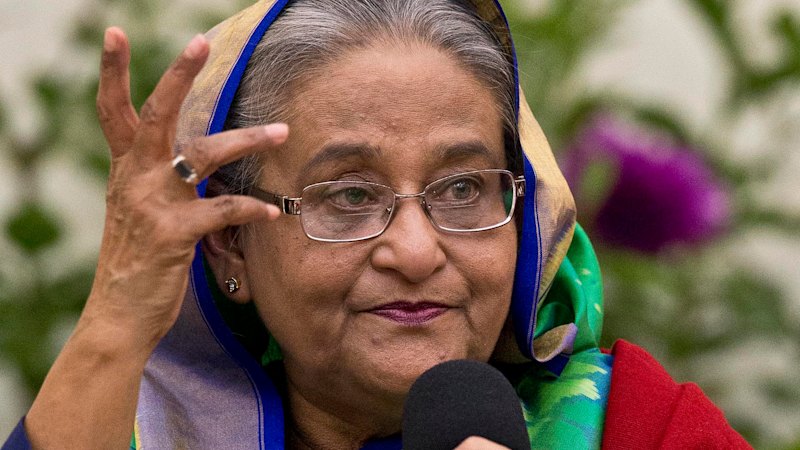
A tribunal in Bangladesh sentenced former prime minister Sheikh Hasina to death on Monday after convicting her of crimes against humanity, including murder and ordering the use of lethal weapons against protesters during the student uprising that ultimately ousted her last year.
The trial, which was conducted in absentia because Hasina fled into exile, was the first sign for many Bangladeshis that justice would be delivered for the killings of hundreds of civilians during the protests, which began peacefully but turned into a violent revolution after security forces moved to brutally suppress the movement.

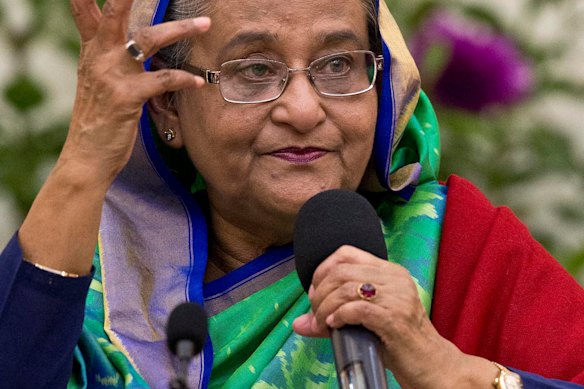
Sheikh Hasina fled to India last year after street protests ended her 15 years in power.Credit: AP
Hasina fled to India after her government fell in August 2024. It is unlikely that India, which considers Hasina a close ally, will allow her extradition.
But the verdict by the International Crimes Tribunal, a Bangladeshi court, is significant because it fulfils one of the promises made by the interim government of Muhammad Yunus, the 85-year-old Nobel laureate. He was tasked with leading his country out of the brief period of bloodshed and mayhem that came to be known as the “July Revolution” into a stable electoral democracy with free and fair elections.
In a statement on Monday, Hasina said the verdict was politically motivated and delivered by a “rigged tribunal established and presided over by an unelected government with no democratic mandate”.
Hasina’s former home minister, Asaduzzaman Khan, was sentenced to death after being convicted on the same charges, and her former police chief, Chowdhury Abdullah Al-Mamun, was given a five-year prison sentence. Khan was last reported to be in India; Al-Mamun is in Dhaka, Bangladesh’s capital.
Loading
Hundreds of people had gathered in front of the tribunal on Monday morning, eagerly awaiting the verdict. Among them were relatives of some of those killed during the crackdown, including the family of Abu Sayed, whose defiant posture and outstretched arms, captured on social media, became a defining image of the revolution.
Sayed’s brother Romjan Ali, who testified at the proceedings, said he wanted justice for “not just Sayed, we want justice for all the martyrs of the July uprising, all the wounded”. He added, “We know there are many who lost their eyes, lost their hands, legs.”


