







Last year, historian Adam Tooze wrote about the tendency to describe the history of energy as a “series of transitions”. In this story, wood gave way to coal, coal to gas, and now fossil fuels are being replaced by renewables. This allows us to believe in history as a tale of progress. In turn, it is that story of progress which allows us to believe that whatever we are now living through, however troubling it might seem, is a necessary step – because soon we will arrive at a better destination.
The problem is that these “transitions” never actually happen. (Tooze is drawing on the work of historian Jean-Baptiste Fressoz). The history of energy use is that energy sources are never actually replaced. Instead, they are added to each other. In fact, Tooze writes, the world now uses more wood than it has at any point in its past – and the same goes for coal.
The story we tell ourselves – one that makes us feel better about our own time – is false. Suddenly, Australia’s current policy of continuing to export fossil fuels reads differently: not as a stop on the way to somewhere better but as yet another step on the way to somewhere worse.
All this came to mind as I was considering the fact that, a decade ago, this seemed like the era of climate doom. Around then, I attended a festival where novelist Junot Diaz spoke about the boom in dystopian fiction. Taking his cue from the Marxist cultural critic Fredric Jameson, he laid out the logic behind this boom. It had become easier for us to fast-forward to the end of the world than face the fact we were still at a point when the end of the world might be averted. That would require work: it would mean changing our lives. Far more convenient to begin to accept apocalypse.
Perhaps, before then, there was a more hopeful point at which we imagined we might address climate change and then move on to the next problem. Instead, since then, we have simply added new problems. As everyone knows, this is the era of polycrisis.
Various moods have been attributed to this era: anxiety, anger, confusion. By now, though, it is most accurate to talk in terms of fear.
In part, this is because the accumulation has hit a certain point: the other reactions no longer seem adequate. But it is also because fear is more specific than the others. Anxiety, anger and confusion can all be amorphous: their causes can be various and diffuse. Actual fear, though, is more specific, activated in relation to a particular threat.
Many have experienced climate anxiety. But fear? Fear only enters the scene at certain times – during the 2019 bushfires, say. It was not only the scale of the fires but the fact so many of us living in cities smelt them, saw the pall they cast. They became real to us – and therefore frightened us.
During the pandemic, fear arrived again, in the knowledge we might die. More recently, many felt financial fear as prices surged and any sense of control vanished. Today’s crazy petrol prices reactivate this.
Then there are far more significant fears, felt by specific groups. Jewish people have lived in well-founded fear of both antisemitism and antisemitic violence. Many other groups, in particular Muslims, have felt increased fear as racism becomes less taboo.
And then there is fear of artificial intelligence – growing among ordinary people and underestimated by Australian politicians. Again, these are not vague anxieties, but fears based on retrenchments in the thousands.
This week, senior members of the government will meet the head of AI company Anthropic. Dario Amodei has warned that half of all entry-level office jobs could go; that there is a possible future in which “20 per cent of people don’t have jobs” and inequality “becomes scary”. How much will this figure in discussions?
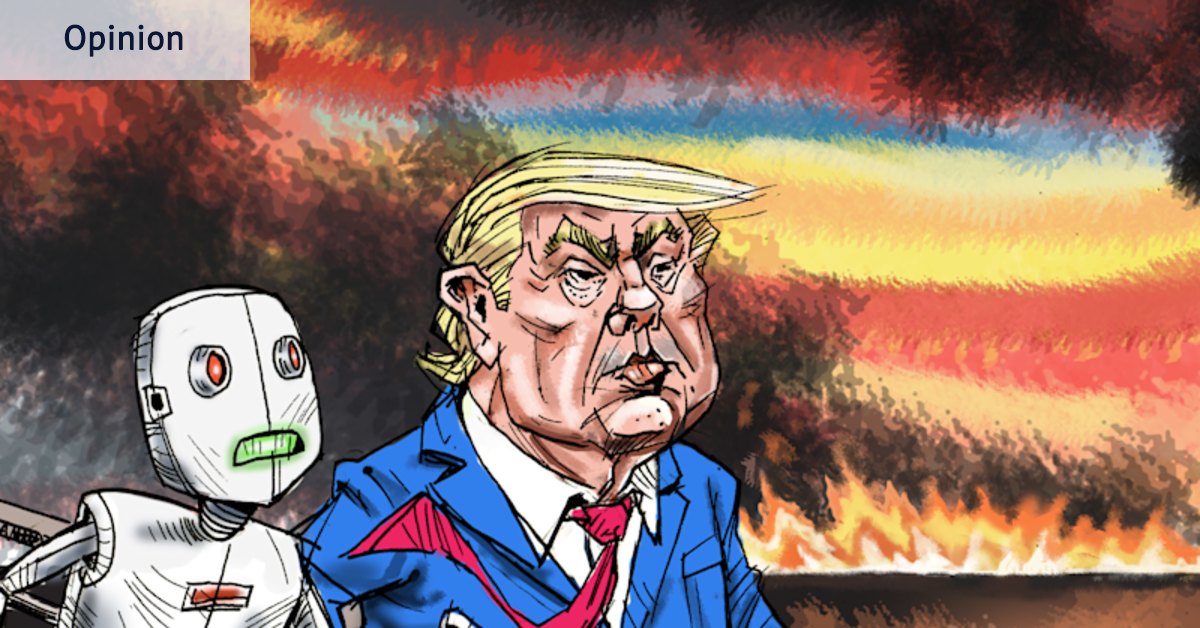
There is a compounding factor in the fears that dominate this moment. Junot Diaz was right: we have, as a species, continued to fail to take seriously our status as the final generations during which something meaningful might be done on climate. A similar failure to act applies to the rise of authoritarianism. Nobody found an answer to Donald Trump – instead, America invited him back – and his second term has been far worse than the first.
This is the pattern that repeats: a failure to meaningfully deal with crisis, followed by the situation deteriorating. With good reason, we are losing faith in our ability to confront these crises. The pandemic was, at first glance, an exception. Australia did well; we came out the other side. In the moment, it was managed (albeit with some significant failings). But did we learn from it?
Former Labor official Kos Samaras recently argued that Victoria is still suffering the political fallout; that true acknowledgment of Victorians’ experiences was never made. Some of his argument is relevant to the whole country: “The clock of normal politics resumes ticking. But the people who lived through it don’t forget. They just haven’t been given the language, or the space, to say what they know.”
We all learnt things about inequality and our failures as a society to value what matters. But our politicians act as though we still don’t know these things.
The very real fear that has spread through our society these past few years, then, has three parts. We are scared of actual events. We are frightened that they won’t be dealt with – not meaningfully – because that has been our recent experience. And we are increasingly immune to reassurance because we are starting to realise that too many of the stories we have been told – about progress and optimism and governments that have things in hand and our best interests at heart – were only ever stories.
Sean Kelly is a regular columnist and a former adviser to prime ministers Julia Gillard and Kevin Rudd.


