









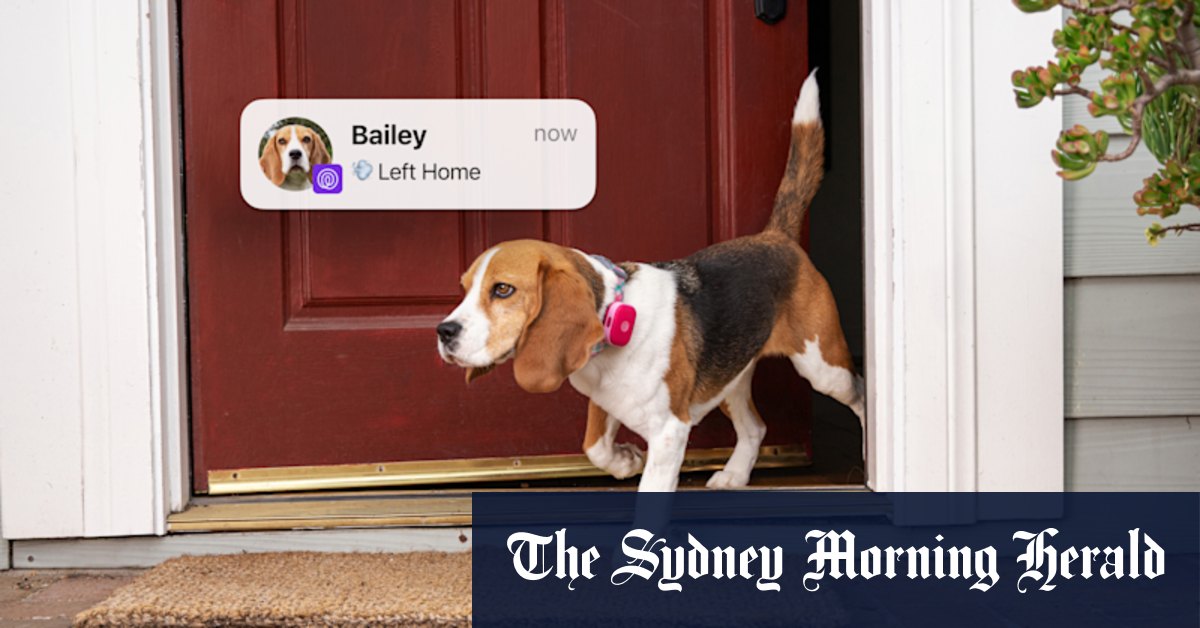

Pet GPS is advertised as lasting for two weeks on a charge, but Antonoff said it would last much longer. The quoted battery life assumes it’s tracking all the time, but when the tracker’s at your designated home location and connected to Wi-Fi, this will not be the case. Antonoff said that when the battery runs out, the device essentially becomes a Bluetooth tracker, so location will still update when someone passes nearby with their phone, and that it can last in that mode for six months with no charging.
The device will ordinarily cost $90, but as an introductory deal customers can buy their first Pet GPS for $3.60. Adding one Pet GPS to your Life360 account is free, but adding subsequent pets will cost a one-time fee of $139. And of course, the feature requires a paid Life360 subscription.
Loading
Life360 offers four different tiers, starting at a basic free service and ramping up to the $250-per-year Platinum tier. The basic service includes tracking of all family members, notifications when your family members leave or arrive at designated places (which could be your home, school, work or anywhere else), the ability for family members to send SOS messages with their location, notifications if a family member fails to show up somewhere at a set time, and crash detection that sends a notification if a family member suddenly stops after travelling at 40km/h or more.
The $160-per-year Gold tier, which is the minimum you need to access pet tracking, also includes individual driver reports that show details of every trip made by each young driver in the family — including their top speed and whether they used their phone — an emergency services dispatch button, roadside assistance and identity theft insurance. As the tiers increase you also get the ability to set more places and access location history for longer, and all users can integrate Tile Bluetooth trackers so they can see important items on the same map as family members.
Life360 has been criticised for enabling stalking and coercive control, and has also been scrutinised in the past for selling sensitive location information to data brokers and providers of targeted advertising. Life360 currently has relationships with location analytics and advertising companies, at least in the US, which enables it to monetise its massive user base even if they’re on the free tier. But the company says it excludes minors’ data, omits sensitive locations such as schools and medical clinics, and provides an option to opt out in its app’s settings.
Loading
In a more philosophical sense, some commentators have expressed concern that the normalisation of ubiquitous tracking could lead to a false sense of security, or damage to important social necessities, such as checking in with your family in person, developing and modelling trust, or educating your children about personal safety and responsibility.
Antonoff said that the company did what it could to minimise risks, and that the remaining downsides were offset by significant advantages. That includes not only the peace of mind that you’ll be alerted in the case of a rare disaster, but also the convenience of “location awareness” in everyday life.
“My most frequent reason for checking the map is to find out when my husband is bringing home dinner. I’m hungry, I want to know how long do I need to wait. Should I go get a snack,” she said.
On pets specifically, she dismissed the possibility that tracking could encourage lapses in responsible animal ownership, including keeping cats inside and providing proper fencing for dogs.
“I think of it as the opposite. This is a way to teach responsible pet parenting,” she said.
“You see your dog every time you look at your family on the map, so it’s a very active interaction. Your dog might normally be out of sight, out of mind when you’ve gone to work. But with our experience, we’re really bringing them into your everyday life.”
Get news and reviews on technology, gadgets and gaming in our Technology newsletter every Friday. Sign up here.


