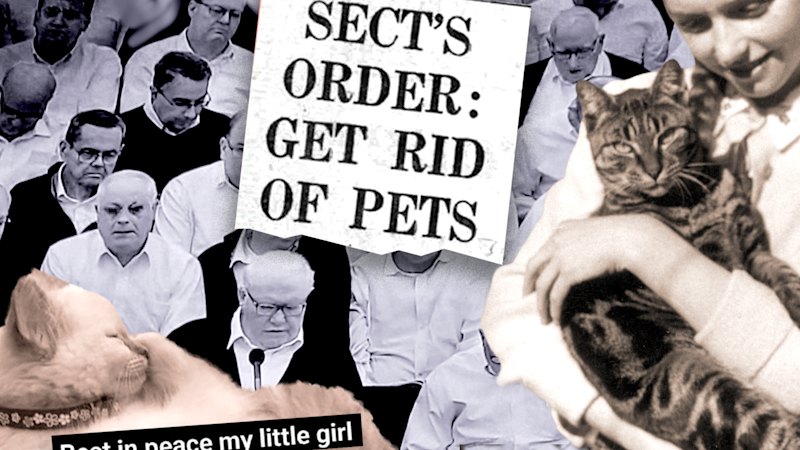






Secretive religious sect The Plymouth Brethren Christian Church has ordered its members to purge their homes of animals, leaving some Australian families heartbroken as they feel pressured to kill or abandon their pets.
Members inside the group, formerly known as the Exclusive Brethren, say some animals, including a kitten, have already been put down since this month’s edict from the sect’s upper echelons, which has controversial ties to conservative politics and substantial financial holdings.
The directive that “every household should be freshly” cleansed of “dirty” animals, obtained by this masthead, follows a dog attack on a young relative of Brethren leader Bruce Hales last month, and has conjured memories of a widely-reported purge of pets by the sect in the 1960s that horrified the public.
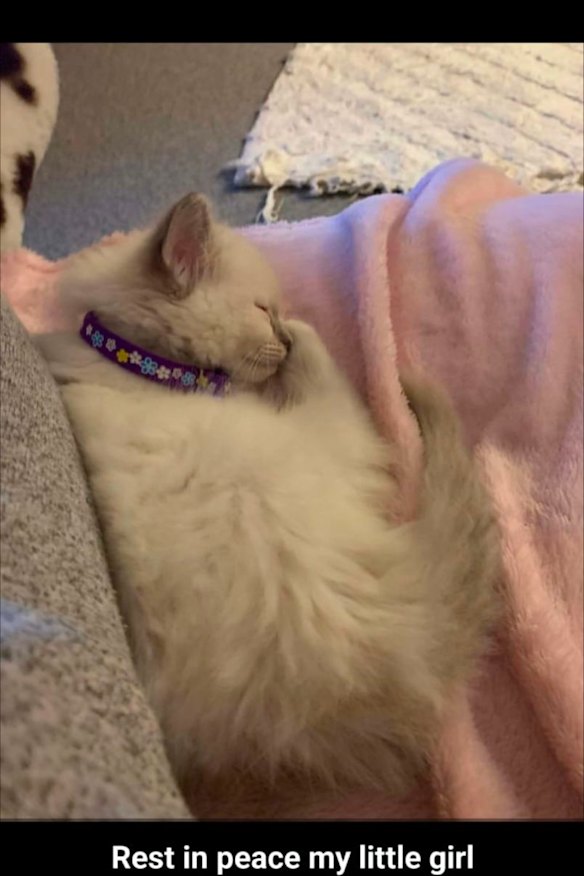
As one Melbourne family made plans to dump their cat four hours out of town so it “could never find its way back home”, others told this masthead they would defy the order. In New Zealand, a member shared pictures mourning her kitten, which multiple people in the church said she had been pressured into euthanising this month.
The Brethren instructs its 50,000 members in Australia and around the world to live separated from society. But it has drawn scrutiny for its involvement in recent elections, campaigning for The Liberal Party, and was raided by the Australian Tax Office in 2024.

On May 2, at closed Brethren meetings across Australia, Canada, NZ, the UK and elsewhere, a letter from leadership was read out detailing a dog attack on a four-year-old relative of the Hales family at a member’s home. The boy survived but required stitches on his face.
“The ownership of such an animal, let alone it being kept at a brother’s home, is clearly wrong,” the letter read. “There are reports of some Brethren having reverted to owning pets, including dogs and other animals, which practice has been clearly spoken against in ministry.
“Every household should be freshly exercised [concerned] to ensure the standard … is carried forward and maintained.”
The directive referenced several Brethren teachings, including that “disposing of dogs” was not enough: birds, “mice out, cats too” and that pet owners should then confess to the sect’s “assembly”.
Following recent scandals, the Brethren now commonly orders its instructions be “destroyed after reading”, but multiple recordings of the meetings were shared with this masthead, along with sect texts detailing past “disposals” of “unclean” pets.
More than a dozen current and former Brethren told this masthead they worry another major purge of animals is now imminent. Many spoke on condition of anonymity, fearing repercussions.
One Victorian member said her heart sank as the directive was read out, a rare explicit order from leadership. “Normally, we only get them for elections and things.”
Her service dog had helped her through “many tough times”, even as he drew disapproving comments within the sect, she said.
“Times when I was so suicidal, without thinking, I’d go to step in front of traffic, and he’d pull me back,” she said. “If I’m asked to choose between my church and the dog, it’s going to be the dog.”

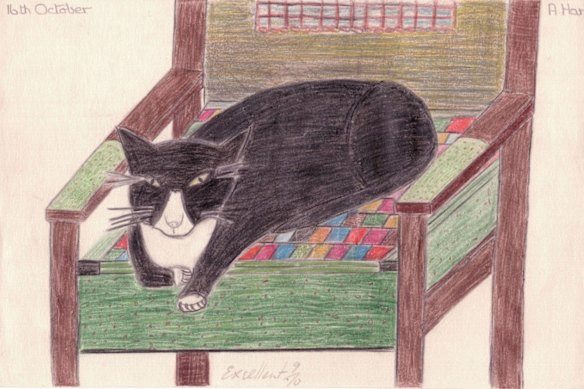
Another family said their elderly aunt had also come under repeated “priestly” pressure to get rid of her beloved companion dog. “We’re worried they’ll finally make her now, and she’ll be totally alone,” they said.
The church tells adherents that loving animals distracts from devotion to God, but members say they view this latest command as “another test to make us prove our loyalty” in a sect where much of daily life, from money to family, is strictly controlled by leadership.
“There could be another walkout,” said one member. “Some aren’t happy. We’ve got [leadership] living in mansions while lots of us are struggling.”
The church dismissed concerns of a pet cull as a conspiracy led by “anti-Brethren activists”, claiming no one in the sect would hurt an animal.
“The recent message from church elders read out at meetings was … simply a reminder of a principle that was established some time ago,” a spokesman said.
“The church would never condone cruelty to any living creature,” he said, adding some members still kept livestock.
The church also denied the 1960s pet purge, calling it “completely untrue … to the best of our knowledge”. The ban and associated cull was well-documented in newspapers, academic papers and books around the world, as well as the Brethren’s own ministries.
When asked why members being made to “dispose of” pets is so often referenced in Brethren texts, which also say “the best dog is a dead dog”, the church did not answer.
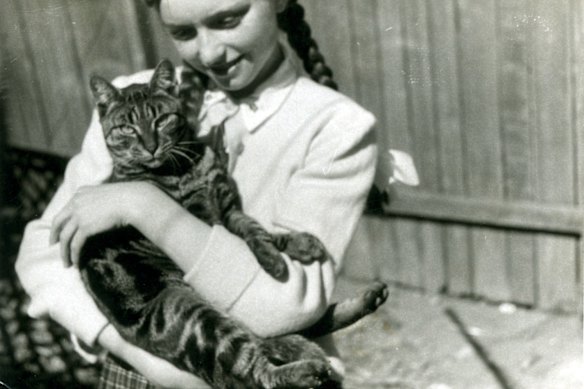
Joy Nason, who grew up in the Brethren in Sydney, recalls being ordered to take her family cat to the vet to be euthanised as a teenager when the ban first came in around 1963.
“I was told to say he had a sore foot, that’s why he had to be put down, and, of course, to tell no one it was Brethren business,” she said.
“I was terrified if I didn’t, I’d go to hell. Even giving animals away, they said, was a sin. I was so upset, I couldn’t stay to watch and, in my heart, I always hoped that vet saw through me, and had Tiddles rehomed instead.”
Back then, newspapers in Australia and overseas reported Brethren bought the gas ether to put their animals to sleep at home, when vets discovered the trend and refused to euthanise.
Some members told this masthead that other pets were killed by more brutal means – drowned, shot or clubbed – at times in front of children. At least three blind Brethren were “ordered to destroy” their guide dogs, though some refused and were instead ex-communicated.
Since then, members said pets had crept back into the lives of Brethren, especially after the pandemic. Some would hide their animals or send them away when hosting Brethren events, even as others openly owned cats, birds and smaller animals, believing the old edict applied only to dogs, or excused working animals.
“But you never know which of the thousands of rules they’ll suddenly enforce so you’re forever on eggshells,” said one member. “A lot of us have pets now.”
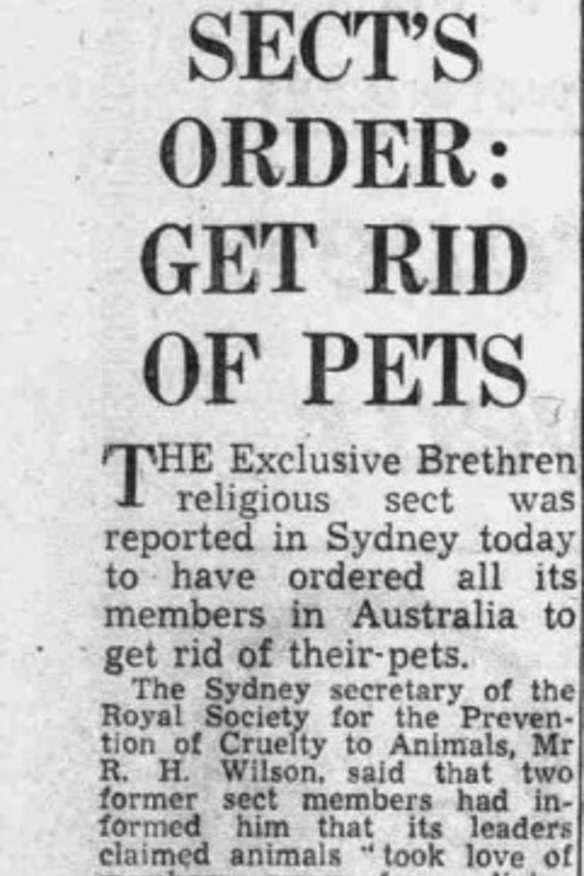
Reports of animal cruelty connected to the sect have continued in the years since the first purge, and more recent “reminders” of the ban from leadership have frequently seen animals killed or dumped again.
A Melbourne woman put down her cats three years ago when the edict was mentioned in passing at a meeting, according to three members. In New South Wales in the 2000s, an ex-member said Brethren asked farmers to shoot their dogs for them.
“Fear of getting caught flouting the rule means it’s kept secret,” said one member. “Though my father has always enjoyed shooting cats.”
Another woman recalled coming home from holidays as a child in the 1990s to find their litter of puppies missing. “We found out years later, they’d come and drowned them,” she said.
Ex-member Cheryl Bawtinheimer, who has accused a Brethren member of sexual abuse and is being sued by the church for copyright infringement over her podcast’s use of a logo, said she had been flooded with messages from people inside the church “panicking” about the new crackdown.
“One’s cat’s just had kittens. They’re refusing to get rid of them,” she said. “People are still scarred from the first ban.”
Bawtinheimer and more than a dozen sources connected to the church estimate that thousands of animals around the world have been killed over the decades because of the Brethren’s ban, and others mistreated or abandoned.
Late on Friday, after further questions from this masthead, the Brethren said it had decided to hold a service over the weekend, it claimed to “reinforce” the message that cruelty was not acceptable, and members should explore options to rehome their pets.
Ex-member Neville McCallum, who vividly recalls Brethren killing their animals during the 1960s, said the sect frequently enforced “bizarre” rules such as the pet ban as “a test of loyalty”. He managed to get around it where he lives in New Zealand by calling his pet a guard dog for his vineyard.
“But I wasn’t ever able to take him home properly, poor thing,” he said. “Now, I’m going around to local vets here to warn them about this latest pet cull.”
Publicly, the Brethren claims it has “no specific rules” and that members instead “choose” to forgo things such as pets and television to focus on the church. High-ranking Brethren appear on its “Not-So-Exclusive” podcast claiming to live normal lives, speaking of pets or of their children loving animals.
“It’s all a lie, PR,” said ex-member Richard Marsh, who said his parents had “been forced to put down their cat, Drusilla” during the first purge.
“The cruelty to animals just day-to-day is disgusting, it’s encouraged,” said an Australian member. “I’ve had my kids in tears because of it.”
Another Victorian woman said she sent her dog away when hosting Brethren members “because I know they’ll hurt him”. “I remember one [member] tried to kick our cat, who’s been a huge emotional support for my daughter since she was little, right in front of her,” she said.
The RSPCA, which investigated the 1960s pet cull, said it had not been alerted to any recent concerns about the church, but noted it could only act on reports made by eyewitnesses to animal cruelty.
Lawyer Tom Grace, who grew up in the Brethren, said the latest pet crackdown stirred up painful memories of the 1960s purge.
“We had a cockatoo then who’d been in our family for 60 years, my grandfather gave him to us,” Grace said, through tears. “I never even considered the ban would mean Cocky. He was part of the family.”
Unable to bear the idea of killing the bird, Grace’s parents instead opened his cage, but Cocky refused to fly away. He stayed around the family home, talking to them, for more than a day.
“Then we found him dead on the ground,” said Grace. “The shock of it, must have been too much.
“It always struck me, him in that cage, as being similar to my family leaving the church. The cage is all we’d known.”
With Michael Bachelard
Start the day with a summary of the day’s most important and interesting stories, analysis and insights. Sign up for our Morning Edition newsletter.