









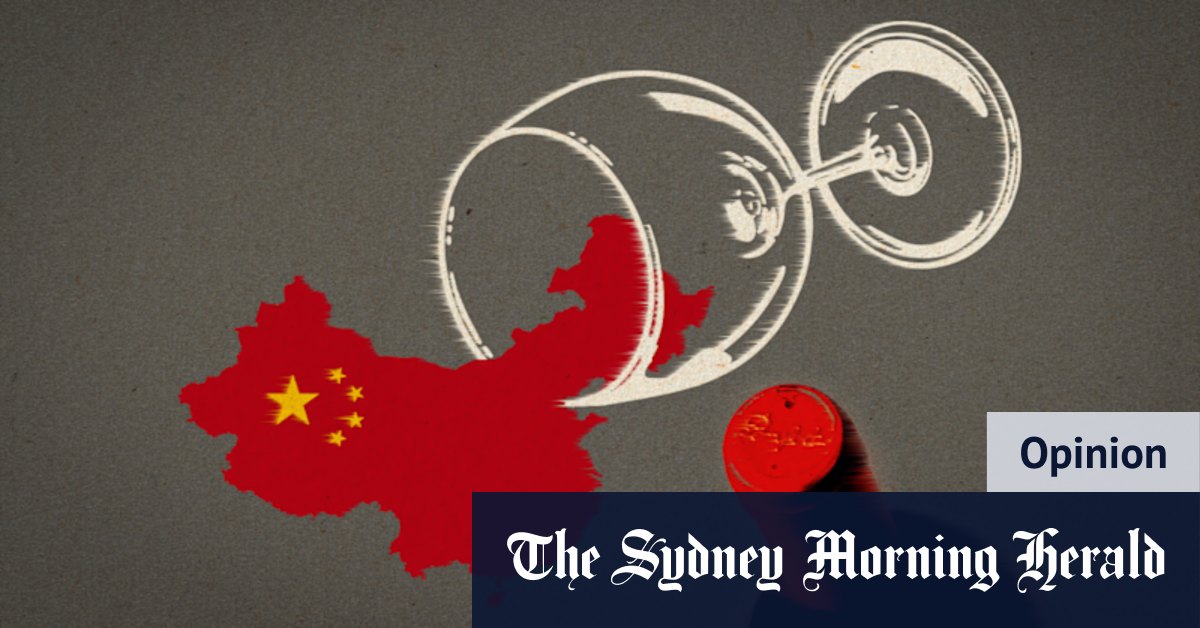
This feels like a behavioural tax on Chinese officials which companies such as Treasury Wines are now paying.
As well as alcohol, this crackdown covers all manner of extravagance in public life including flashy cars, luxury culinary dishes, cigarettes and even adornment such as ornamental plants and fancy decorations in government meeting rooms.


Treasury chair John Mullen (second from the right) with his family, Jen, Jacqui, and Tim.Credit: Oscar Colman
In China’s case, this isn’t a small number of people but the 100 million-strong group of party members. So it packs a punch for companies such as Treasury Wine that supply these “decadent” goodies.
It is part of a broader initiative that looks to address the public’s displeasure with the behaviour of government officials at all levels.
Under the new rules, officials on domestic trips are barred from accepting cash gifts, souvenirs or local specialties. For overseas trips, private jet travel is off limits, while officials are no longer allowed to add extra stops or extend their stays abroad without prior authorisation.
Loading
For Treasury Wine, it equates to the sovereign risk that comes with trading with China.
This company in particular is unfortunately too familiar with this concept.
In 2020, China imposed a 170 per cent tariff on Australian wines – a punishment which was the result of a diplomatic spat between the two governments and not of the company’s making.
In 2024, an enthusiastic mood of Treasury Wines was captured by its then-chief executive Tim Ford, who said it was fantastic to see Chinese consumers reignite their passion for Penfolds’ great Australian luxury wines, and a sense of renewed momentum now that the China market had re-opened.
The reprieve lasted 18 months.
By August this year, Ford was becoming cautious about what the Chinese booze-banquet ban might mean for sales to the country.
This week, Treasury Wine had no choice but to withdraw guidance for the group in 2026 (when low to mid-single digit growth in earnings before tax was expected) and in 2027 (where the company had guided for 15 per cent growth).
The company is now attempting to redirect some China supply to other markets.
It isn’t the company’s only earnings challenge. It also has a problem with its US distributor that is in the process of pulling out of California, which Treasury Wine is predicting will put a dent in its sales revenue for the America’s region in financial year 2026.
None of this would have improved the mood of shareholders on Thursday when they filed into the annual meeting at the Grand Hyatt in Melbourne.
Mullen already knew the Australian Shareholders’ Association and one of the influential proxy voting advisory groups, ISS, were staging a rebellion on the basis that he was stretched thin because he also chairs two other large listed companies – Qantas and Brambles.
While their concerns are generally fair, in this particular case retaining an experienced chairman such as Mullen to contend with the current challenges makes more sense than trying to replace him.
For Mullen, this move is a head-scratcher.
“Just because a number of boxes ticked goes over some arbitrary limit set by someone who’s probably never been the director, I don’t think that’s appropriate,” he told those assembled at the meeting.
Now, where is that wine glass?
The Market Recap newsletter is a wrap of the day’s trading. Get it each weekday afternoon.


