









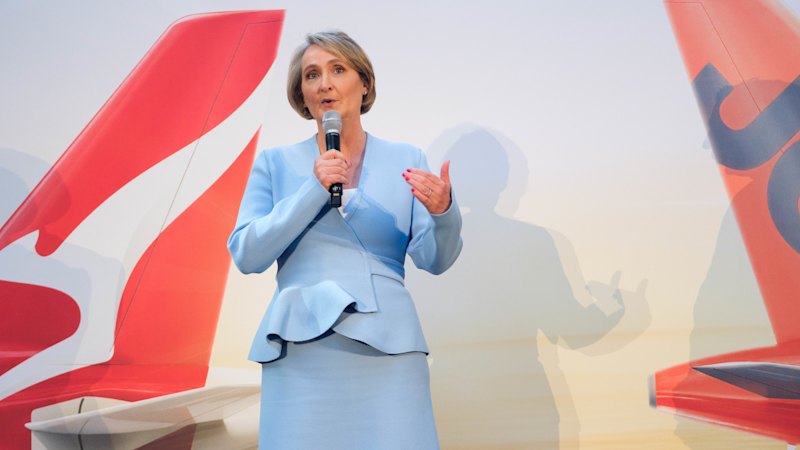
Hudson’s comments came in a wide-ranging discussion on Wednesday at a Commonwealth Bank event alongside the bank’s chief executive, Matt Comyn, and Origin Energy boss Frank Calabria. The business leaders – all of whom lead companies that are grappling with the need to cut emissions – shared their views on some of the key issues their companies and industries faced in the climate transition.

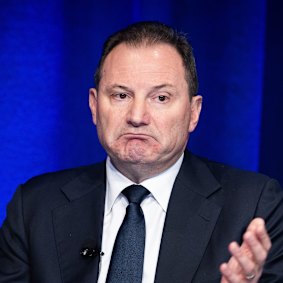
Origin Energy chief executive Frank Calabria says people are realising how ambitious it is to hit net zero emissions by 2050.Credit: Renee Nowytarger
Origin and Qantas are clients of CBA.
In energy, which accounts for three quarters of Australia’s net emissions, Calabria highlighted progress, including the rapid growth in solar and, more recently, batteries, while adding that there was a growing realisation of how ambitious it was to hit “net zero” by 2050.
“I think genuinely if you stare into an ambition to be net zero, I think we’re all now starting to appreciate just how big an ambition that is for a country that continues to want to grow and be prosperous over that time,” Calabria said.
Calabria, who supports net zero, said the energy sector would have to do a lot of the “heavy lifting”, especially over the next decade, adding that many in the audience, which included businesspeople, would be “facing into how tricky that might be.”
Loading
Even so, he struck an optimistic note by saying he believed technology’s potential was being underestimated, pointing to examples such as the rapid rise of electric vehicles or advancements in energy storage.
Comyn said he thought the next five years could be “perhaps meandering” and “difficult to navigate” on a global basis, but said the trend towards decarbonisation over the next 25 years was a long-term structural shift.
Comyn said forecasting was tough, but he thought there would be a move from today’s “relatively modest pace of progress” to “much more rapid” change in decades to come.
“From a technology perspective, I have to believe that there’s going to be very, very significant technology changes over the next couple of decades,” he said.
Comyn said he thought there would be more rapid progress as 2050 got nearer.
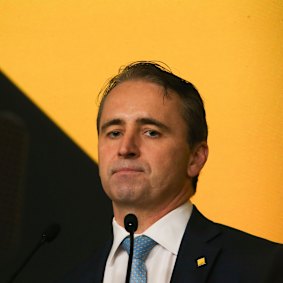
CommBank chief executive Matt Comyn predicted more rapid technological change to help meet emissions targets in decades to come.Credit: Glenn Campbell
“In the latter stages of that time period, I think the progress will be much more rapid, and I think there’ll be much more of a galvanisation. But perhaps that is being overly optimistic. We may still be, or whoever is here, we may still be answering questions on whether net zero is important in 2045, but I doubt it,” he said.
While many big companies have net zero goals, the idea remains politically contested, with the Coalition this month formally dumping “net zero” from its policy agenda.


