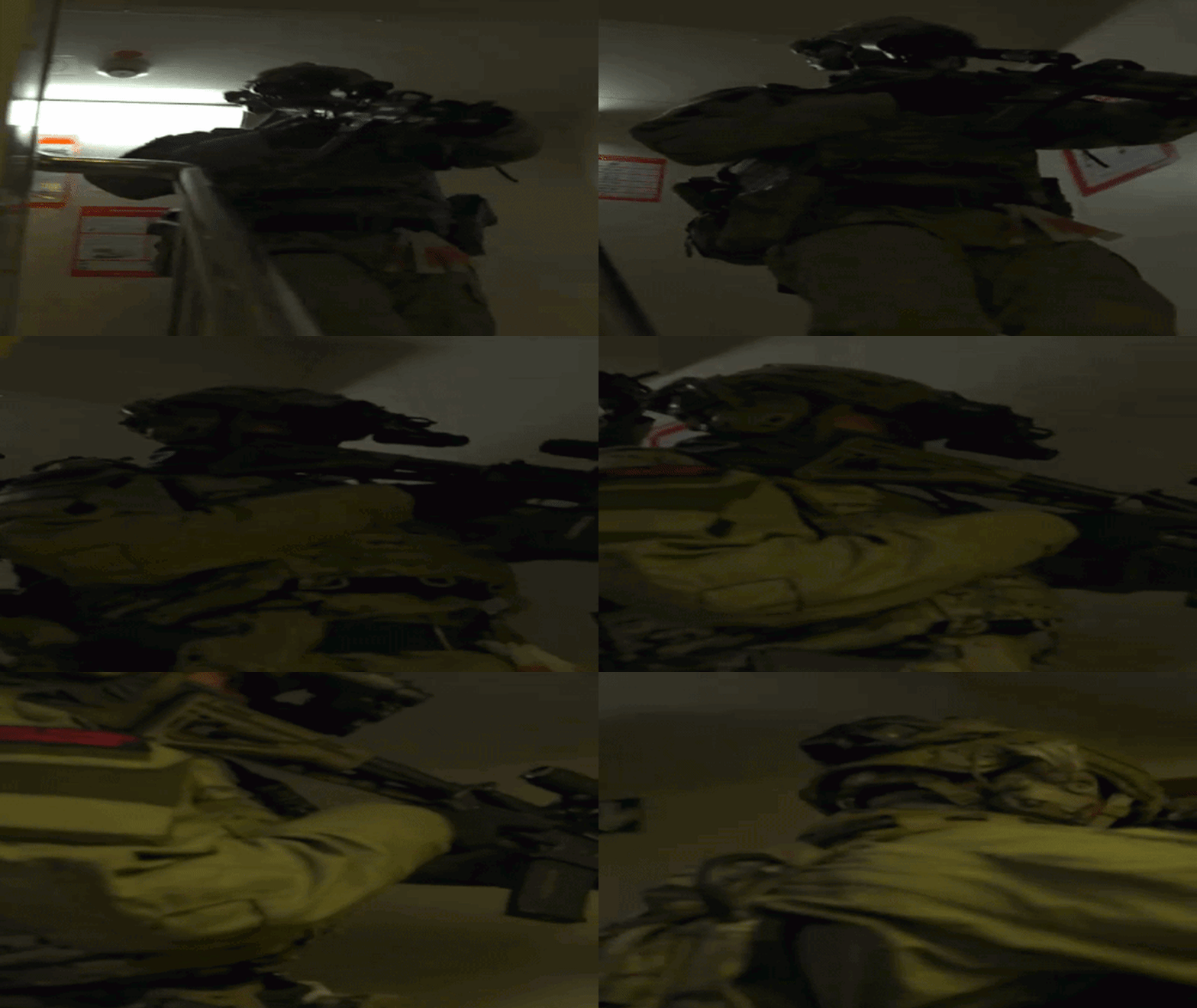




London: British troops have boarded a Russian tanker in the English Channel in their first operation to seize a ship in the English Channel, rappelling onto the vessel’s deck and storming its cabins in a pre-dawn raid.
The commandos intercepted the ship in darkness on Sunday morning by dropping to its deck from a Chinook helicopter, supported by two Royal Navy vessels, a surveillance aircraft and other helicopters.
The move follows similar operations by the French navy, which has seized four Russian tankers over the past year, to disrupt the oil trade that helps Moscow fund its war on Ukraine.
Footage released hours later showed the Royal Marines commandos moving through the private quarters of the ship, the Smyrtos, to take control of its crew and direct them to take it to the south coast of England.
“Overnight, Royal Marines commandos of the Royal Navy were involved in the interception of a shadow fleet vessel,” said First Sea Lord Gwyn Jenkins, who is also the chief of naval staff.
“Mission success thanks to the skills, bravery and professionalism of our people.”
The Ministry of Defence issued statements and footage on social media soon after the six-hour operation, while Prime Minister Keir Starmer said it sent a message to Russian President Vladimir Putin and his government.
“In the early hours of this morning, I directed our Armed Forces to intercept a shadow fleet oil tanker attempting to pass through the English Channel,” Starmer said on X.
“This successful operation delivers yet another blow to Russia and reminds those fuelling Putin’s war in Ukraine that we will not let them hide.”
The Smyrtos, which flies under a Cameroon flag but has been sanctioned as an exporter of Russian oil, was said to be loaded with 704,962 barrels of crude from the Ust-Luga terminal near St Petersburg. Marine news service Lloyd’s List said it was bound for the Indian port of Sikka.
Ukrainian President Volodymyr Zelensky thanked the UK for the interception.
“It was Russia’s hubris, fuelled by high oil and gas revenues, that paved the way for this war, and every decision by partners that deprives Russia of money also limits the war itself,” he said.
Zelensky also said the past week had seen Russia launch 1920 attack drones against Ukraine, as well as 1790 guided aerial bombs and 17 missiles. He said Ukraine needed more air defence support from the west, as well as stronger sanctions on Russia.
The French navy intercepted a similar tanker, the Tagor, in the Atlantic Ocean about 400 nautical miles west of Brittany earlier this month, with support from a Royal Navy helicopter.
The Tagor was halted while sailing from the Russian port of Murmansk under the flag of Madagascar.
French President Emmanuel Macron said it was “unacceptable” for ships to circumvent international sanctions, violate the law of the sea and finance Russia’s war on Ukraine.
Kremlin spokesman Dmitry Peskov said the French interception bordered on “international piracy” and was illegal.
The British operation came days before global leaders including Starmer and Macron meet at the G7 summit in the French city of Evian on the shores of Lake Geneva, where talks are expected to include the war in the Middle East the war in Ukraine.
US President Donald Trump, who is due to attend the G7 summit from Monday to Wednesday, has repeatedly accused European leaders of investing too little in defence and offering too little support to the US in its war with Iran.
Starmer prepared for the summit by meeting Japanese Prime Minister Takaichi Sanae in London on Sunday. The UK, Italy, and Japan are jointly developing a supersonic stealth fighter jet under what they call the Global Combat Air Program.
Trump is expected to join Macron for dinner at the Palace of Versailles on Wednesday.
The British interception of the Russian tanker also comes at a time of heightened concerns about the country’s military capability because of a split within the government on whether to increase defence spending to the full extent required in a major security review.
Former defence minister John Healey quit the post on Thursday, in a sudden move that fuelled talk of an imminent leadership challenge against Starmer, and this was followed hours later by the resignation of armed forces minister Al Carns.
Healey said Starmer was “unable” to get an agreement to fund defence on the scale needed, and he said Chancellor of the Exchequer Rachel Reeves was “unwilling” to commit the financial resources necessary.
The resignation highlighted the cabinet split over spending when several ministers blocked attempts to find savings in welfare or other programs to find the funds for defence.
A government strategic defence review, or SDR, authored by three eminent defence and financial experts, set out plans last year that would require £68 billion in additional spending on defence over a decade.
Britain spent £60.2 billion on defence in the 2025 financial year and appeared to be on track to lift this to £73.5 billion by 2029, but Healey made it clear that more was needed and that his cabinet colleagues had dashed his hopes for greater spending.
General Richard Barrons, one of the authors of the review and a former commander of British joint forces, said Healey’s resignation revealed a failure of competent government.
“A year after the SDR was agreed, the government has decided not to fully fund its own review. In doing so, it is not merely failing to move forward; it is actively going backwards,” wrote Barrons, now a senior consulting fellow at Chatham House.
“The government has, in effect, decided not to fund the defence review it commissioned and endorsed, because it prefers to spend money elsewhere. That is a political choice.”
Get a note directly from our foreign correspondents on what’s making headlines around the world. Sign up for our weekly What in the World newsletter.