







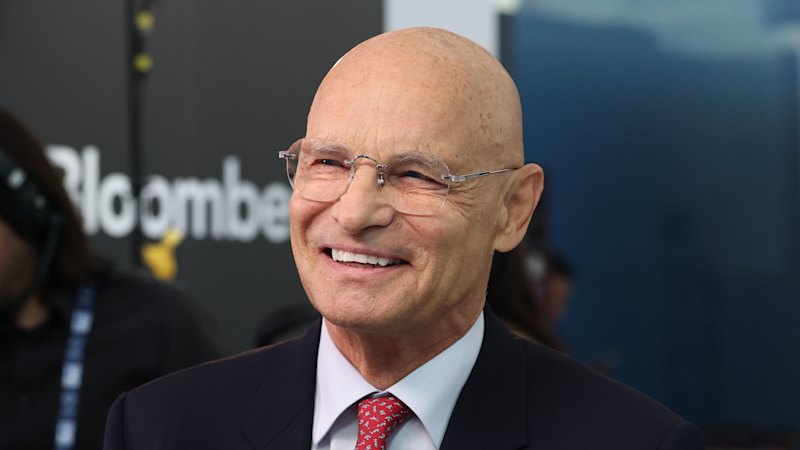
“The time is right to ensure a new, clear path for Gunvor’s future,” Törnqvist said. “For a trading house of Gunvor’s size and complexity, a broad-based, inclusive partnership is the right model.”
Dispel speculation
Törnqvist has been the main owner of Gunvor since 2014, when he acquired the 44 per cent stake held by his co-founder Gennady Timchenko, in a deal that was announced just as the Russian oil trader was sanctioned by the US. The balance of the shares are held by about 200 employees.

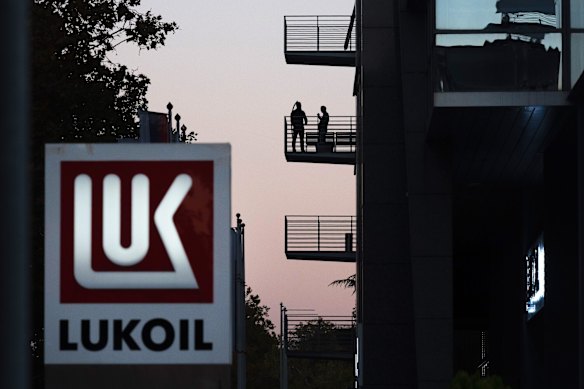
The move represents the most dramatic fallout yet after the US Treasury Department announced abruptly that it would block a deal for Gunvor to buy the international assets of sanctioned oil major Lukoil PJSC, and alleged the connection to Russia’s government without providing evidence.Credit: Bloomberg
Gunvor has spent years seeking to dispel speculation about its ties to Russia. Timchenko is a friend of Russian President Vladimir Putin, and when the US imposed sanctions on him it claimed that Putin had investments in Gunvor. The company denied the claim, which was presented without evidence.
Gunvor in its current form was founded in 2000 by Törnqvist and Timchenko. The company got its big break after the Russian government dismantled privately-owned Yukos Oil and threw its billionaire owner in jail, and Gunvor was one of the traders called on to market significant volumes of crude oil as Russia sought to keep the barrels flowing. Soon it was the biggest trader of Russian oil, at one point handling around 30 per cent of the country’s seaborne exports.
Törnqvist’s dominant stake in Gunvor has also meant that he was one of the largest individual beneficiaries from the energy-trading boom that followed Russia’s full-scale invasion of Ukraine. While bigger rivals like Vitol Group and Trafigura Group have reaped larger profits, those companies have a far wider shareholder base.
Loading
Today it trades enough oil daily to meet demand from the UK and France combined, and has also built up a significant book trading liquefied natural gas. Like its rivals, Gunvor has poured some of its windfall profit from recent years into buying stakes in fixed assets such as a power station in Spain.
The company’s plan to buy Lukoil’s international assets represented a bold play by Törnqvist that would have transformed Gunvor’s business and catapulted it into the big leagues of oil production, in addition to adding a sprawling network of gas stations across the US, Europe and Turkey.
Gunvor was already in talks with Lukoil to buy certain assets when the sanctions were announced, and it evolved into a conversation about a larger deal, Törnqvist told Bloomberg last month. He emphasised at the time that the purchase would be “a clean break,” and that Lukoil would not have any option to buy back the assets it was selling.
Bloomberg reported in November that Spain’s Banco Santander SA pulled funding commitments from Gunvor after the US Treasury comments, but that its other lenders remained supportive.
The collapse of the Lukoil deal and the Treasury comments also fuelled questions about succession planning at Gunvor, which shook up its senior management earlier this year. Törnqvist described the changes at the time as “a reset and setting the course for the future.”
The CEO has previously expressed a desire that his family retain control of the trading house, and in 2023 appointed his son to the board.
Bloomberg


