


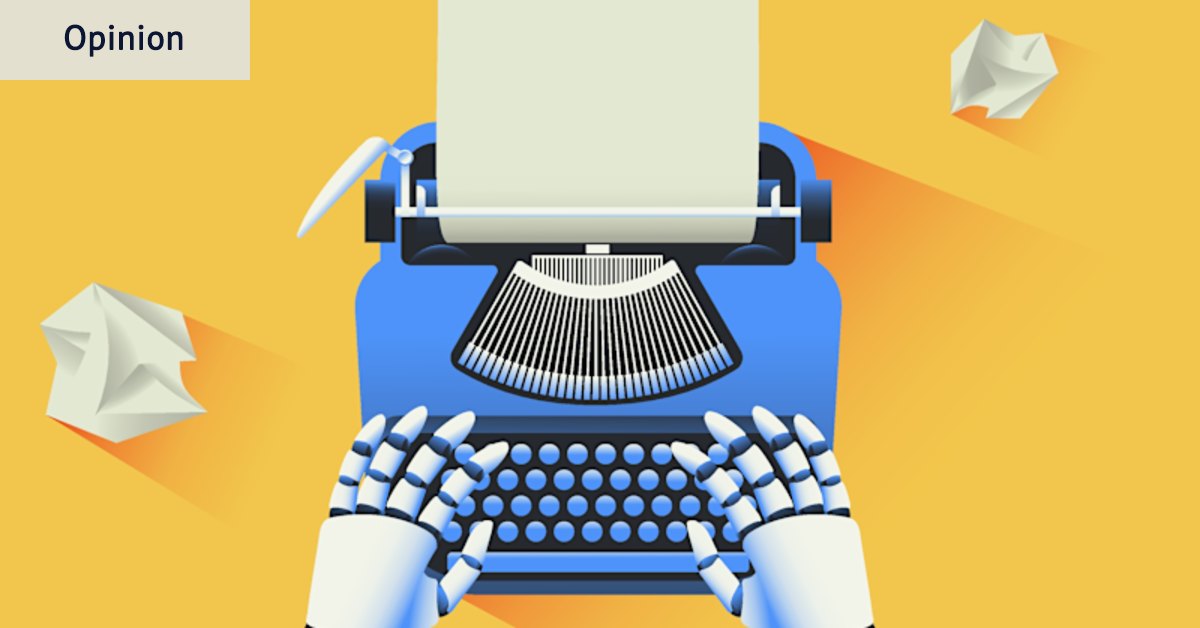
Humans may be on the way out. But at least the humanities are back. Or so some of the tech gods tell us.
After decades of dismissing liberal arts and humanities studies as useless, and insisting that the mastery of science, engineering, maths and tech is essential to future success, the tech world is coming around to the idea that learning about human nature could be a valuable asset in the coming artificial intelligence revolution.
As it turns out, tech jobs may be drying up after years of students rushing to computer science. Who needs to code? AI does that for you.
What AI can’t do — yet — is the stuff that makes us human: empathy, emotion, psychology, critical thinking. “What a piece of work is man,” Hamlet said, describing an intricate and infinite creature.
“I think AI is a false mirror,” said Drew Lichtenberg, the dramaturg at the Shakespeare Theatre Company in New York and a lecturer at Johns Hopkins University. “It reflects back answers to black-or-white questions, but it does little to help explain the human experience the way art or philosophy can.”
He said he was shocked that students last semester had been hungry for difficult plays and philosophical readings with no clear answers. “They were particularly into Kant and his ‘Analytic of the Sublime’, Nietzsche and existential nausea, Camus and the myth of Sisyphus,” he said, adding that the cool reason of AI comprehends, but the seething imagination of art apprehends.
Daniela Amodei, a co-founder of Anthropic, told ABC News that “the things that make us human will become much more important instead of much less important”. She said that at Anthropic, the company was looking to hire people who were “compassionate and curious” about other people.
Amodei, who majored in literature at the University of California, Santa Cruz, said that “studying the humanities is going to be more important than ever. A lot of these models are actually very good at STEM. But I think this idea that there are things that make us uniquely human — understanding ourselves, understanding history, understanding what makes us tick — I think that will always be really, really important.”
Other billionaires and execs — Jamie Dimon at JPMorgan Chase, Ginni Rometty at IBM, Satya Nadella at Microsoft, Mike Novogratz at Fortress Investment Group and Jack Clark at Anthropic — have warned of the need for emotional intelligence and storytelling in a world dominated by AI.
Reed Hastings, a founder of Netflix, said on Reid Hoffman’s podcast recently that we had moved beyond the days when STEM swallowed the Stanford University campus. If he had a three-year-old today, he said, he would be “doubling down” on teaching the child emotional skills.
“For students and parents, the best defence today is to be broadly educated so they can adapt to the changes coming,” Hastings told me. “AI is better at rational thinking than it is at emotional depth. The last job that AI will get is stand-up comedian.”
Mark Cuban, an AI optimist who predicted a decade ago that English majors would have the edge in the future, told me: “AI is going to do a lot of amazing things with drugs and devices and stuff that’s going to be insanely important and cool. But, you know, humans are humans. Curiosity is the greatest skill you can have in an AI universe.”
Some people are beginning to realise you have to avoid sautéing your brain in AI slop if you want to keep it fit.
“The people who are reading hard books and are still writing have built these brain circuits, and they’re comfortable with cognitive strain,” said Cal Newport, a Georgetown University computer science professor. “These are the people with real value if everyone else has fried their brains.”
Rob Reich, a Stanford professor who teaches the social ethics of science and technology, said that computer science students were awash in anxiety about their future. “The first time that there’s been a decline in computer science enrolment at Stanford in 20 years is in the past 18 months,” he said.
Maybe humans are getting worried about becoming less human. As a friend of Reich says, we have gone from visiting people on birthdays to letters to phone calls to texts to emojis.
Reich suggested that humans, unable to keep up with AI, might have decided to go read some poetry or literature or philosophy and remind themselves of “enduring sources of meaning in the world”.
When Anthropic’s head of AI safety, Mrinank Sharma, left the company in February, saying that “the world is in peril” from AI and other things, he posted on the social platform X about looking for meaning in poetry: “I want to explore the questions that feel truly essential to me, the questions that David Whyte would say ‘have no right to go away’, the questions that Rilke implores us to ‘live’.”
Reich said that some people thought that once AI did the majority of economically valuable work and we lived in a world of abundance, “what will be left for humans to do is fundamentally a more humanistic set of questions about artisanal projects that people might want to direct themselves toward”.
Some of my academic friends doubt this is a real trend, as they see liberal arts and humanities departments shrinking and closing, graduate enrolments slashed and reading scores falling.
The New Yorker declared “The End of the English Major” three years ago. The Washington Post reported this past week on a Texas study in which liberal arts landed at the bottom of undergraduate programs that paid off after college. “Just try to imagine a world — or a working democracy — when those skills are limited to a few,” keened one Shakespeare professor.
Maybe the lords of the cloud are feeling guilty as it becomes apparent that AI is going to subsume us. So they’re wishfully thinking that truth and beauty can help us steer AI towards its better angels.
“They know that American society is going to turn against them in big ways because they are the greatest and most illegitimate pirates who ever lived,” said Leon Wieseltier, editor of the journal, Liberties. “Tech is the single most powerful force that was ever arrayed against the humanities.”
“There is a huge difference between knowledge and information, and these asinine people have taught our population that all of knowledge can be reduced to the status of information,” Wieseltier added. “Press a button, you got your answer. So the whole humanistic mentality of mystery, obscurity, patience, beauty — it’s the opposite of what this technology has inculcated.”
This article originally appeared in The New York Times.
