









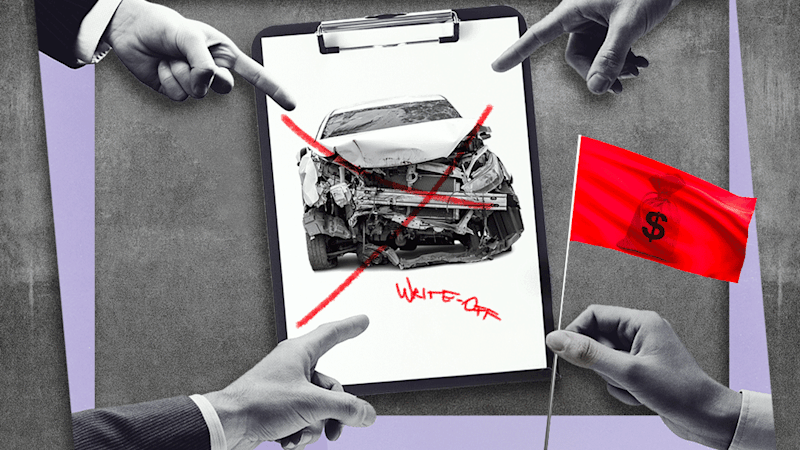

Anthony McGrath, IAG’s executive manager of counter-fraud and intelligence, said claims management companies operate “in a grey area”, taking advantage of “vulnerable Australians who have just been through an often-traumatic experience”.
“They promise quick fixes or expedited, hassle-free claims, but in reality they can cause inflated costs, unclear communication, delays, and unnecessary stress,” McGrath said, urging anyone who thinks they could be dealing with one to contact their insurer immediately.
NRMA insurance customer Reg Mahoney is among a growing number of Australians to have unwittingly gone through a claim management company. After he was hit at high speed in a 2022 accident, Mahoney provided his contact and insurance details to a tow-truck driver who responded to the scene.
“Forty minutes later I was contacted by a person, purporting to be from my insurance company, who knew all my information,” he said.
“They caught me at a vulnerable time while I was in shock after the accident.”
McGrath said disaster chasers were similarly predatory when it came to home damage.
Loading
“These fake operators will typically arrive uninvited at storm-damaged homes and use high-pressure sales tactics to secure agreements for low-cost, immediate repairs,” he said. “They might claim to identify damage at your property, ask for payment up front, or even claim to be from your insurance company.” McGrath said builders or tradespeople sent by insurers will never ask for payment up front.
Alexandra Kelly, director of casework at the Financial Rights Legal Centre, said that while insurers could make their claims processes smoother to minimise the appeal for consumers in a third party taking care of a claim, she ultimately echoed the call from the IAG and other insurers for stronger laws against claims management companies’ practices.
While her centre traditionally advises in cases against insurance companies, “this is one of the strange areas where us advocates are more aligned with insurers”, she said.
“Consumers are lured into a complex contract that sets out exorbitant hire fees, told the at-fault party will be pursued for costs, but in the fine print, they can turn around and say you have to pay. It can be $200 a day for a hire car, it can lead to $10,000 bills,” Kelly said.
Disaster chasers are also known to attempt to get insurers to pay repair costs inflated well above their true value, as well as take percentage fees from claims payouts, Kelly said.
The Insurance Council of Australia has called for stronger regulation to shut down “predatory operators”, noting “mounting evidence reveals significant consumer harm”. “Their practices not only hurt individual customers but drive up insurance costs for all Australians,” a spokesperson said.
The Business Briefing newsletter delivers major stories, exclusive coverage and expert opinion. Sign up to get it every weekday morning.


