









Kavanagh is the second Australian to be arrested while looking for his children. Australian journalist Scott McIntyre was detained by Japanese police for six weeks in 2020 after he went to his estranged in-laws’ apartment building to look for his two kids Hinata and Harugo who he has not seen since 2019.
Under Japan’s sole-custody laws, Japanese parents can legally kidnap their kids, cutting off the other parent from all contact with the child because custody is granted to the parent who was last with the child. The sole custody laws allow the abducting parent to disappear and hide all details of their child’s health, education and location from the other parent.
Dozens of mothers and fathers who have spoken with this masthead and 60 Minutes as part of a years-long investigation into child abductions in Japan say the laws have destroyed their lives. There are more than 100 children from France who have also been abducted by a Japanese parent, and almost 500 from the United States.
Foreign Minister Penny Wong has labelled the abduction of Australian children in Japan “heartbreaking”, and has led global lobbying of Tokyo to change its Samurai-era sole-custody laws.
They were initially designed to protect women fleeing domestic violence, but are now being used by both men and women in a race to abduct children as relationships break down.
Last year, in response to the global outcry, the Japanese parliament passed laws to allow parents to seek joint custody of their children for the first time.
Loading
But they will not come into effect until next year. The government has also yet to guarantee visitation rights unless both parents agree, fuelling concerns that the new laws will not address the ability of one parent to cut off the other entirely. Interpol missing person notices for children have been routinely ignored by Japanese officials.
“I understand it’s been very distressing for several parents,” Wong told Senate estimates in October. “We don’t ever want children to be abducted.”
Foreign Affairs secretary Jan Adams said that through sustained advocacy, Australia has had some success in “encouraging Japan to nudge their quite culturally specific system towards one where access to both parents is more normal”.
“But it’s fundamentally a different set of legal and family-oriented decisions that they make.”
Traditionally, Japanese families have preferred to save face by cutting off all contact during disputes, rather than mediating conflict, which would require ongoing contact with the opposing partner.


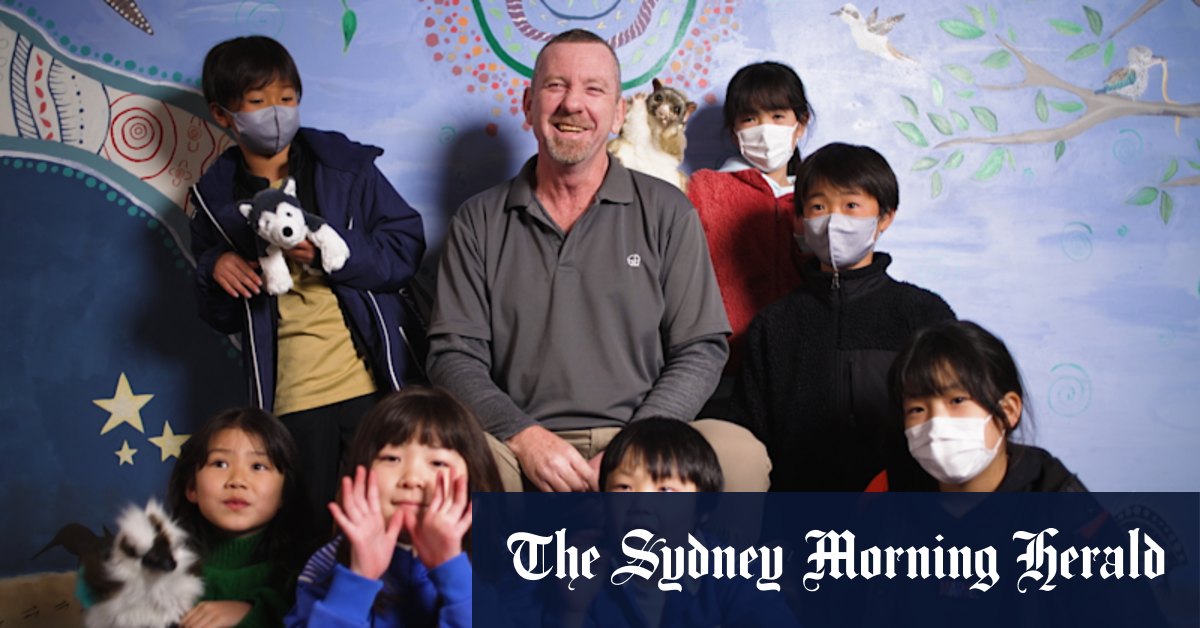
Australian father Randy Kavanagh at his English school near Takasaki. Credit: Viola Kam
Before his arrest, Kavanagh had planned to take his custody battle to the Japanese Supreme Court.
The former Australian taekwondo fighter has built a reconciliation hub in Takasaki where he teaches English to local primary school students while lobbying the local government to allow him to see his daughter.
“He had repeatedly visited his daughter Anna’s school, the city office, and the police station regarding Anna’s participation in the school sports day scheduled for October 25,” Miko said.
“He was asking the city office staff for an explanation, but since he did not receive a clear answer and continued waiting for a response, it seems that the city office staff eventually called the police.”
Japan’s Foreign Ministry was contacted for comment.


