


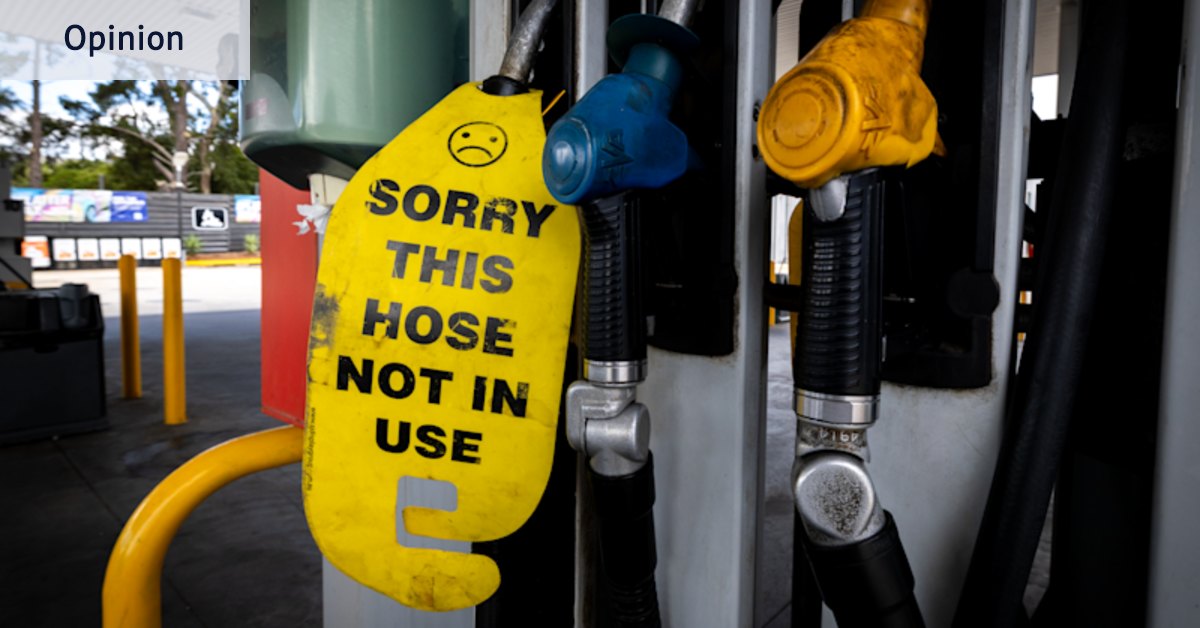
History suggests that when you get a crisis as big as the current oil shock, it not only causes short-term problems like inflation, but also leads to long-term changes in people’s behaviour.
The global financial crisis of 2008 is said to have made some people in the worst-affected countries more debt-shy, for example, while COVID-19 ushered in a big rise in working from home.
What might change this time? I’d hazard a guess that soaring fuel costs and all those empty bowsers could change how many of us think about the cost of running a petrol or diesel-fuelled car, compared with an electric car.
Indeed, there are already reports from car makers and dealers that more people are thinking about making their next car an EV.
As more people make that decision, it only hastens the need to address a sizeable gap in our tax system. The problem is pretty simple: fuel excise is not collecting tax from the growing number of road users getting around in an electric car.
Fixing this by introducing some sort of road user charge – dubbed an “EV tax” by some – would be a sensible economic reform that the federal government has already committed to implementing at some stage, though some in the government are reportedly pushing for a delay.
The current fuel crisis helps to illustrate why a road user charge makes sense – and why it should happen sooner rather than later.
As petrol and diesel prices have skyrocketed this month, debate has inevitably turned to how much of the bowser price is tax. The answer: 52.6¢ in every litre of petrol and diesel goes to the taxman through fuel excise, which helps to pay the cost of maintaining roads.
The Opposition says we should cut fuel excise in response to the oil shock – but the problem with that is that it leaves a hole in the budget, while also encouraging spending at a time when the Reserve Bank wants the opposite.
However, there is a strong case for changing how we raise tax revenue to help fund roads in the longer term.
The problem is that owners of electric cars obviously don’t pay fuel excise, and this will leave a growing hole in the budget as more people switch to using EVs, as we try to meet our emissions reduction goals.
In response, the government has made it crystal clear that there is a change coming at some stage. After last year’s economic reform roundtable, Treasurer Jim Chalmers and state treasurers publicly committed to undertaking further work on road user charging for EVs, adding that the policy should “not deter the continued take-up of electric vehicles”.
At a time when there’s so much concern about raising productivity, it’s worth noting that economists see road charging as a genuine economic reform.
Not only would it plug a looming hole in the budget, it also sends a “price signal” to motorists, as the idea is that you pay a higher charge if you use the roads more. This sort of thinking appeals to economists because it sends a signal to drivers that maintaining the roads has a cost.
Last week, The Australian reported Treasury was modelling a national road user charge, and soon after there was political outcry.
The Greens attacked the idea of a road user charge only on electric cars, which they called a “full-body slam” on EVs. They argued we should be looking at how to encourage EV uptake, rather than making it more expensive to use clean transport.
However, it is difficult to see how asking EV owners to contribute to the cost of the roads they drive on would really change the incentive that people have to buy an electric car. We can’t be sure without knowing the size of the charge, of course, but Chalmers has explicitly said road user charging will be designed so it doesn’t hold back EV take-up.
It’s also about fairness. A road user charge would be a way for EV users to help to pay for the roads that they use, just like other motorists do when they pay fuel excise.
Importantly, this is not some short-term revenue grab. Road user charging made sense long before Donald Trump decided to attack Iran and unleash chaos in the oil markets.
Chalmers said last August that road user charging was a “longer-term project” – saying the status quo won’t work in 10 or 20 years because fewer people will be driving petrol cars.
Another reason it’s a long-term project is that the practical details of a road user charge are tricky. For example, how do you measure how much someone has driven, so they can be taxed accordingly? There are privacy concerns around tracking drivers’ movements, while checking odometers also seems clunky. The states are also involved, adding another layer of complexity.
These are all issues that can be worked out, though perhaps not before the May budget. Instead, it would not be surprising if the budget notes the long-term risks to fuel excise from accelerating EV take-up, or perhaps the government may give some more detail about its plans for road user charges.
To EV owners, the idea of an “EV tax” would no doubt be pretty unpopular.
But that’s the nature of reform: it’s about the greater economic good, not pleasing everyone. In the long term, some sort of tax on EV driving is the logical replacement for petrol excise, and EV owners should also help to pay for the roads they use. After all, one day the vast majority of motorists will be getting around in EVs, and this oil crisis may well accelerate the move in that direction.
The Business Briefing newsletter delivers major stories, exclusive coverage and expert opinion. Sign up to get it every weekday morning.
 Clancy Yeates is deputy business editor. He has covered banking and financial services, and was previously national business correspondent in the Canberra bureau.Connect via X or email.