


Opinion

Australia is in the midst of economic revolution.
No matter your thoughts on artificial intelligence, whether it will be our saviour or plunge us into some dystopian sci-fi form of hell, the impact of the technology is being felt across Australia right now.
The nation is amid an AI infrastructure spending boom the likes of which we haven’t seen since the nation’s miners went on a tear in the early 2010s.
That boom, the biggest since the 1850s gold rush, delivered a fillip to miners’ bottom lines, powered China’s industrial revolution and pushed plenty of cash into certain governments’ coffers.
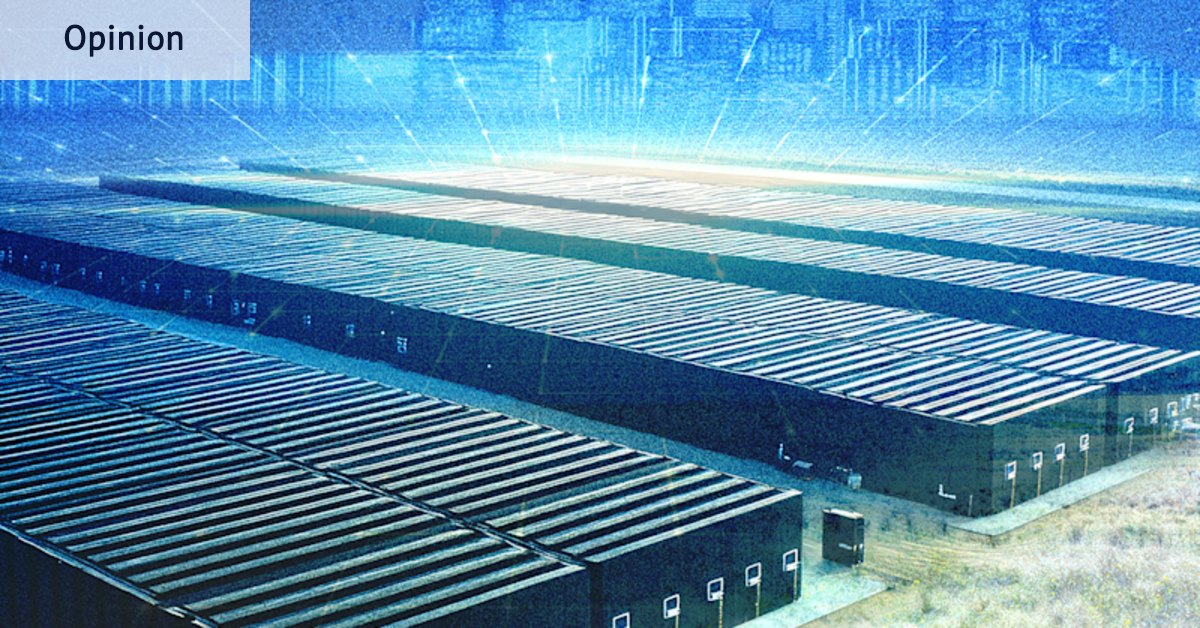
We’ve just got some idea of how big a boom is coming after the Australian Bureau of Statistics released figures showing a record $6 billion was spent by businesses on equipment linked to data centres and AI in the three months to the end of March. Take into account the new buildings to house all this stuff, and spending soared 84 per cent to $21.8 billion over the past year.
In percentage terms, spending on AI and data is growing faster than during that early 2010s mining boom.
Mining is traditionally the biggest source of this nation’s capital expenditure. But that is clearly under threat. AMP economists reckon that within the next five to 10 years, it will be data centres and AI.
Wednesday’s national accounts showed spending by the private sector on buildings and equipment is soaring in the two states where the AI construction boom is really under way – NSW and Victoria.
Through the first three months of this year, businesses in NSW spent a record $43.6 billion while their counterparts in Victoria outlaid their own record $34.6 billion. Not all the expenditure was on data centres and AI, but a sharply growing chunk was.
During the early 2010s mining boom, private capital spending in WA peaked at $32 billion. This year, it’s around $20.8 billion.
Westpac analysts believe that, combined with renewable energy projects (many of which are planned to power data centres), the country is looking at a $350 billion pipeline of data centre-related work over coming years.
All of this spending is being done on the expectation that this technology will deliver enormous productivity and economic breakthroughs.
From discovering cures to the worst diseases to slashing home construction time, proponents of AI believe it will deliver life-altering advances to humanity. Just a fortnight ago, a question that has bedevilled mathematics for eight decades – the planar unit distance problem – was solved by AI.
It’s easy to be seduced by the large numbers and the promises of hope. Who wouldn’t want the economy to grow strongly on the back of a technology that offers the chance to eradicate terrible diseases while making our lives easier?
But that’s where the doubts over AI begin.
At the front line where these data centres are being built, communities are raising concerns about their scale and noise, use of power and water. Unions fear jobs will disappear.
Last week, the leader of the globe’s largest Christian religion, Pope Leo XIV, weighed into the issue. And not on the side of AI.
In a 42,000-word encyclical, the Pope cited everyone from St Augustine to Hannah Arendt to Gandalf (yes, The Lord of the Rings’ Gandalf) to argue the potential dangers of the new technology.
He warned the world is facing a “pivotal choice” between a future where God and humanity dwell together or a Tower of Babel where technology leads to an unjust and inhumane existence.
My religious education, at the hands of Christian Brothers and the Poor Clares, suggests that is a pretty bleak outlook.
Former treasurer Joe Hockey last week raised some more earthly issues about AI.
Hockey fears that AI will lead to 15 per cent unemployment in this country by 2031.
“I mean, driverless cars are writ large, coming fast in the US, and AI technology and robotics are replacing people, and it’s going to be on a mass scale,” he told the National Press Club.
An unemployment rate at 15 per cent means 2.3 million Australians out of work (compared to 700,000 currently).
Hockey urged governments to slash spending to make space for supporting such an army of unemployed. But there’s literally no way any government could cut so much out of the federal budget without driving the country into recession and precipitating riots on the streets.
I can’t blame people for being confused by the questions thrown up by the advent of AI. I’m confused.
I’m unsure whether the world is sitting on the cusp of economic and medical revolution that will transform living standards like the advent of electricity or penicillin, or whether it will unleash vast social unrest unseen since the plague ravaged Europe in the 14th century.
A case can be made for either argument.
Economics is effectively the study of trade-offs. The trade-offs we are facing because of AI may be the discipline’s greatest test.
Little wonder it took the Pope more than 42,000 words to run through his arguments.
Previous technological breakthroughs, from the wheel to the steam engine to the internet, did end some jobs. But once in place, affected communities and workplaces largely enjoyed more employment opportunities, higher wages and better quality of life.
But there’s a difference between aeroplanes replacing ships as the preferred method of intercontinental travel, and AI machines replacing everyone from lawyers to artists.
Adding to the tension around AI, this new technology is being dropped on to a world that was already splintering because of community-wide economic tension.
From Brexit and Donald Trump and One Nation on the right, to Sumar, the Broad Front and the Greens on the left, the political system is shattering. AI will amplify that trend.
The rise among young people who believe democracy is failing, as they engage with a terrible mix of fascism and communism, shows it’s not just older voters angry and bewildered by what’s going on around them.
In AI, we now have a technology that effectively ends our ability to tell the difference between what’s real and unreal.
Artificial intelligence offers extraordinary economic opportunities that are already evident in this country. But if that future is really as bleak as Pope Leo fears, then we’re about to take a step into the darkness.
Shane Wright is a senior economics correspondent.
The Opinion newsletter is a weekly wrap of views that will challenge, champion and inform your own. Sign up here.
 Shane Wright is a senior economics correspondent for The Sydney Morning Herald and The Age.Connect via X or email.