










The Australian Electoral Commission will mount an intensive voter education blitz ahead of the Farrer byelection, warning a “congested” information environment and rising misinformation could undermine confidence in Australia’s preferential voting system.
The move comes amid a spike in informal voting in parts of the country and a political push from minor parties and conservatives to overhaul how preferences are allocated.
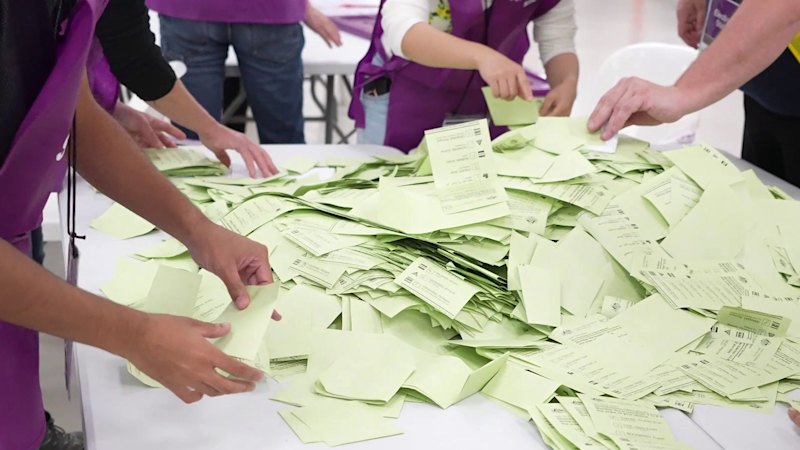
NSW – where preferential voting is optional at a state level – recorded the highest informality rate at the last federal election, at 8.06 per cent – a slight increase on the previous poll. The seat of Farrer, which includes regional towns and cities including Albury, Deniliquin and Griffith, sat even higher at 9.03 per cent. Officials fear the byelection could see that climb further if a crowded field produces an unwieldy ballot paper.
An AEC spokesperson said the commission was stepping up efforts to ensure voters understood how to cast a valid ballot and how preferences flow under the system, saying there was a “clear and increasing” requirement to provide information about how Australia’s preferential voting system works for federal House of Representatives contests.
The campaign will include instructions printed directly on ballot papers, handouts at polling booths, posters and multilingual guides, alongside a broader media push spanning radio, social platforms and direct messaging to voters.
“The communication environment during a byelection can be congested and difficult for voters to navigate,” the spokesperson said. “The AEC is alert to the prospect for incorrect information to be spread around how preferential voting works – from a variety of potential sources.”
It will also revive its “stop and consider” messaging, aimed at countering misleading or false claims circulating online.
The intervention follows controversy at this month’s South Australian state election, where Pauline Hanson’s One Nation distributed “open” how-to-vote cards that listed only a first preference for its candidate, leaving the rest blank.
The tactic led to confusion among some voters, with reports of candidates or campaigners filling in preferences themselves, prompting accusations of “dirty tricks”.
Hanson has seized on the issue to argue for optional preferential voting last week, similar to the NSW system, where voters can choose to mark a single preference or continue numbering candidates. She said people were “fed up” with sending preferences to the Greens or Labor and the system was aimed at keeping the major parties in control.
The push has found some traction. In Queensland, the Liberal-National government is examining optional preferential voting, while in NSW Labor figures are arguing the opposite – for tighter compulsory preferential rules to maximise flows from progressive voters.
The AEC said its role was not to enter the political debate but to ensure voters could navigate whichever system was in place. With a byelection likely to draw an unusually large field and heightened political scrutiny, officials are bracing for a test not just of voter patience – but of the system itself.
But election experts have rejected claims the current system disadvantages minor players.
Bill Browne, the director of the democracy and accountability program at the Australia Institute, a left-aligned think tank, said Australia had a long history of preferential voting which had benefited either side of politics.
“Preferential voting actually makes things simpler for Australians because it removes the need for tactical voting, where you’re trying to guess who are going to be the final two people in the race, and you can just vote according to your true beliefs,” he said.
Dr Jill Sheppard, from the Australian National University’s school of politics and international relations, said it was easy to underestimate how hard preferential voting could be for many voters.
“Generally, we know that that informality – which is the percentage of votes that don’t get counted because they make mistakes in preferencing – is always higher in rural areas and particularly in areas with high numbers of migrants who aren’t used to voting in Australia,” she said.
“Organic campaigns to try to undermine people’s confidence and knowledge about the electoral system, but I doubt we’d see it from One Nation this time because they’ll want to make sure that as many of their votes are included at the end of election counting as possible.”
Cut through the noise of federal politics with news, views and expert analysis. Subscribers can sign up to our weekly Inside Politics newsletter.


