









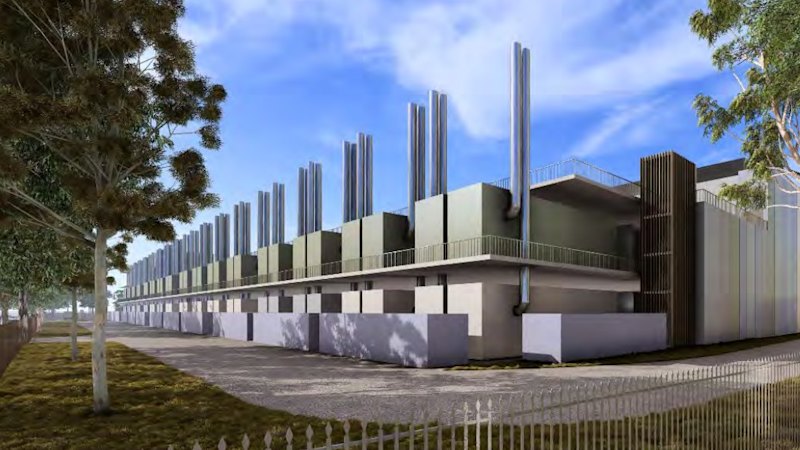


Residents in Perth’s east are claiming victory as plans for a contentious data centre neighbouring the Helena River appear to have been put on ice following significant community pushback.
Hasluck MP Tania Lawrence, whose electorate encompasses the eastern suburb of Hazelmere, confirmed plans for the $600 million centre that were set to go before a Joint Development Assessment Panel next week have now been withdrawn.
Lawrence said she was notified on May 13 by GreenSquareDC founder and director Walt Coulston that the company had decided to formally withdraw the application, a move described as a “significant win for the community”.
“Local residents came to me with serious concerns about this proposal and as their representative I formally raised those concerns with the WA ministers for Water, Energy and the Environment,” she said.
“I engaged with the proponent to further discuss my community’s concerns, and I was advised that they had decided to withdraw the application.”
Lawrence said community members have engaged “constructively and consistently” throughout the process and felt it was appropriate that their voices be taken seriously.
“Hazelmere residents deserve to know that when they speak up, their concerns are heard. This is a significant win for our community,” she said.
The proposal by Sydney-based data company GreenSquareDC would have seen a three-storey facility built next to the Helena River Waldorf School, on two Aboriginal heritage sites and approximately 40 metres from the Helena River channel.
Public outcry against the proposal planned for lots 14 and 15 on Stirling Crescent was aired at several City of Swan council meetings, with concerns around environmental impacts, noise pollution and cultural insensitivity.
The city received a total of 1890 submissions regarding the proposal, with 1829 opposing the project.
At a council meeting on May 13, prior to the announcement of the application being withdrawn, councillors voted 11-2 in favour of mayor Tanya Richardson providing a deputation against the proposal at the JDAP meeting on May 19.
They also voted to request the city’s chief executive write to the Department of Planning Lands and Heritage requesting a state direction on land use planning matters associated with data centres.
“Data centres are presently classified as ‘warehouses’ for land use purposes; however, this designation does not accurately reflect their function or operational demands,” Councillor Sarah Howlett told the meeting.
“Unlike traditional warehouses, which store physical goods, data centres are purpose-built for the electronic storage and processing of information and require substantially higher power densities.
“Continuing to categorise data centres as ‘warehouses’ overlooks the scale of resources they require, misrepresents their true function and fails to recognise the importance of strategically locating them within industrial areas that can support grid stability.”
Howlett said establishing data centres as a distinct land use classification would help to align planning frameworks for the evolving nature of the data centre industry.
Community delight
Bibbul Ngarma Aboriginal Association executive director Francesca Flynn told this masthead that the organisation was “full of relief and joy” after finding out the application had been withdrawn while planning their deputations for the upcoming DAP meeting.
“It was an incredible moment and to be with community when we found out made it even more special,” she said.
“We were not expecting the application to be withdrawn so this was a massive surprise and such a huge relief.”
Flynn said the group was “deeply concerned” about the proposal potentially undermining their long-term river restoration program at Mandoon Bilya (Helena River).
“BNAA is not opposed to data centres; however, we strongly believe they should be located in industrial areas and not on floodplains, wetlands, or Aboriginal heritage sites,” she said.
“Land use planning is intended to ensure that land is used and developed in a way that supports the needs and priorities of the community. It is an essential tool for managing growth, protecting the environment, and promoting sustainable development.
“We hope that it sends a clear message that the community expects data centres to be located in appropriately serviced industrial area, where they don’t place a burden on existing services, community amenity and environmentally and culturally sensitive areas.”
Trillion Trees communications coordinator Kate Herren said the data centre did not belong “on the banks of a culturally significant river, near residential properties or adjacent to a primary school”.
“This development went against the intent of the zoning in this rural residential pocket of Hazelmere, and would have destroyed the environment and the amenity for local residents and surrounding land users, including Trillion Trees,” she said.
It was a similar sentiment from Helena River Waldorf School Parents and Friends vice chair Anita Rowell.
“[We are] immensely relieved and grateful to hear of the withdrawal of the data centre application,” Rowell said.
“This proposal brought together an extraordinarily broad community of people who all felt this was simply the wrong location for a development of this scale and intensity, next door to our beautiful school, on the banks of Mandoon Bilya (Helena River).
“We are so very heartened that our community voice was heard.”
Rowell said she was especially relieved for the children of the school who will “continue to benefit from learning in the quiet, nature-based environment”.
WA Greens leader Brad Pettitt said the withdrawal of the “frankly, outrageous data centre proposal” was a win for the community groups who had fought the centre from the beginning.
“Data Centres are incredibly energy and water intensive, and we have multinational companies that are looking for development sites to take advantage of the promised AI boom,” he said.
“But we know that they are not concerned about the local environment and community impacts.”
Pettitt also said changes were needed in the planning system to ensure more data centres wouldn’t be classified as a warehouse or storage in the future.
GreenSquareDC and the Department of Planning, Lands, and Heritage have been contacted for comment.


