








What should you wear to work? It’s one of those fraught questions that can weigh heavily on the mind of anyone who begins a new job, or is at the start of their career and has no idea what the usual dress code is.
I don’t blame you for not knowing either, as the way we dress for work has evolved markedly over the last few decades and varies wildly depending on where, how and what you do.

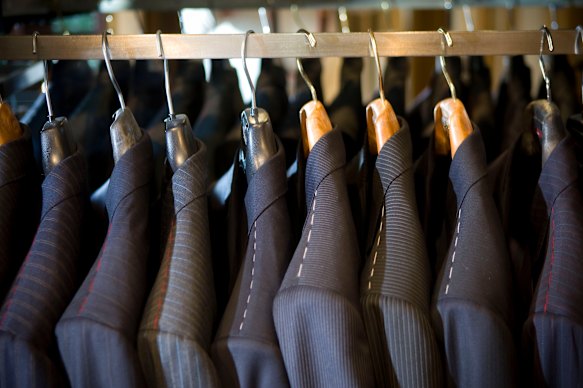
The era of stuffy office suits might, thankfully, be over.Credit: James Davies
For most of the last century, heading to the office meant dressing up in formal clothing that was reserved especially for working hours. This peaked in the 1980s with power dressing like heavy suits, padded shoulders, boxy briefcases and dangerously high heels (plus dangerously high hair, of course).
Around the turn of the millennium, the rise of the computer age meant the Silicon Valley uniform of jeans and hoodies finally gave us permission to relax the dress code slightly, but only on certain days and in certain industries.
For years, “casual Friday” dictated that office workers could “dress down” by ditching their ties and jackets only on that day.
But the biggest shift to our attire in recent times came from the pandemic years, when anything uncomfortable collected dust in our wardrobes and those who were able worked virtually in the stretchy pants and comfortable shoes.
Have we gone so far down the path of comfort and casual clothing at work that we will soon be back into more formal wear?
A few years on, and we’re now in the era of “inclusive professionalism”, where strict codes have loosened and there is, thankfully, some acknowledgement that work is about your output not your outfit.
When I was in the early stages of my career in my mid-20s, I made a promise to myself that I wanted to be successful without ever having to wear a suit to work. I’ve made it to my mid-40s with that rule still mostly intact.


