


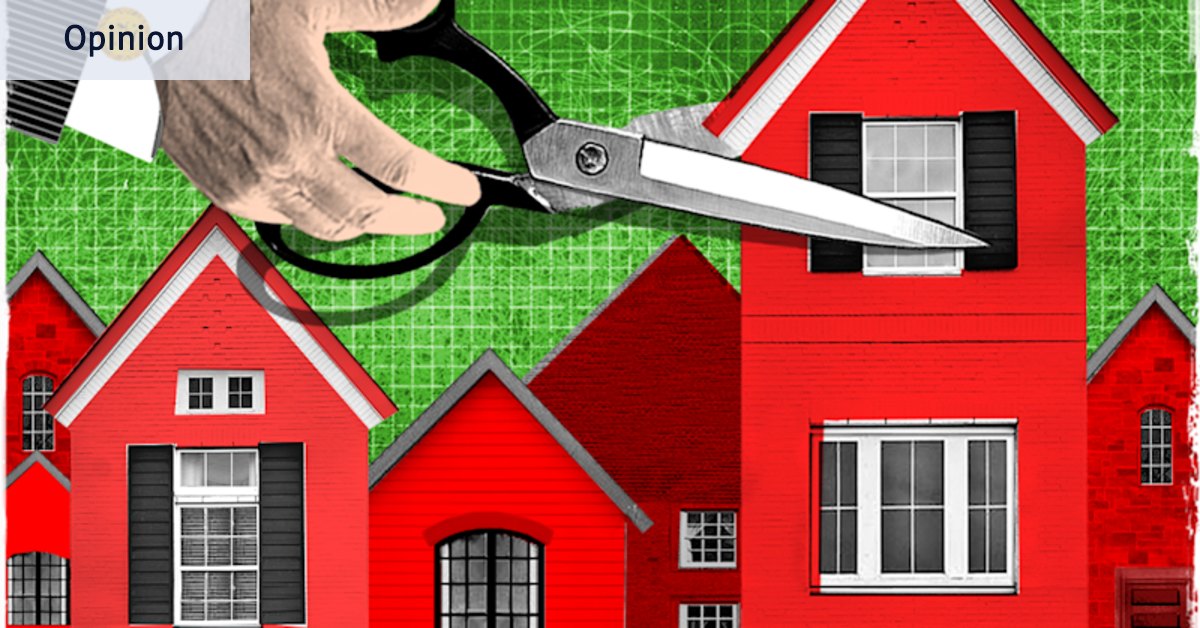
In early 2024, Liberal MP Keith Wolahan, sometimes mentioned as a future leader of his party, told the ABC’s Patricia Karvelas that as house prices rocketed beyond wages, success in life was becoming “less about hard work and more about the lottery of birth or ‘marrying well’. Our children should study the works of Jane Austen; not be forced to live them.” The taxation of property investment, it seemed, should be up for discussion.
Wolahan was ignored by his party. A year later, he lost his blue-ribbon Liberal seat – named Menzies – to Labor.
There were many factors in Peter Dutton’s sweeping election loss. One was the amount of time chewed up by the party’s nuclear folly. So it was interesting to see the chief proponent of that policy, Ted O’Brien, now shadow treasurer, pounce on reports last week that Labor is considering changing the way housing investment is taxed. The Liberals were opposed.
This more or less sums up the current state of the Liberals: reliant on the political instincts of the man behind its nuclear policy rather than the talents of rising stars who lost their seats in part due to the political instincts of the man behind its nuclear policy.
On nuclear, the Nationals played a part, too. Yesterday, the Coalition reunited. Optimists in its ranks will see this as a good thing. But the fundamental divisions between and within the two parties remain – including the forces that consistently pull them away from policies that might appeal to most Australians.
After all, it wasn’t just Wolahan who was ignored. Another “future leader”, Dave Sharma, now a senator – but who previously lost another blue-ribbon seat, Wentworth, to an independent – was saying similar things around the same time, in perhaps even more emotive language: young people “have done all that we have asked of them … yet they find, no matter how much they earn or how hard they save, homeownership is beyond their grasp”. Australian Financial Review journalist Phil Coorey has pointed out that Tim Wilson – another “future leader” and moderate – wrote on similar themes in 2020.
One can imagine Labor repeating such lines back to the Liberals if the government goes ahead with changes to housing taxes. In last Monday’s column, I wrote that Labor had begun dropping hints about large reforms, potentially around housing, in the budget. That day, Anthony Albanese told caucus the budget would see “significant reform”. The next day, Coorey reported changes to capital gains taxes were on the table. Asked about this last week, both Albanese and Jim Chalmers didn’t rule it out.
If such policies are pursued, the government will need to have its arguments sharpened. Voters certainly had no inkling, at the last election, that this was coming down the pipeline. Labor will no doubt be targeted by the opposition with the broken-trust theme.
None of that means the government shouldn’t do it.
All of this was the case with the government’s backflip on the stage 3 tax cuts, too. And so it was interesting, in his recent interview in The Monthly, to read Jim Chalmers holding out that backflip as a model. “When we come to a different view, like we did on the income tax cuts last term, making sure everyone got a tax cut, we were upfront about it – we said we’d changed our mind, we explained why,” he said. “The PM deserves a lot of credit for the way he went about that and it’s a bit of a template for the future, to open up intergenerational opportunity, to reform our economy, in a way that builds trust and doesn’t diminish it, by talking up to people, not down to them.”
Albanese made a similar comment in August last year – and added two more important parts of the recipe for successfully changing your mind.
On ABC radio, he had just said his stage 3 tax cuts shift came in response to global inflation. Labor “explained why we were doing that, we argued our case”. So the ABC’s Sally Sara said, “If economic conditions change again, could that lead to further adjustments in tax policy that hasn’t yet gone to the electorate?” Albanese replied: “Towards making the tax system more efficient and fairer – of course. And that’s what we did when we changed the tax cuts to make sure that everyone got a tax cut rather than just some.”
Together, the two men have laid out three conditions for a shift. First, you have to be upfront and treat voters as though they are intelligent. Second, changes must make tax fairer and more efficient. Third, the economic conditions must have changed.
Have conditions changed this time? Definitely. Inflation seems to be rising again; we’ve already had another rate rise. Another number that will get through to voters is that real wages – which have been rising under Labor – are now forecast to fall. This was Wolahan’s argument back in 2024: the divergence of wages and house prices. That said, Labor may not want to talk too much about falling wages.
Is a budget the best place for such announcements and debate? Budgets, one political veteran reminded me last week, bring so many other elements into play. You can be tripped up by something entirely unrelated to your main focus.
But there are two reasons the government might prefer the backdrop of a budget. One is that it allows you to make this argument about changed economic conditions forcefully. The second is that you can justifiably wrap such changes up with other changes – such as income tax cuts.
This was the fourth ingredient in the government’s successful backflip on the stage 3 tax cuts: the fact huge numbers of Australians did well out of it.
And then there was the fifth and final reason: the opposition was very, very bad. As Albanese told the ABC, “the Coalition said that they’d roll it back and they opposed it, then they said we should have an election on it before they voted for it”. The Coalition, still dominated by some of the same masterminds behind the 2025 wipeout, is even worse than it was then.
The degree of difficulty for changes like this is high – Labor should be under no illusions. But with the Coalition’s underlying problems barely addressed, and with clear divisions on this particular topic, its ability to win the argument with the government must be in doubt.
Sean Kelly is author of The Game: A Portrait of Scott Morrison, a regular columnist and a former adviser to prime ministers Julia Gillard and Kevin Rudd.
Get a weekly wrap of views that will challenge, champion and inform your own. Sign up for our Opinion newsletter.
 Sean Kelly is author of The Game: A Portrait of Scott Morrison, a regular columnist and a former adviser to Julia Gillard and Kevin Rudd.Connect via X.