








“This was a clear demonstration of American might: Trump can and will act decisively and kinetically, and I think this will worry Zhongnanhai,” Loh says, referring to the compound where China’s political leadership is based in Beijing.
Billion-dollar complications
Maduro’s removal poses some economic complications for Beijing. China is the largest buyer of Venezuelan oil, but it’s a lopsided relationship, accounting for only about 4-5 per cent of China’s total oil imports. There is also the prospect of whether Beijing can recover the roughly $US12 billion in outstanding loans it is owed.
Loading
But the evergreen question in the rolling US-China rivalry is, of course, what this means for the Taiwan equation.
As with Russia’s illegal invasion of Ukraine, the US strike on Venezuela has revived fresh debate about whether Beijing could draw on this example to justify its “reunification” agenda with its democratically self-governed island neighbour.
If the US can remove a leader of a country it does not regard as legitimate, how can it credibly deter China from its ambitions of dismantling Taipei’s leadership? Just as Trump despises Maduro, Beijing loathes Taiwan’s leader, William Lai Ching-te, and does not recognise his government’s legitimacy, nor do most nations officially recognise Taiwan as a sovereign country.

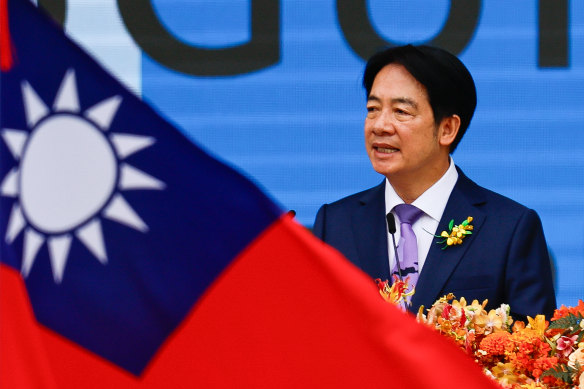
Taiwanese President Lai Ching-te is a thorn in Beijing’s side.Credit: Daniel Ceng
There are major distinctions and historical differences between the two cases – one being the credibility of Taiwan’s elections versus the strong evidence that Maduro relied on election fraud to maintain his autocratic hold on power – but nuance is hardly a bulwark against aggression.
Nevertheless, many China analysts dismiss the idea that the Venezuela incursion will have any material impact on Beijing’s long-term goal of controlling Taiwan.
“This view flips the logic of realism: it implies that if the US were perfectly law-abiding, others would be too, but China’s foreign policy follows its own calculus. Major powers will always prioritise national interest over international law,” says Loh.
“Trump’s move is not suddenly going to delay or hasten China’s plans.”
‘Beijing will request the US mute its invocations of international law.’
Ryan Hass, former China director on US National Security Council
Bonnie Glaser, an Indo-Pacific expert at US think tank the German Marshall Fund, believes Maduro’s capture is “not a blueprint for Chinese takeover of Taiwan” and Xi’s ongoing purges of China’s top military brass are likely to be a greater factor in Beijing’s calculus.
“Beijing is instead relying on a vast toolkit of ‘greyzone’ tactics to instil despair among Taiwan’s citizens so that they eventually capitulate. The Chinese believe that time is on their side to achieve reunification without sacrificing blood and treasure,” Glaser posted to X.
As Ryan Hass, a former China director on the National Security Council in the Obama administration, points out, Beijing has paid little deference to international norms thus far when it comes to the coercion of Taiwan. While it will publicly campaign as a defender of international law, Beijing would probably use the Venezuela affair to insist that the US take its foot off China’s neck in its foreign policy agenda.
“Privately, I expect Beijing will emphasise to Washington it expects to be given the same latitude for great power exemptions to international law that the US takes for itself,” he posted on X.
Loading
“In other words, Beijing will request the US mute its invocations of international law in [the] South China Sea and elsewhere.”
As Trump sets his sights on Greenland, the Venezuela strike may prove to be an early presage of the attacks coming in 2026 on the scaffolding of international law that underpins global order, having been degraded throughout 2025 in Gaza, Ukraine and elsewhere.
As the two great powers selectively decide which rules apply to them, Beijing will surely be content to see the US tied up in arenas it has no desire to enter into, while America’s partners grow increasingly uncomfortable at the actions of their ally.
Get a note directly from our foreign correspondents on what’s making headlines around the world. Sign up for our weekly What in the World newsletter.


