



It used to be that the price of technology got lower over time. Manufacturing pipelines matured, components hit an economy of scale, and demand moved to more cutting-edge designs, meaning that year-old laptop got a price drop for Christmas, or that four-year-old game console had a fresh redesign that sold for half the price.
These days, when a device’s price changes, it’s almost always up.
Popular consumer laptops have increased in spec over the past four years, but not in line with their price rises, which in some cases approach $1000. Samsung’s Galaxy S26 smartphone is $300 more than its S22 was.
It’s becoming more common to see mid-cycle price increases, meaning the exact same model goes up in price because the manufacturer can’t wait until the next product launch to adjust the cost. On Thursday Sony increased the price of its PlayStation 5 in Australia to $1000. It launched in 2020 at $750.
It’s been a while since the old tech purchasing advice of “wait for a price drop or a sale” has been truly useful, but we’re now at a point where it’s actually been inverted. If you’re likely to want an upgrade before 2028, you should buy it today if you can.
Explaining the AI tax on RAM
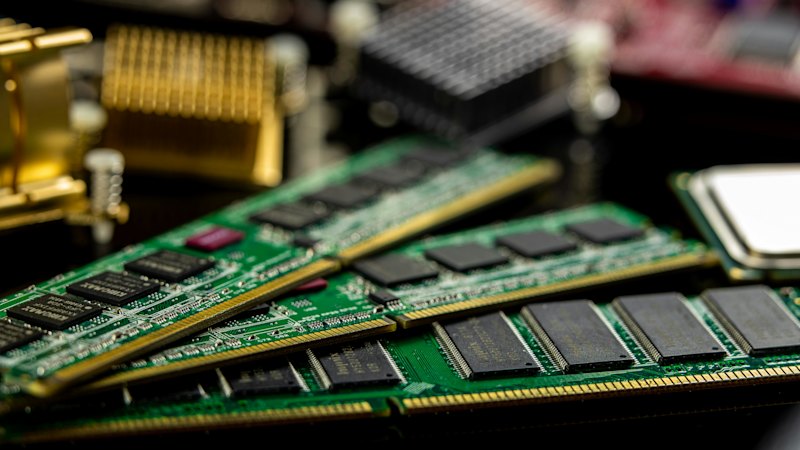
The price of everything is going up, but when it comes to computers, the biggest increase has been in RAM. Often referred to as memory, RAM is a fundamental part of every computing device, storing the data for applications that are actively in use, so the CPU can access it at extreme speed. It’s tricky to produce, with most of it manufactured by two massive suppliers in South Korea.
Appetite has grown over the years as the same kinds of chips used for PC RAM sticks have become integral to graphics processors, phones and even cars. But the insatiable appetite of new AI data centres has pushed production into uncharted territory.
Tech giants are spending billions fitting out new facilities with an extraordinary amount of high-bandwidth memory, so RAM manufacturers have shifted their production lines to serve them. These are not the same chips that go into your new smartphone or laptop, but they use the same manufacturing infrastructure.
The result is that niche high-speed consumer RAM becomes even more niche (look at the Xbox Ally X handheld PC, which uses 8000MHz RAM; it just had a mid-cycle price increase from $1600 to $1800), but even the most mainstream devices are hit because the companies selling them need to compete with the trillion-dollar giants getting all the chips they can.
Reportedly, the high-bandwidth memory used for AI hyperscalers uses about three times the wafer capacity compared with consumer DRAM. To translate, that means every gigabyte of memory made for the tech giants takes up the manufacturing space of three gigabytes that could go to your devices. And by the way, hyperscaler facilities aren’t measured in gigabytes, but petabytes. That’s one million gigabytes.
OpenAI’s Stargate project alone, a plan to open massive data centres in the US which is now at risk, was recently estimated to be taking up 40 per cent of the global RAM capacity.
What that means for your purchasing power
Prices have been increasing for years, and industry-watchers have been issuing warnings since before that but, even with time to prepare, there simply isn’t a quick way to increase RAM manufacturing capacity. New facilities being constructed might not be putting out a consistently high amount for years, and AI data centres need more all the time, so they may eat those too.
So for every single gigabyte you get, a company has had to drive a dump truck of money to Samsung or SK Hynix to get some line capacity.
And because those manufacturers are prioritising high-bandwidth, the leftover capacity is likely to shrink rather than grow. Or, as a recent analyst report from Counterpoint put it, “the market is witnessing a full-throttle upward trend across all segments”.
Therefore, many new devices are currently the cheapest they’ll be for the next few years, even if they’re more expensive than their 2024 equivalents.
In the near term:
- Sticks of RAM and graphics cards used to build DIY PCs have doubled in price and continue to climb.
- Some non-volatile memory like SD cards are also affected.
- Annually refreshed products such as laptops and smartphones will be more expensive each year, and may see increases mid-cycle.
- New game console releases are being delayed, and existing models are likely to climb in price.
Compounding the issue, especially for laptops, is that AI has also raised the minimum acceptable amount of RAM per product.
Microsoft has mandated that laptops have at least 16GB (among other requirements) in order to be branded a Copilot+ PC and access Windows AI features. That has largely killed the market for basic sub-$1000 8GB laptops, though Apple has just launched one.
Currently, buying old stock that retailers already have, or from reliable second-hand traders, can offer some relief. But these prices will also move up.
Is there an upside?
Only if you’re holding stock in RAM manufacturers, or can’t wait for more powerful chatbots.
A delirious champion of generative AI might say that the higher costs are the price we pay to enter a new era of computing. Hardware is more expensive, but the time cost of every task is lower thanks to helpful AI, and capabilities get better for free all the time. But neither of those things is really true. Investment in AI has resulted in breakthroughs in important areas like disease diagnosis and language translation, but it’s hardly a case of consumers funding this through a device tax; those are commercial developments.
Some argue that the move to AI is a solution to the problem, as well as its cause. A device with AI can make more efficient use of system resources, the argument goes, meaning a less capable machine can produce results with smarts, where you previously needed brute force. So maybe your next computer can have less RAM, and the money can go to Silicon Valley to train the next generation of models, and it will all work out. But this is far from assured.
For example, AI-powered image generation is still far too energy-intensive, and prone to errors and weirdness, to replace the likes of Photoshop. You still need RAM for that. And chatbots aren’t anywhere near reliable enough to stop you from opening 20 Chrome tabs for research. More RAM.
Nvidia caused a minor uproar recently when it unveiled the newest version of its DLSS technology (deep learning super-sampling), which is designed to let video games run faster relative to a machine’s horsepower, by rendering in lower resolution and having AI clean it up. DLSS 5 did appear to do that, but it also appeared to take creative licence with faces, inventing details like wrinkles, make-up and hair texture, leaving characters looking like AI-generated photos. Plus, the demonstration required two RTX 5090 graphics cards; currently worth about $7000 each.
We’re a long way away from AI being as important to a computer as RAM. But we don’t get to choose which we’re paying for.
Get news and reviews on technology, gadgets and gaming in our Technology newsletter every Friday. Sign up here.

