






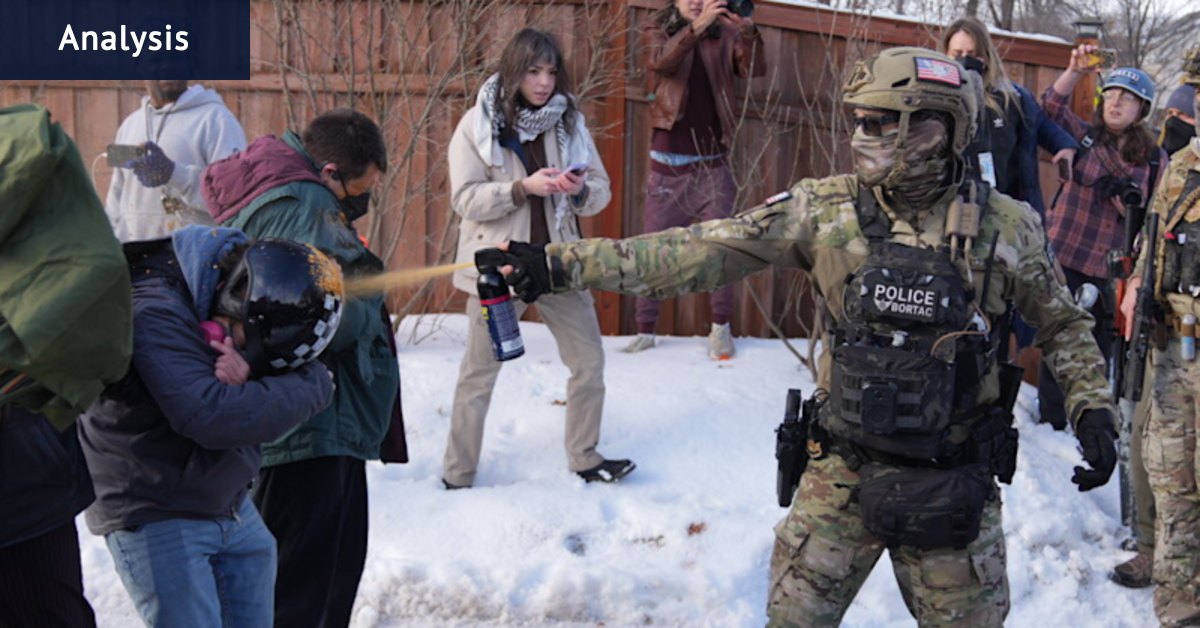
WARNING: VIDEO CONTAINS GRAPHIC CONTENT
“Presumably, these portions of the videos would be defendants’ best evidence to demonstrate that agents acted in line with the Constitution, federal laws and the agencies’ own policies on use of force,” the judge wrote. “But a review of them shows the opposite.”
In one case, video showed a line of protesters gathered peacefully on the street outside the Broadwater facility holding signs, Ellis wrote. “Almost immediately and without warning, agents lob flash-bang grenades, tear gas and pepper balls at the protesters, stating, ‘f— yea!’ ”
Weeks later in another neighbourhood, bodycam footage showed an agent pushing a protester to the ground, allowing him to stand up and then tackling him again, “kneeling on his head or neck”.
Loading
“Only after agents threw tear gas and pepper balls and pushed the protester to the ground did other protesters throw some bottles of water at the agents, which cannot support the agents’ use of force,” Ellis found.
One of the key complaints of Noem and the DHS in the past 24 hours has been about protesters routinely using vehicles as weapons to ram ICE agents as they do their jobs. But the Ellis judgment was also sceptical on that topic.
DHS had submitted footage from an October 3 incident in Chicago purporting to show agents facing danger from cars ramming them on purpose.
But the judge, having reviewed the video, said it actually suggested the agent “drove erratically and brake-checked other motorists in an attempt to force accidents that agents could then use as justifications for deploying force”.
Loading
The footage caused Ellis to question claims from Supervisory Border Patrol Agent Kristopher Hewson that ICE agents were being rammed “every day” of Operation Midway Blitz.
In another incident, agents wrote in their field reports that protesters had thrown a bicycle at them. But Ellis found the footage from the event made it clear that agents “actually took a protester’s bike and threw it to the side after they had deployed tear gas”.
The alleged lies came from everywhere. Russell Hott, the then Chicago field director for ICE, told the court that someone had “ripped a beard off an agent’s face”. But when later questioned, Hott said he had no proof that it had actually happened.
Perhaps the most scathing assessment in the legal opinion was reserved for Border Patrol chief Gregory Bovino, who commanded the Chicago operation and appeared on the streets of Minneapolis on Thursday morning, the day after the killing of Good.
Ellis specifically found Bovino’s testimony was “not credible”. He “appeared evasive over the three days of his deposition”, she wrote, “either providing ‘cute’ responses to plaintiffs’ counsel’s questions, or outright lying”.
“Most tellingly, Bovino admitted in his deposition that he lied multiple times about the events that occurred in Little Village that prompted him to throw tear gas at protesters,” Ellis said, referring to a neighbourhood in Chicago.

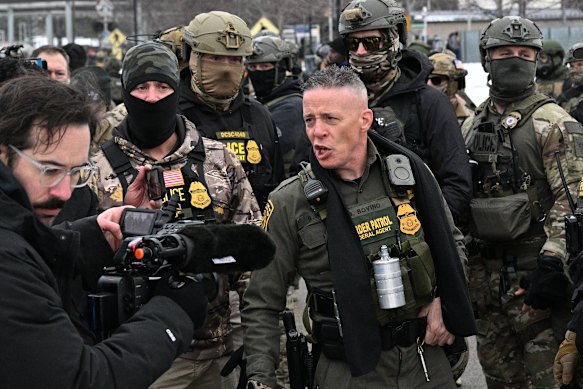
US Border Patrol chief Gregory Bovino in Minneapolis on Thursday, after the killing of Renee Good.Credit: AP
After obtaining an injunction, the plaintiffs moved to drop the case. However, on Thursday, Ellis declined to immediately dismiss the lawsuit and scheduled another hearing for January 22, citing in part concerns about the shooting in Minneapolis.
There is no doubt that ICE agents encounter hostile protesters when dispatched to large US cities, and sometimes they are at risk of violence. But law enforcement overwhelmingly has the upper hand. Sympathy for their plight must surely be limited.
This administration’s record on such matters is abysmal – and not just when it comes to ICE.
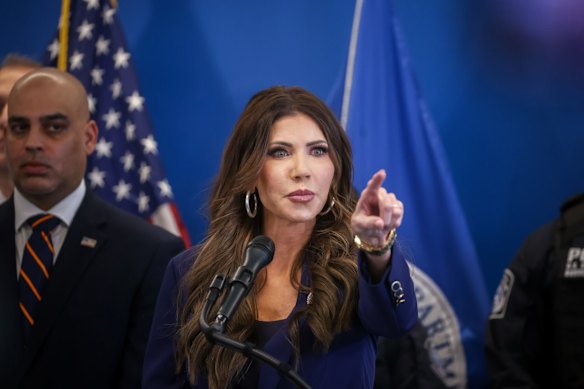
Kristi Noem, secretary of the US Department of Homeland Security, at a news conference in New York on Thursday.Credit: Bloomberg
Noem’s instant conclusion that Good brought it on herself was reminiscent of US President Donald Trump blaming diversity hires for the deadly January plane crash in Washington – just hours after it occurred and without a shred of evidence.
The government’s insistence that it already knows what happened in Minneapolis also prejudices the FBI investigation. And now there are signs the investigation will be tainted.
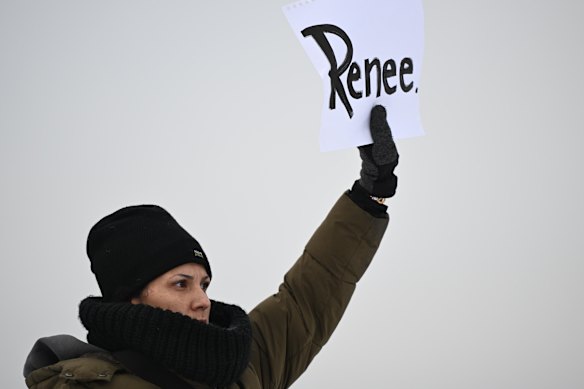
A protester in Minneapolis on Thursday.Credit: AP
Minnesota’s Bureau of Criminal Apprehension, a state body, initially said it would conduct a joint probe into Good’s death with the FBI, following discussions with the US Attorney’s Office.
Loading
But on Thursday morning, US time, it said the US Attorney’s Office had reversed course, and the FBI – a federal agency under the direction of Trump’s political appointees – would conduct the investigation alone.
In a statement, Minnesota BCA Superintendent Drew Evans said his agency would no longer have access to the case materials, scene evidence and interviews necessary to complete a thorough, independent investigation.
Excluding state police from the investigation reeks of a cover-up – especially when it is clear that under this administration, federal authorities cannot be trusted to tell the truth.
At a press conference on Friday, Minnesota Governor Tim Walz deployed a quote from George Orwell’s famous dystopian novel 1984.
“The Party told you to reject the evidence of your eyes and ears,” Walz said. “It certainly feels like that in this moment.”
Get a note directly from our foreign correspondents on what’s making headlines around the world. Sign up for our weekly What in the World newsletter.


