










While the Nebari deal doesn’t replace that funding, it does give the company extra flexibility, with the option to draw on the local facility if and when it needs a boost.
West Wits Mining chief executive officer Rudi Deysel said: “Securing this loan for Qala Shallows with Nebari provides the critical funding required to deliver production and the flexibility to scale as our project advances. This is a pivotal step towards a long-life, steady-state gold operation.”
The Witwatersrand Basin sits on sacred mining turf, with its surrounding goldfields coughing up a jaw-dropping 62,000 tonnes of gold since the early 1900s.
The basin was once the domain of giants such as Rand Mines and Durban Roodepoort Deep, whose names are etched into the history of the world’s richest goldfield. To this day, the area reigns supreme, having produced more than 40 per cent of all the gold ever mined on earth.
After lying dormant for two decades – as the gold price soared to new heights – West Wits seized its chance in 2018 when South Africa’s Department of Mineral Resources and Energy handed the company the keys to revive the legendary patch of ground.
Since then, the company has had to steer some choppy environmental waters to secure fresh guidelines and approvals, but with the green lights now in place, it’s charging ahead at breakneck speed towards production.
Between 2021 and 2023, a series of scoping studies and feasibility work on the company’s Witwatersrand Basin project mapped out a hefty global resource of 5.025 million ounces at 4.66 grams per tonne (g/t) gold. From that work, Qala Shallows quickly emerged as the logical launchpad, offering 10.7 million tonnes at 2.98g/t for just over a million ounces.
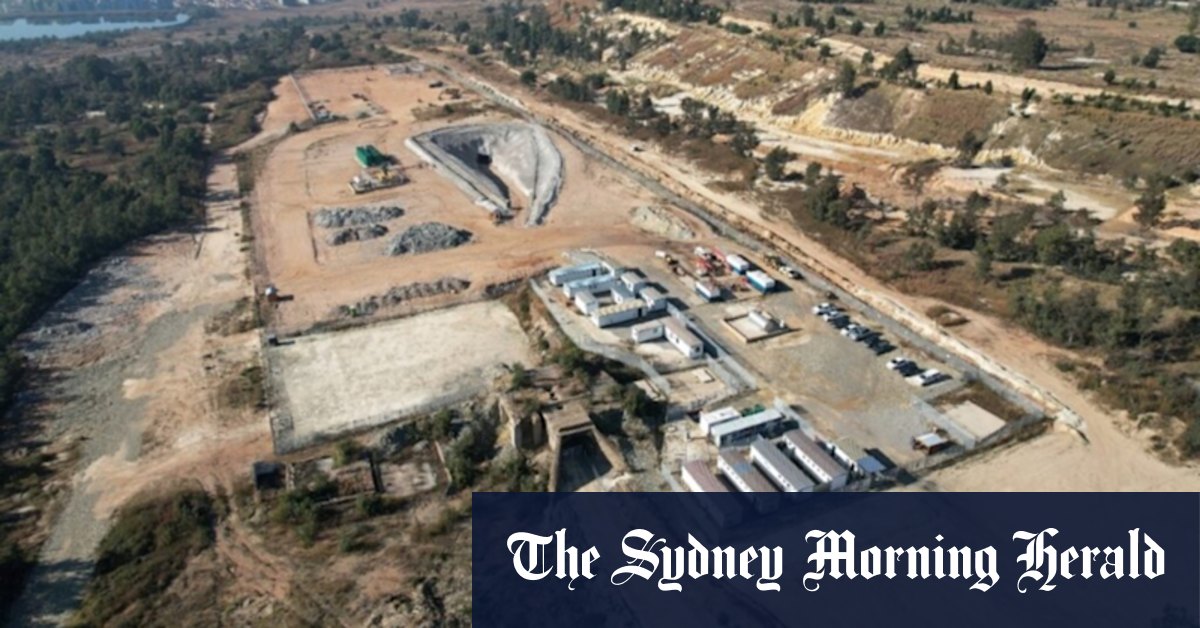
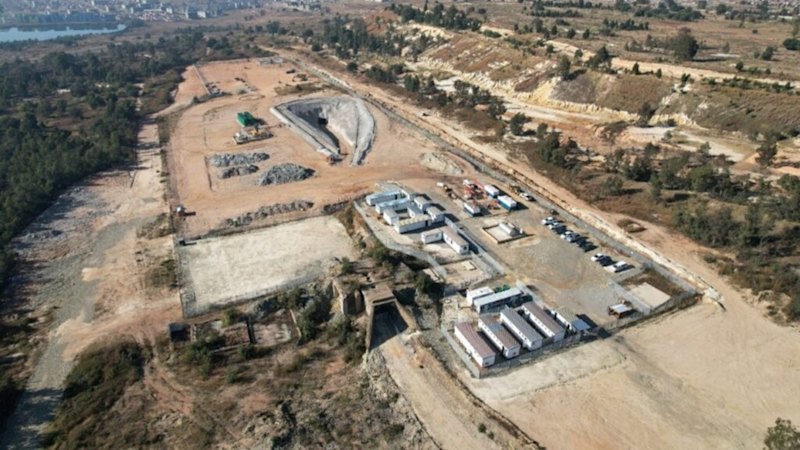
Adding to the attraction, Qala Shallows also came with its own adit, decline and shaft already in place.
West Wits wasted no time breathing life back into the old workings, rehabilitating access to kick off sampling and surveying. One 150-kilogram bulk sample pulled from historic drives even confirmed the grades, cementing Qala Shallows as the project’s first cab off the rank.
Three months ago, West Wits unveiled its long-anticipated definitive study and the numbers didn’t disappoint. The report pegged the project’s net present value at a whopping US$500 million (A$764 million) using a 7.5 per cent discount rate and a staggering post-tax internal rate of return of 81 per cent – the kind of economics most juniors can only dream about.
The mine is tipped to churn out 70,000 ounces of gold a year, racking up a massive US$983 million (A$1.5 billion) in post-tax free cash flow over a 12-year life, based on a gold price of US$2850 (A$4360) an ounce.
Even more compelling, all-in sustaining costs are forecast to average just US$1289 (A$1970) an ounce, putting Qala Shallows firmly in the lowest cost quartile of producers worldwide.
A toll-treatment deal inked with Sibanye-Stillwater in 2022 guarantees a ready-made processing route. Ore deliveries are slated to kick off in early 2026 at 15,000–20,000 tonnes a month before ramping up to a steady 65,000t monthly run-rate within three years.
The project also comes with a modest US$60 million (A$93 million) capex price tag and peak funding of just US$44 million (A$67 million), which should be easily covered by existing loan approvals, giving West Wits ample financial headroom.
For punters, the new funding represents a major milestone. The company is now set up for a pivotal six months as it advances into underground production at Qala Shallows and edges toward that crucial first gold pour.
West Wits is no longer just a story about ounces in the ground – it’s about turning those ounces into cash flow in one of the world’s richest gold belts.
Is your ASX-listed company doing something interesting? Contact: mattbirney@bullsnbears.com.au


