









A driverless Waymo car has edged into oncoming traffic while attempting a left turn at a congested intersection.
The video, widely circulated online, shows a white Jaguar I-PACE, part of Waymo’s autonomous fleet, trying to turn left on a green light but then gets caught on an orange light and seems to panic.
The vehicle initially tries to turn on a green light, but then becomes stuck in the intersection as the light turns orange, appearing to react erratically.
As the car begins to turn, it briefly enters the path of oncoming vehicles.
MORE: Australia makes huge backflip on EVs
In the distance, a police officer is seen trying to redirect the driverless vehicle.
There was no crash or reported injuries, and the vehicle appears to proceed once the path is clear.
But several commenters called out the incident, stating it had “failed” or made a dangerous error.
The incident is what engineers refer to as an “edge case”, a term used to describe unusual or unpredictable situations that fall outside normal driving conditions.
These scenarios can include emergencies, lane blockages, roadworks or traffic behaving in ways that are unusual.
In another incident recently captured on video, a Waymo car drives itself right through a police stand off, in which around four squad cars have pulled over a man who is lying on the ground arms outstretched, surrendering to police who presumably have their weapons drawn
The Waymo cars cruises right through the scene oblivious to the chaos.
MORE: Mystery spy drone seen before refinery fire
Unlike humans, who can assess the situation, wave people through, and communicate with other drivers, the Waymo relied on data and pre-programming logic.
The vehicle uses a combination of sensors, including lidar, cameras and radar, to build a real-world view of its surroundings.
It then builds a three-dimensional map of nearby objects or hazards.
The data is processed continuously to maintain what engineers call a “safety buffer”, essentially it’s building a safe space around the vehicle in order to avoid collisions.
That is why autonomous vehicles might look hesitant or awkward, as the vehicle is programmed ot be cautious while it assess to situation.
Waymo is owned by Alphabet Inc. The company began as Google’s self-driving project in 2009 and has since attracted billions of dollars in investment as it works to roll out its robotaxi service across the state.

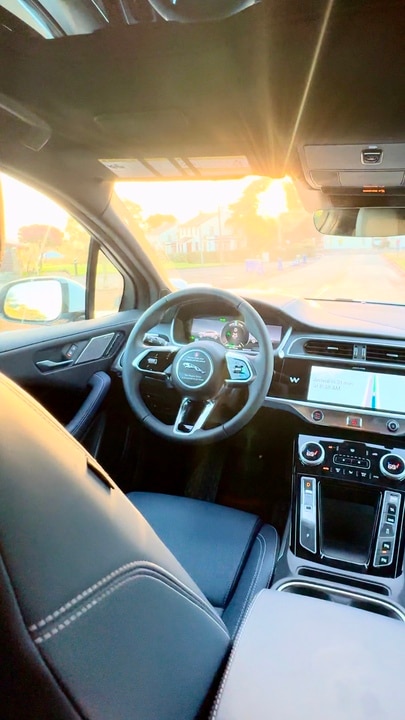
Its vehicles are already operating in parts of the United States, including San Francisco, Phoenix and Los Angeles.
According to reports, Waymo is eyeing expansion to Australia.
The company, which has teamed up with Google as it raises its AI ambitions, has been looking for offices space in Sydney and has held discussions about driverless car testing.
The service is likely to take on a different look in Australia to the US, where it has been based on modified versions of the Jaguar I-Pace in recent years. But production of the I-Pace ended in 2024, and Waymo has signed a deal with Geely and its sub-brand Zeekr to source next-gen vehicles from China.


