









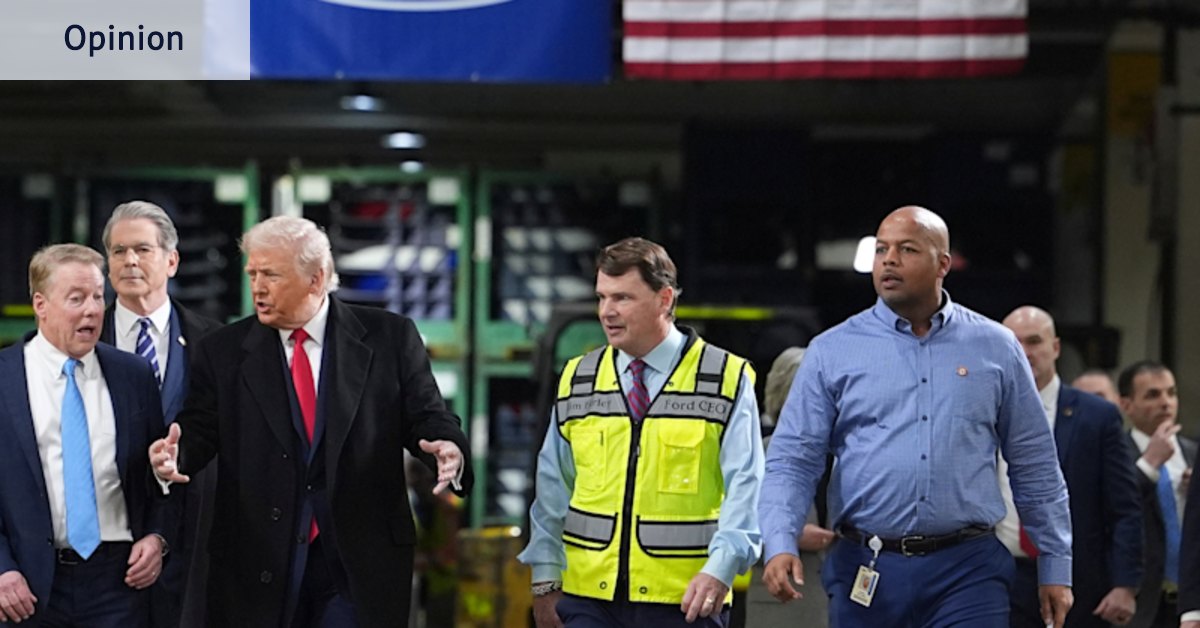
So, even business leaders who aren’t true believers could ask why risk alienating the famously vindictive, most powerful person in the world – and his army of supporters – when doing so would accomplish little, if anything? After all, every other executive is making the same calculation. In other words, silence is rational. As long as the system is not meaningfully threatened, keeping your head down is the easiest and safest choice.
But that’s not where we are any more. Destroy NATO – an alliance every company that sells outside the US depends on – from within and America’s global position would collapse over days, not decades. Destroy the Fed’s independence and inflation would return and foreign capital flee. These would not be distant problems; they would be immediate catastrophes of world-changing scale.
This isn’t about partisanship. You can be a loyal Republican and still believe that dismantling stable capital markets or rupturing America’s relationship with Europe is so dangerous that it demands public opposition.
There is a difference between holding power and exercising leadership that leaves a legacy. Leaders are judged by what they do when a system is under threat.
Winston Churchill’s career was riddled with failure, from Gallipoli to a disastrous India policy to a stint as chancellor of the Exchequer, so damaging it inspired John Maynard Keynes to write The Economic Consequences of Mr Churchill. Yet none of that defines him. What matters is his lonely stand against Adolf Hitler in the 1930s and, above all, his resolve in May 1940.
When the survival of the system was at stake, Churchill acted and saved the world. Those are the moments by which leaders are remembered.


There is a level of global mistrust in the US that will outlive the Trump presidency.Credit: Getty Images
Business leaders who have told themselves they are uninterested in or above politics now need to understand that whatever their preferences, politics is coming for them. Leadership would mean clear public statements drawing red lines around NATO and the Fed, backed by the withdrawal of campaign donations from anyone who supports an assault on either institution, and the willingness to support politicians who oppose the attacks.
Although most CEOs likely fear the costs of taking a stand, there are those who have such extraordinary stature that they could safely challenge these actions, but have not tied themselves to either the administration or the Democratic opposition so closely that they have neither lost their credibility with other business leaders nor much of the public.
For example, Ken Griffin will never be dislodged from Citadel and Satya Nadella will lead Microsoft for as long as he chooses. There are others. The institutions that made them among the wealthiest, most powerful and most respected leaders in recent history are now under threat.
If they lead, others who are less secure can and will follow. Business associations such as the US Chamber of Commerce and the CEO Roundtable could help co-ordinate action, ensuring that the full weight of the business community is felt. So although Griffin has shown his independence by making statements opposing Trump’s moves on the Fed and tariffs, he has refrained from publicly using his stature to rally other CEOs.
Loading
The US has faced existential crises before. Surviving many of them required the patriotism and public service of business leaders. During both World Wars, business leaders happily devoted both their personal time and their companies’ resources to the war effort (while paying marginal tax rates well over 90 per cent). Every generation of business leaders likes to imagine that, in such a moment, they would have done the same.
This is such a moment. It is one created not by historical accident or external threat, but by the whims of a single person. Business leaders – for their own good, for the good of the world, and for the sake of their legacies – have been silent long enough. If they wait any longer, it may well be too late.
This column reflects the personal views of the author and does not necessarily reflect the opinion of the editorial board or Bloomberg LP and its owners.
Gautam Mukunda writes about corporate management and innovation. He teaches leadership at the Yale School of Management and is the author of “Indispensable: When Leaders Really Matter.”
Bloomberg L.P.
Get a note directly from our foreign correspondents on what’s making headlines around the world. Sign up for our weekly What in the World newsletter.


