


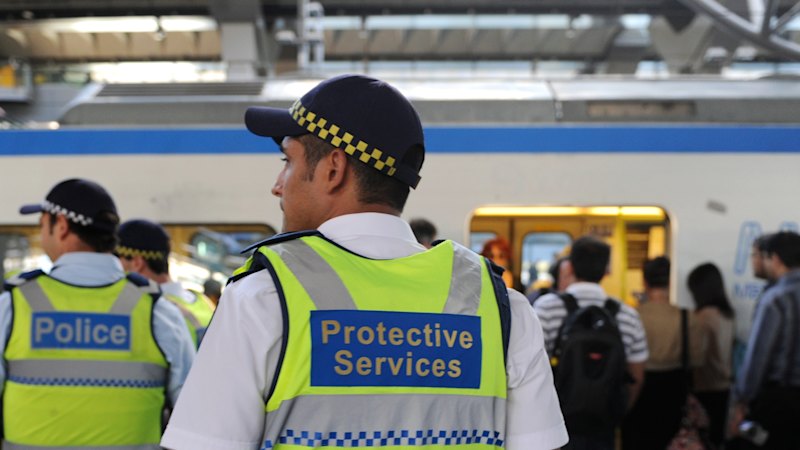

Violent crimes across Victoria’s railway stations soared in 2025, marking it as the most dangerous year for commuters since the state’s COVID-era lockdowns ended.
Police data compiled by the Crime Statistics Agency for The Age reveals that since 2022, violent offences occurring across the state’s rail network have surged by 33 per cent despite permanent patrols manning all 216 metropolitan stations and four V/Line stations daily between 6pm and the last train.
The data comes amid concerns about the impending removal of the nightly protective service officer presence from 120 metro railway stations and does not include the death of 22-year-old Aidan Becker, who was killed at Mernda station earlier this month after intervening in an armed robbery.
Police allege four teens approached a 14-year-old schoolboy at the station and tried to rob him, before seriously assaulting him and pushing him to the ground.
Becker intervened, walking with the 14-year-old away from the railway station, but police say the group followed the pair and beat and fatally stabbed Becker. The off-duty security guard died at the scene, despite attempts by ambulance paramedics to revive him.
The stabbing occurred just 10 minutes before PSOs were scheduled to begin their 6pm patrol at the station.
Victoria Police and the state government continue to back their decision to redeploy protective service officers from railway station platforms to trains, streets and shopping strips.
The government has so far refused to disclose which 120 stations will be stripped of the permanent patrols, a decision slammed by opposition police spokesperson Brad Battin.
“With serious offending on train stations increasing, Labor must immediately release its hit list of [the stations] that will be stripped of PSOs,” he said, adding that the officers played a “vital role” in crime prevention.
PSOs have had a nightly presence at railway stations since 2010, when the Baillieu government was elected on a promise to put two at every metro station each night between 6pm and the final train service.
Under the overhaul, announced in November, PSOs are set to have an expanded presence at 32 “high-risk” railway stations, with officers patrolling the platforms from 9am until the last service, instead of from 6pm.
They will also continue to have a permanent nightly presence at 72 lower-crime stations on the network, starting from 6pm. In the remaining “low-crime rate” 120 stations, the officers will operate in mobile clusters, with each team moving between six stations.
“These changes reflect the reality that some stations experience more crime than others,” a Victoria Police spokesperson said.
The spokesperson said the categorisation of stations would also factor in considerations including patronage, crime data and police callouts.
The police data reveals that total number of serious offences – including assaults, sexual crimes, threats of violence and murder known as crimes against persons – across the rail network was 1174 in 2022. In 2025, this figure rose to 1561, marking a 33 per cent jump over the three-year period.
The figures do not account for non-violent crimes recorded across the network, such as theft or disorderly conduct.
The city’s major transport hubs are the epicentre of the violence: Southern Cross recorded 197 offences in 2025 – the highest of any station in the state – up from 174 in 2024.
Southern Cross, the only privately owned station in Victoria, processes almost 20 million Metro and V/Line passengers a year, alongside Skybus and coach services. Civic Nexus, its owner, did not respond to questions about the violent crime rate, but a spokesperson said: “In addition to our own 24/7 security staff, we work closely with Victoria Police and other stakeholders to address any safety and security issues.”
Flinders Street followed behind with 151 recorded offences, up from 133. Together, the two CBD stations accounted for more than 20 per cent of all station-based violent crimes statewide last year.
Dandenong, Sunshine and Footscray stations followed the two CBD stations, recording 62, 43 and 40 violent offences respectively.
Richmond station recorded double the number of offences in a year, from 12 in 2024 to 24 in 2025. In the north, South Morang also recorded a sharp rise, jumping from 15 offences in 2024 to 26 last year.
Mernda station, where Becker was killed, recorded eight violent offences in 2025, ranking 47th across the state’s most dangerous stations. There were 10 violent offences there in 2023, and nine in 2024.
Frankston station recorded the biggest drop in the state, falling from 51 offences in 2024 to 36 last year. Dandenong, while still the third most violent station on the network with 62 offences in 2025, had 12 fewer than the previous year.
Regional stations, although typically recording lower figures than those in metropolitan areas, also recorded an uptick in 2025. The V/Line stop at Sale, which recorded zero serious crimes in 2024, logged 11 by the end of last year.
There were about 162 million passengers across both metro and V/Line services in the 2022-23 financial year, compared to 198 million in 2024-25, a 22 per cent increase.
Despite the record number of the serious offences across the state, transport tsar Jeroen Weimar told an inquiry in late November that internal data showed commuters were travelling safely across the state’s public transport network.
“There is always a need in any public transport system to continue to work on ensuring … the safety of the network, which I believe is very strong,” he said.
A Victorian government spokesperson said the new deployment model was a reflection of the change in crime patterns since the introduction of PSOs in 2012.
“Police and PSOs won’t be stuck on platforms like they are now – they’ll be on trains, at interchanges and responding to crime patterns where the community need them most,” they said.
However, some public transport researchers have expressed concern that reducing the static presence of PSOs at smaller stations could jeopardise commuter safety.
Police Association of Victoria secretary Wayne Gatt has also questioned the change.
“In over 30 years of experience, there’s one thing about crime that I have learned: If you put two PSOs or two police on a street corner, it is very unlikely that someone will commit a crime in front of them,” Gatt said in November.
With Patrick Hatch
Start the day with a summary of the day’s most important and interesting stories, analysis and insights. Sign up for our Morning Edition newsletter.
 Carla Jaeger is a journalist for The Age. Got a tip? Email carla.jaeger@theage.com.au or message carlajaeger.62 on Signal.Connect via X or email.