









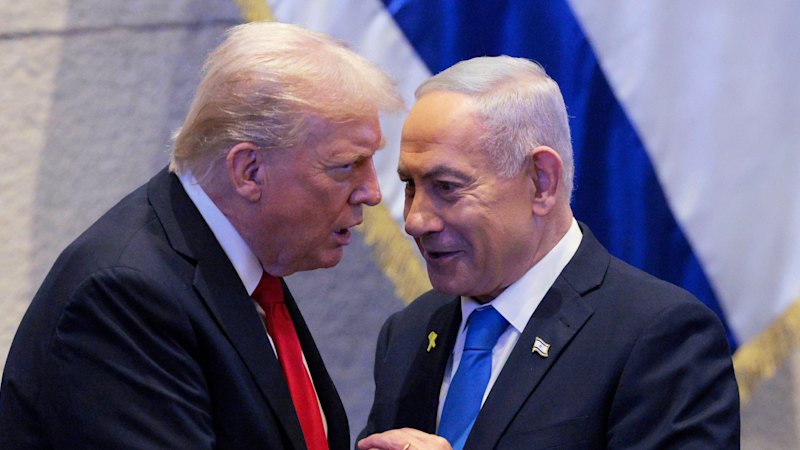
The US ambassador to the United Nations, Michael Waltz, thanked the council for supporting a “historic and constructive resolution”, describing Trump’s plan as a “bold pragmatic blueprint” to chart a new course in the Middle East.
During nearly two weeks of negotiations, Arab nations and Palestinians pressed the US to strengthen the original language about Palestinian self-determination.

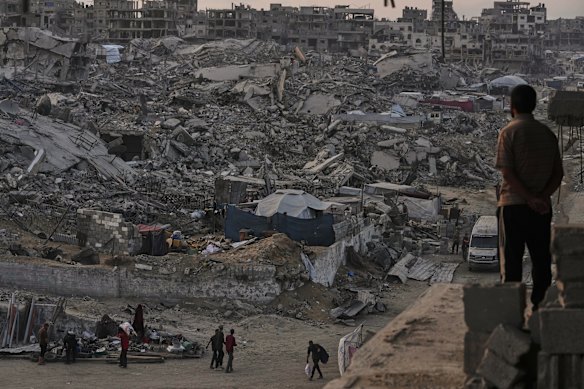
Gaza City on November 11, 2025.Credit: AP
The US ultimately revised the resolution to say that after the Palestinian Authority – which now governs parts of the West Bank – makes reforms, and after redevelopment of the devastated Gaza Strip advances, “the conditions may finally be in place for a credible pathway to Palestinian self-determination and statehood”.
The final resolution added: “The United States will establish a dialogue between Israel and the Palestinians to agree on a political horizon for peaceful and prosperous coexistence.”
A statement issued several days ago by the US mission to the UN said the resolution had support from Qatar, Egypt, the United Arab Emirates, Saudi Arabia, Indonesia, Pakistan (which is currently a Security Council member), Jordan, and Turkey.
On the weekend, facing resistance to the US-led resolution from hard-right elements of his coalition, Israeli Prime Minister Benjamin Netanyahu reiterated his opposition to Palestinian statehood in any form.
Loading
“Our opposition to a Palestinian state in any territory has not changed,” he said. “Gaza will be demilitarised and Hamas will be disarmed from its weapons, either the easy way or the hard way. I do not need reinforcements and tweets and lectures from anyone.”
Waltz said the stabilisation force, which will include troops from Muslim-majority countries such as Indonesia and Azerbaijan, would secure Gaza’s streets, oversee demilitarisation, protect civilians and escort aid through safe corridors.
“This resolution is no mere paper promise; it’s a lifeline … It dismantles Hamas’s grip, it ensures Gaza rises free from terror’s shadow, prosperous and secure,” Waltz said.
“Every day without this [peacekeeping] force, aid trucks lie idle, children starve, and the extremists regroup to try to maintain control.”
with AP, Brittany Busch
Get a note directly from our foreign correspondents on what’s making headlines around the world. Sign up for the weekly What in the World newsletter here.


