






“MI5 retrieved and provided to the Kenova investigation a very large volume of historical records,” he said.
“Regrettably, after this extensive disclosure process was complete, we discovered additional relevant information. MI5 informed Kenova and shared the material without delay.”

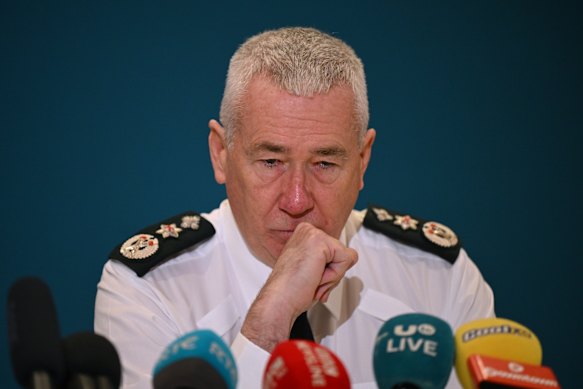
Chief Constable Jon Boutcher speaks to the media in Belfast, Northern Ireland, after the release of the Kenova report on Tuesday.Credit: Getty Images
Jon Boutcher, the chief constable of Northern Ireland’s police force, said the late disclosure of the files was a “serious organisational failure” on the part of MI5 that undermined the trust of victims and their families.
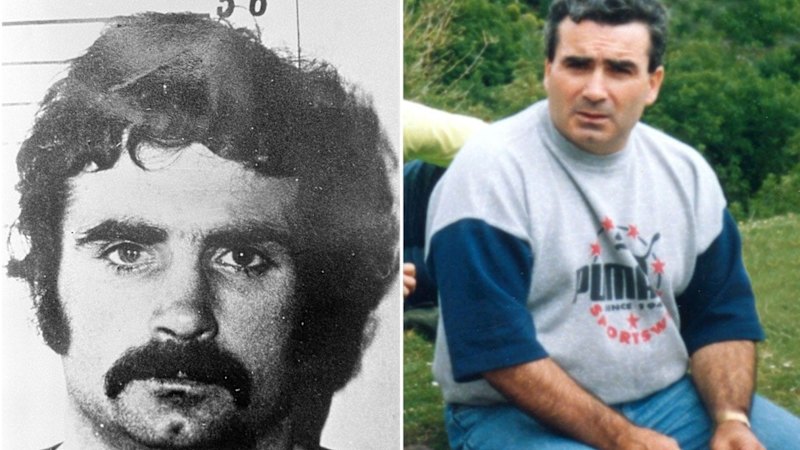
“The organisation’s role in running Stakeknife was far from peripheral, as had been claimed,” he said.
Boutcher said while the spy was an important source of intelligence, he was also involved in “the most serious and inexcusable criminality while operating as an agent, including murders”.
He added that the government’s refusal to officially name the agent was “untenable and bordering on farce”.
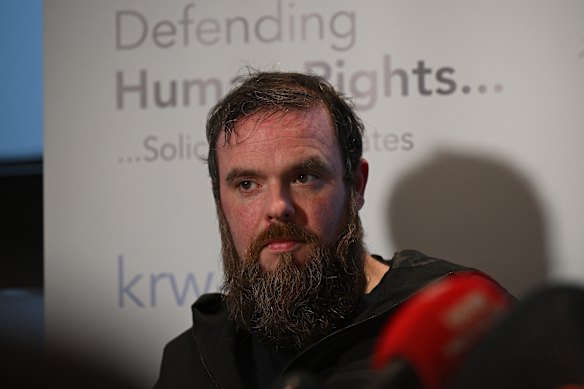
Paul Wilson, whose father Thomas Emmanuel Wilson was killed by the IRA in 1987.Credit: Getty Images
The families of some of those killed by the ISU said Kenova missed a “key detail” in not naming Stakeknife.
“You can’t investigate the agent known as Stakeknife, spend all the money, and then not find out who he is – that seems like a gaping own goal,” said Paul Wilson, whose father Thomas Emmanuel Wilson was killed in 1987.
Moira Todd, whose brother Eugene Simons disappeared in 1981, said her family had searched for years trying to find him, but authorities knew all along what had happened to him. His body was found years later – by chance – in a shallow grave in County Louth.
“It’s 45 years ago, almost to the day, since my brother was taken and tortured by Stakeknife. He was murdered after. The authorities had all the details,” she said.
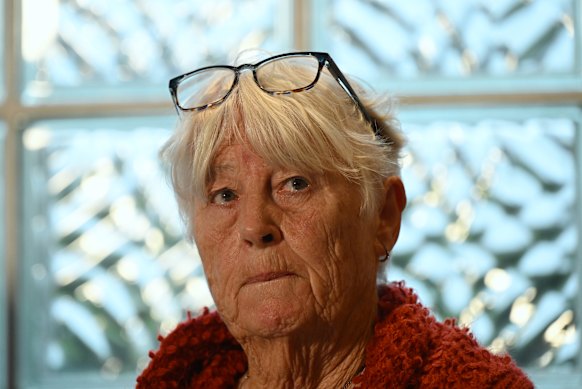
Moira Todd’s brother Eugene Simons disappeared in 1981. His body was found in a shallow grave years later.Credit: Getty Images
“I just want someone to take me into a room and tell me the truth. If they want a non-disclosure agreement, I’ll sign it. I just want to know the truth.”
“Forty-five years on, I’m sitting here, really none the wiser, and hearing about the truth being suppressed, and the government avoiding accountability, and it’s just totally frustrating.”
The inquiry’s author, Sir Iain Livingstone, called on authorities to make an exception and name Stakeknife, arguing it was in the public interest.
Operation Kenova found that the cultivation and recruitment of Stakeknife started in the 1970s, and he continued to operate as an agent into the 1990s. It discovered more than 3500 intelligence reports from the spy, but found that authorities often appeared to prioritise the protection of the agent at the expense of others who were harmed or killed.
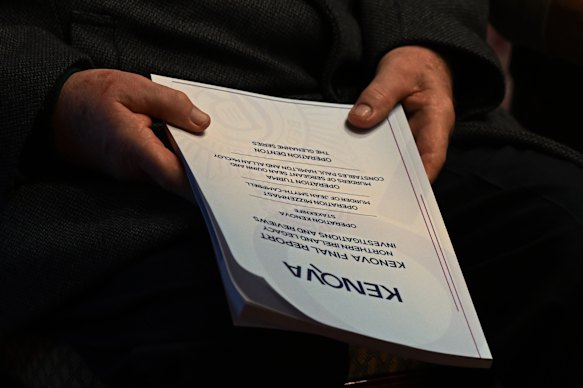
A relative of a victim holds a copy of the Kenova report.Credit: Getty Images
The Telegraph reported that the Kenova report estimated that the number of lives saved by his intelligence-gathering was between the “high single figures and low double figures”. Livingstone, concluded it was likely that Stakeknife’s actions “resulted in more lives being lost than were saved”.
However, some British military figures questioned that.
Colonel Tim Collins, a former British Army officer who served with the SAS and as commander of the Royal Irish Regiment during the invasion of Iraq in 2003, said agents such as Stakeknife helped prevent wider bloodshed.
“The report lays bare a catalogue of failures – operational, ethical and institutional – that cannot be ignored,” he said, writing for the Telegraph.
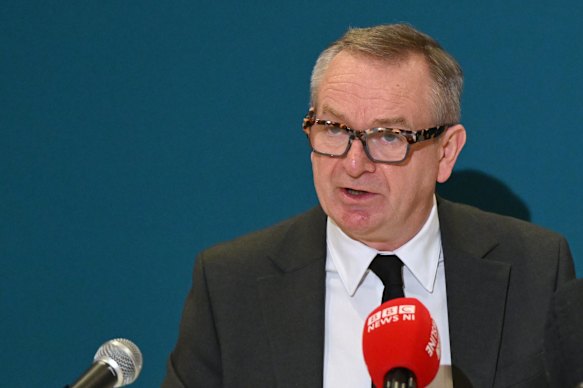
Kenova head Sir Iain Livingstone.Credit: Getty Images
“The question is not whether agent-handling was perfect. It wasn’t. The question is whether it was necessary. And it was – because the alternative was far worse.”
Colonel Philip Ingram, a former officer in army intelligence – who claimed to have known some of Stakeknife’s handlers – insisted the agent would have saved more people than investigators have claimed.
“What’s impossible to put out are those he will have saved indirectly by other operations being disrupted or the right comments [that] pushed other potential operations in another direction. Stakeknife and other agents will have saved hundreds if not thousands of lives,” he told the Telegraph.
The 1998 Good Friday Agreement largely ended the conflict involving Irish republican and British loyalist militants and the UK security forces that left 3600 people dead, some 50,000 wounded, and thousands bereaved.
AP
Get a note directly from our foreign correspondents on what’s making headlines around the world. Sign up for our weekly What in the World newsletter.


