










Payment for service members is a key concern among lawmakers of both parties – and a point of political leverage. The Trump administration shifted $US8 billion from military research and development funds for last week’s payroll, ensuring that military compensation did not lapse.
Loading
But it is unclear whether the Trump administration would be willing – or able – to shift money again as tensions rise over the protracted shutdown.
The $US130 million would cover just a fraction of the billions needed for military pay cheques. Trump said the donation was to cover any “shortfall” and it is unclear how regulations would cover such a donation.
“That’s crazy,” said Max Stier, president and chief executive of the Partnership for Public Service, a non-partisan organisation focused on the federal government.
“It’s treating the payment of our uniformed services as if someone’s picking up your bar tab.”
Loading
Stier questioned the legality of the donation and called for more transparency.
Pentagon policy says authorities “must consult with their appropriate Ethics Official before accepting such a gift valued in excess of $10,000 to determine whether the donor is involved in any claims, procurement actions, litigation, or other particular matters involving the department that must be considered prior to gift acceptance”.
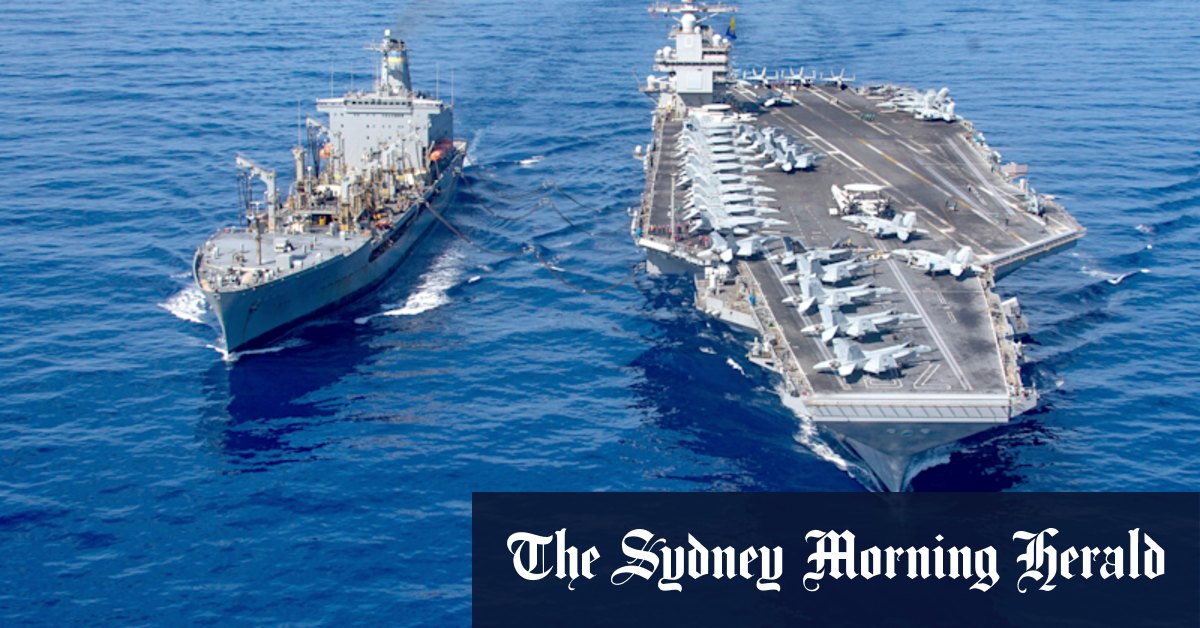
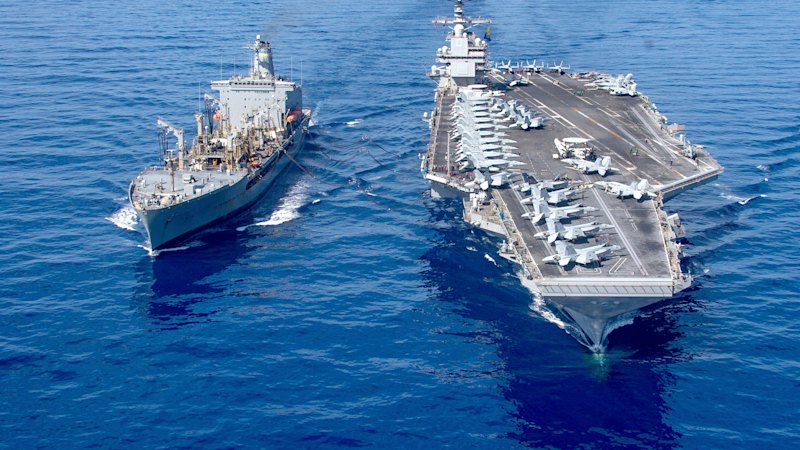
Meanwhile, US Defence Secretary Pete Hegseth has ordered the USS Gerald R. Ford aircraft carrier and its strike group to deploy from the Mediterranean Sea to the US Southern Command region, near the South American coast.
It would “bolster US capacity to detect, monitor and disrupt illicit actors and activities that compromise the safety and prosperity of the United States”, Parnell said on social media.
The Ford – with about 5000 sailors of crew and more than 75 attack, surveillance and support aircraft, including F/A-18 fighters – was recently in port in Croatia on the Adriatic Sea.
It is not clear how long it would take to arrive off South America or whether all five of the destroyers in its strike group would make the journey.
Deploying an aircraft carrier will add major resources to a region that has already had an unusually large US military build-up in the Caribbean Sea and Venezuelan waters. There are already more than 6000 US sailors and marines on eight warships in the region.
The latest deployment and the quickening pace of the US strikes, including one on Friday, raised new speculation about how far the Trump administration may go in operations that it says are targeted at drug trafficking, including whether it could try to topple Venezuelan President Nicolas Maduro.
Loading
Hours before Parnell announced the news, Hegseth said the military had conducted the 10th strike on a suspected drug-running boat, killing six and bringing the toll from the attacks that began in early September to at least 43.
Hegseth said on social media that the strike was on a vessel operated by the Tren de Aragua gang. It was the second time the administration had tied an operation to the gang that originated in a Venezuelan prison.
“If you are a narco-terrorist smuggling drugs in our hemisphere, we will treat you like we treat Al-Qaeda,” Hegseth posted. “Day or NIGHT, we will map your networks, track your people, hunt you down, and kill you.”
Maduro argues that the US operations are the latest effort to force him out of office.
Two of the most recent strikes were carried out in the eastern Pacific Ocean, expanding the area where the military has launched attacks and shifting to where much of the cocaine is smuggled from the world’s largest producers, including Colombia.
Escalating tensions with Colombia, the Trump administration has also imposed sanctions on Colombian President Gustavo Petro, his family and a member of his government over accusations of involvement in the global drug trade.
AP
Get a note directly from our foreign correspondents on what’s making headlines around the world. Sign up for our weekly What in the World newsletter.


