








“This emphasis on the Western hemisphere should not come as a surprise to anybody. It matters more to American security than any other part of the world,” said Nick Solheim, the chief executive of American Moment, a group that backs Trump’s policies and trains junior staffers.
Loading
But he said advocates of a more robust focus on the Western hemisphere were not saying Washington should abandon global affairs entirely.
“It’s making sure that our neighbours are not doing anything that is, that would adversely affect the United States, and then focused on our greatest geopolitical challenge right now, which is China,” he said. “That is not a retreat from the world of foreign policy. It is an accurate prioritisation of what actually matters the most, what poses the biggest threats to the United States.”
The move against Venezuela drew criticism from both the centre and the right as some influential “America First” advocates said that military conflicts and expanded foreign opportunities for US oil companies weren’t why voters backed Trump.
“This is the same Washington playbook that we are so sick and tired of that doesn’t serve the American people, but actually serves the big corporations, the banks and the oil executives,” Marjorie Taylor Greene, a long-time Trump ally who is retiring from Congress after breaking with the president, said on NBC’s Meet the Press on Sunday. “We don’t consider Venezuela our neighbourhood. Our neighbourhood is right here in the 50 United States, not in the southern hemisphere.”
Washington has a long history of efforts to back friendly leaders in Latin America, including at times intervening with force to do so. But it has not done so directly since the 1991 end of the Cold War, and Venezuela – with 30 million residents and a territory double the size of Iraq’s – is an especially large nation to take on.
“I understand how we got here, but there’s been no forethought to the difficulties of the plan or the ideas that they seem to have adopted as the way ahead, and there definitely is no plan to the level of detail that’s required,” said Jennifer Kavanagh, a senior fellow at Defence Priorities, a thinktank that advocates a more limited role for the US military in the world.
She said she wasn’t sure that China and Russia would be emboldened by Trump’s actions, since they already appear to feel unconstrained toward their neighbours. But she noted that Trump appears to be cautious about tangling with militaries that could inflict serious damage on the United States.
“This sort of spectacular operation is very consistent. He likes to hit adversaries that can’t hit back, whether it’s small drug-smuggling boats, or Iran with no air defences, or Venezuela, which is also weak,” she said. “And to me, that explains the more accommodating approach to Russia and China, in the sense that his view of military power is kind of ‘go big or go home’. But that model doesn’t work against Russia and China.”
Some of Trump’s former advisers warn that the world the president is building may turn out more dangerous than the era of the 1990s and 2000s, when the United States was the preeminent global power and backed a broad effort to strip barriers to trade.
Loading
“It just seems to be back to the 18th and 19th centuries,” said Fiona Hill, an expert at the Brookings Institution who was Trump’s top Russia adviser in his first term. “If you’ve bought into the idea of competition among the great powers and that Russia is another great power that’s inevitably going to dominate in its region, just as China is in its region, then this is the logical conclusion from this.”
Hill said countries that have deep, allied ties to the United States but are threatened by Trump may seek to protect themselves by building trade and security relationships elsewhere, a move that will ultimately weaken Washington, not strengthen it.
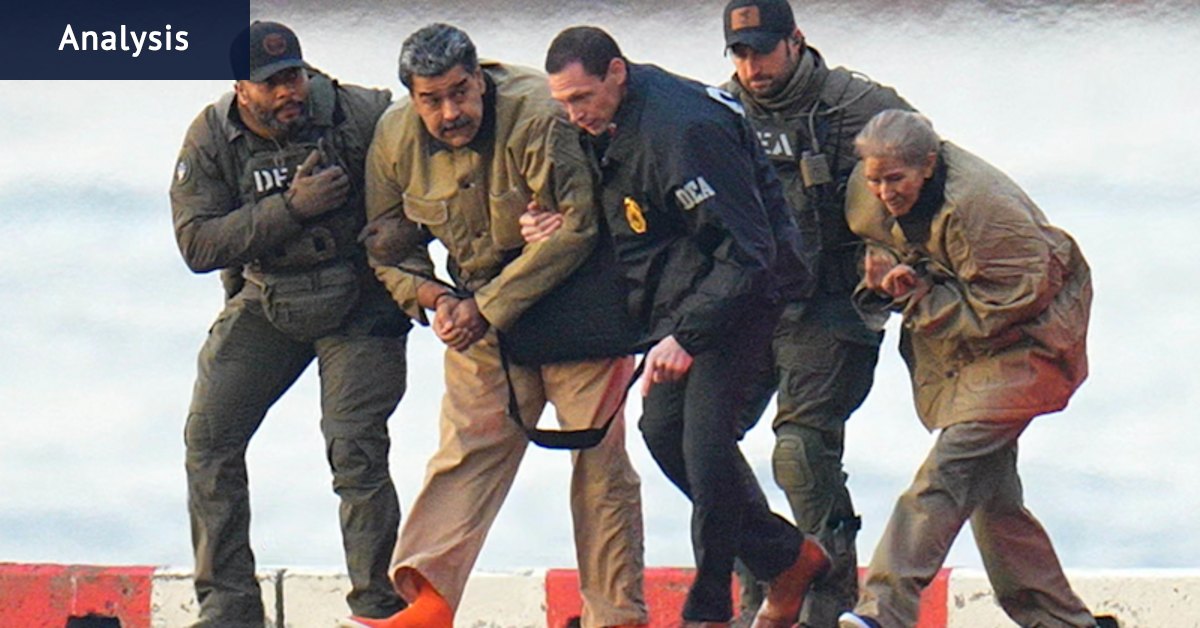
The raid has sparked fears elsewhere that Trump could act on other threats toward US neighbours, which have included demands to take over the Panama Canal, to turn Canada into the 51st state, to annex Greenland and to overthrow Cuba’s government.
Trump on Sunday said he didn’t plan action against Havana, but offered tough language nevertheless.
Loading
“I think it’s just going to fall. I don’t think we need any action,” he told reporters on Air Force One. “You ever watch a fight, they go down for the count, and Cuba looks like it’s going down.”
He was sharper toward Greenland.
“We need Greenland from a national security situation,” Trump said. “It’s so strategic. Right now, Greenland is covered with Russian and Chinese ships all over the place … Denmark is not going to be able to do it.” On Saturday, an influential former White House aide, Katie Miller, posted on social media an image of Greenland with the US flag superimposed on top of it.
The president’s repeated statements about Greenland drew a sharp response earlier Sunday from Danish Prime Minister Mette Frederiksen. “I have to say this very directly to the United States: It makes absolutely no sense to talk about the need for the United States to take over Greenland,” she said.
In a statement, she said Denmark is a US military ally and that the United States has extensive access to Greenland.
“I would therefore strongly urge the United States to stop the threats against a historically close ally and against another country and another people who have said very clearly that they are not for sale,” she said.
The Washington Post
Start the day with a summary of the day’s most important and interesting stories, analysis and insights. Sign up for our Morning Edition newsletter.


