


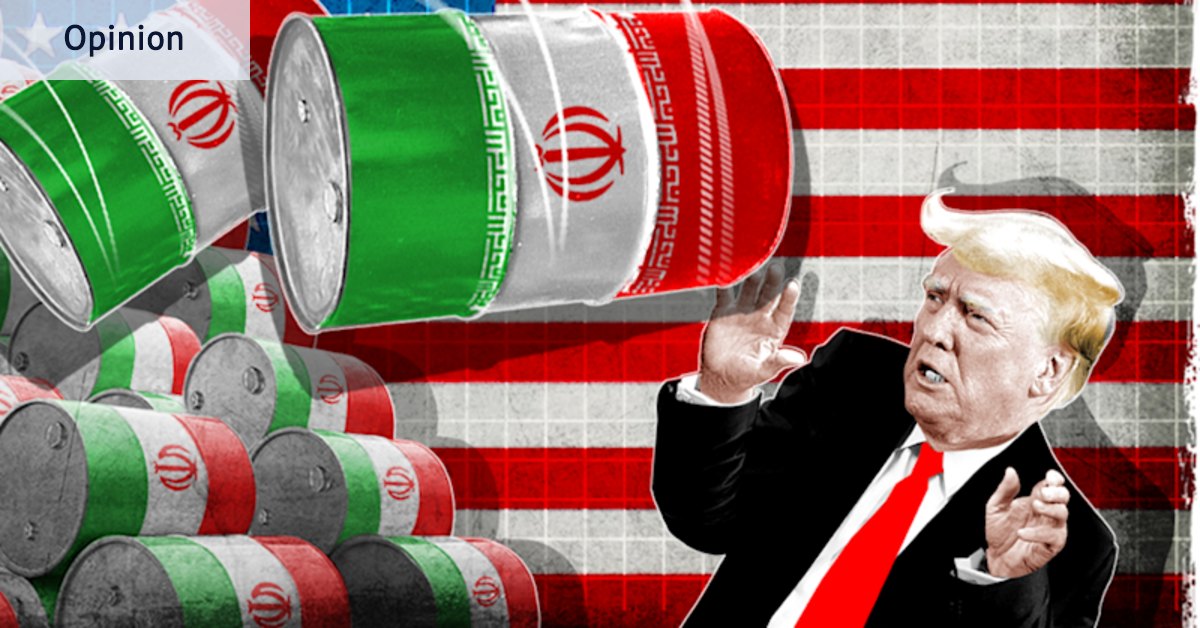
For the ordinary Trump-voting American, the Middle East conflict is a long way away. The situation on the ground as bombs rain down across Iran, Israel, Lebanon and many other countries is likely of little concern. But what Americans will have noticed is that petrol prices have soared more than US80¢ a gallon since the start of the Iran war.
This is one reason why US President Donald Trump will be looking for a pause in his campaign against the Iranian regime. He may not get one.
The Trump administration has tried valiantly to keep the price of crude oil under $US100 a barrel. It successfully cajoled its counterparts in the Group of Seven and the International Energy Agency’s 32 member countries to release emergency oil stocks – the largest single release in the IEA’s history.
The total release of 400 million barrels was more than double the previous release. More than a quarter came from the US Strategic Petroleum Reserve, which consists of federally owned crude oil stored in more than 60 underground salt caverns along the US Gulf Coast, each cavern almost big enough to fit two Empire State Buildings stacked on top of each other.
Before the release, the reserve – which at capacity can hold 700 million barrels of oil – was only 60 per cent full. It is now down to 45 per cent.
And yet, on Wednesday the price of Brent crude, the international standard, crept above $US104 a barrel as the Strait of Hormuz, the entrance to the Persian Gulf, remained closed for the first time in modern history. These developments represent a setback for Trump’s promise in his inaugural address to “bring prices down” and “fill our strategic reserves up again right to the top”. They complicated his attempts to project strength at a crucial summit meeting with China’s Xi Jinping scheduled for March 31. Trump on Tuesday delayed that meeting indefinitely. His Iran problems also rob him of momentum in the campaign to determine the composition of Congress at the midterm elections later this year.
The problem is that a pause in the fighting doesn’t suit the Iranian government. A ceasefire now doesn’t represent breathing space for the regime – it represents being even more vulnerable the next time the US and Israel attack them. Iran isn’t getting any sanctions relief; key air and naval assets have been destroyed; and Trump has openly said the map of Iran will “probably not” look the same after all this is done. Not exactly an inducement to wind up hostilities.
The attacks have damaged key cultural heritage sites such as Golestan Palace – the only UNESCO‑listed World Heritage Site in Tehran, dating back to the 16th century – historic structures in Isfahan in central Iran, and prehistoric sites in Khorramabad Valley, Lorestan Province. Attacks on oil depots in Tehran have sparked fires and caused downpours of “black rain”, rainfall contaminated with pollutants. Although the US denied responsibility for those attacks, suggesting that Israel was responsible, the overall effect has been to harden the Iranian government’s resolve.
From the regime’s perspective, it either changes the rules of the game in the Persian Gulf or it gets hit again in a few months’ time, when it is even less able to defend itself.
Trump had earlier called for their “unconditional surrender” – perhaps reflecting a cockiness after his successful abduction of Nicolás Maduro in Venezuela and the early success of his strikes against Iran, which eliminated Ali Khamenei, the supreme leader. But it is likely the regime views surrender as worse than defeat. Defeat leaves it in control. Surrender may mean a more gruesome fate.
For this reason, Iran likely won’t want to stop fighting until it achieves its own war aims. These include getting the sanctions eased so the regime can rebuild; ensuring that Gulf petro-states hosting US bases deny the use of those bases to attack Iran; and preventing the US and Israel from returning for another round of strikes. From its perspective, none of this will happen unless the US and its Gulf allies pay a high enough price. For this reason, there probably won’t be a halt to the blockade of the Strait of Hormuz any time soon. As the regime sees it, Iran’s perceived weakness encouraged the US and Israel to attack. Its leaders may not let Trump declare victory and pull back.
The new generation of Islamic Revolutionary Guard Corps commanders were born in the 1960s and 1970s and rose through the ranks fighting the US and Islamic State in Iraq and Syria. The new leader is the son of the man killed at the outset of the current round of fighting and has been closely involved in shaping the Revolutionary Guard over the past 25 years. His father issued a religious edict stating that nuclear weapons are forbidden under Islam. But these edicts expire with the death of the leader who issued them, and it’s unclear if it will be reissued by the son. A new generation of leaders may well feel they should do what India, Pakistan and North Korea did – go for a bomb and create the facts of the future in the present.
Meanwhile, Trump’s calls for other countries, including Australia, to help reopen the Strait of Hormuz aren’t being obeyed. Instead, India, Turkey and others are more likely to make their own arrangements with Iran to ensure their ships get safe passage.
Iran has been undoubtedly weakened. Israel has been undoubtedly strengthened, in relative terms. But the situation hasn’t been resolved, and probably won’t be, until everyone’s tolerance for pain has been met. And that includes US voters grumbling at the gas station.
Professor Clinton Fernandes is in the Future Operations Research Group at UNSW. His latest book is Turbulence: Australian Foreign Policy in the Trump Era.
The Opinion newsletter is a weekly wrap of views that will challenge, champion and inform your own. Sign up here.
 Professor Clinton Fernandes is part of University of NSW’s Future Operations Research Group which the threats, risks and opportunities that military forces will face in the future. He is a former intelligence officer in the Australian Army.