


Lessons have been learnt by all parties involved in and affected by the Iran War in the past 48 hours.
The pro-US Gulf states have learnt that the Iranian government isn’t going to collapse any time soon. They will have to deal with the regime as a neighbour indefinitely. For its part, Iran has received confirmation of something it had suspected but couldn’t be certain about – its ability to control the Strait of Hormuz is the true centre of gravity of this conflict. On this rests the stability of pro-US Gulf states and parts of the global economy. It will have to be careful not to overplay its hand, for instance by demanding an immediate US withdrawal from its bases in the region.
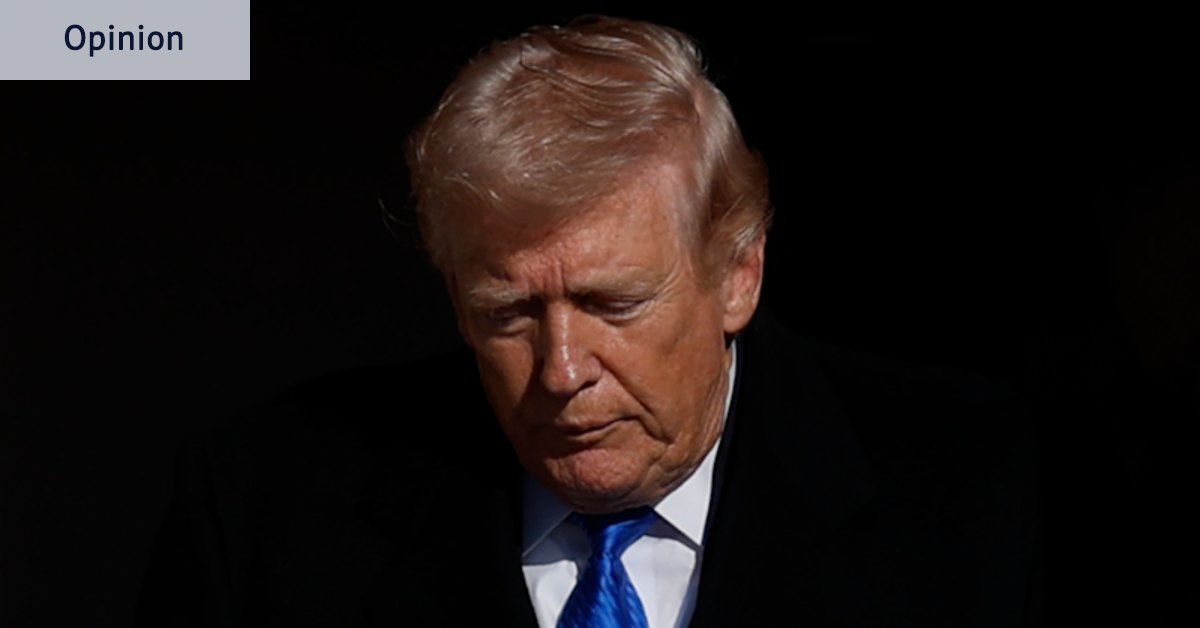
What US President Donald Trump has learnt remains unclear, but it is no accident that he issued his 48-hour deadline for bombing Iran’s electricity infrastructure on a Saturday morning. Doing so gave him – not the Iranians – a decision point by Monday morning US time, when the financial markets opened. Carrying out his threat would have risked Iranian retaliation against the Gulf states’ energy infrastructure and desalination plants. It would have risked a crisis in manufacturing sectors in many parts of the world, especially in Asian countries with a high share of energy imports from the Gulf: Japan (57 per cent), Thailand (56 per cent), South Korea (55 per cent), India (50 per cent) and Taiwan (40 per cent). The US financial sector would have also taken a hit, for which Americans would punish him and the Republican Party.
Trump didn’t order the attacks, claiming – implausibly – that the Iranians had asked for more time. In coming days, Trump can be expected to say he received many “please sir” messages from (fictional) Iranian regime officials asking for a ceasefire.
Trump’s backdown saw the price of Brent crude oil drop 11 per cent immediately, down to $US100 ($141) a barrel. That’s achieved his immediate goal, although it remains vastly higher than before Operation Epic Fury began in late February, when it was trading in the $US65-$72 range. The S&P 500 and the Dow Jones Industrial Average were each up more than 1 per cent on Monday afternoon US time. The five-day window Trump announced will allow markets a full week of trading without the imminent threat of an energy apocalypse. It also means Trump wants the option of unleashing a massive attack over the weekend before pausing again on Monday morning.
The Iranians appear to understand the constraints on the US president. The speaker of the Iranian Parliament, Mohammad Bagher Ghalibaf, insisted on social media that “No negotiations have been held with the US, and fakenews [sic] is used to manipulate the financial and oil markets and escape the quagmire in which the US and Israel are trapped.” Ghalibaf is not merely a parliamentarian – he is a powerful Iranian official and a former commander of the Iranian Revolutionary Guard Corps.
It’s a sign that Iran won’t let this crisis go to waste. The core issue is regime survival. That means not letting the US off the hook now, just so that it can return for another round of strikes in a few days or weeks.
Iran wants the ability to defend itself. But the US and Israeli strikes have degraded key air defences as well as its air force and navy. It feels it must change the rules of the game in the Persian Gulf or it will be hit again, perhaps as early as next weekend. The regime’s non-negotiable bottom line will therefore be long-term sanctions relief, beyond the temporary lifting of sanctions on Iranian oil currently at sea.
It wants to use its energy exports to keep buying what it needs to rebuild its defences. It will also want the US and its Gulf allies to pay a high enough price for some time to discourage a repeat performance of their decapitation strikes. As the Iranian regime sees it, the US and Israel attacked it because it hadn’t inflicted enough pain. Without sanctions relief, Iran is unlikely to allow free passage through the Strait of Hormuz, a corridor for 20 per cent of the world’s crude and refined petroleum. Threats without the incentive of long-term sanctions relief are likely to fail. Iran won’t allow Trump to declare victory and pull back.
Nate Swanson, the National Security Council’s former director for Iran, warned before the recent round of strikes that Iran “may seriously consider targeting the Gulf Arab states’ energy infrastructure”. He wrote this in Foreign Affairs magazine, not a briefing for the president’s eyes only, because he had been forced out of his role after accusations of disloyalty by Trump’s ideological ally and conspiracy theorist Laura Loomer. Several other oil and gas experts were laid off due to cost-cutting by the Department of Government Efficiency (DOGE). Among them were the Bureau of Energy Resources’ sole expert in tracking sanctioned oil tankers, as well as the person who liaised with the International Energy Agency.
However, over the past 48 hours, Trump seems to have substituted his personal judgment for that of his expert, disciplined policy team. His actions over the next few days, not his words, may reveal what he’s learnt.
Professor Clinton Fernandes is in the Future Operations Research Group at UNSW. His latest book is Turbulence: Australian Foreign Policy in the Trump Era.
The Opinion newsletter is a weekly wrap of views that will challenge, champion and inform your own. Sign up here.
 Professor Clinton Fernandes is part of University of NSW’s Future Operations Research Group which analyses the threats, risks and opportunities that military forces will face in the future. He is a former intelligence officer in the Australian Army.
From our partners
