







There is nothing more valuable in politics than trust.
Trust is what handed John Howard a third election win in 2001, it’s why Bob Hawke won in 1987, and it’s why Labor lost in 2013, after Tony Abbott spent three years campaigning against Julia Gillard for breaking her promise on the carbon tax.
Last week, this column explained why Prime Minister Anthony Albanese plans to make the 2028 election a referendum on trust, and why he expects to win that election – despite having broken promises not to change tax breaks on negative gearing and capital gains.
Barring a disaster, regional war or some other unforeseen act of God, the 2026 federal budget has already defined the terms of the 2028 election campaign. It has energised and united the Coalition to an extent that seemed impossible just three months ago, when Sussan Ley lost her job to Angus Taylor.
The next election will be a referendum on trust.
Voters have marked down the government for its most recent budget, according to the most recent Resolve Political Monitor, even though many more people support than oppose individual measures including the tax changes, taxing trusts and more.
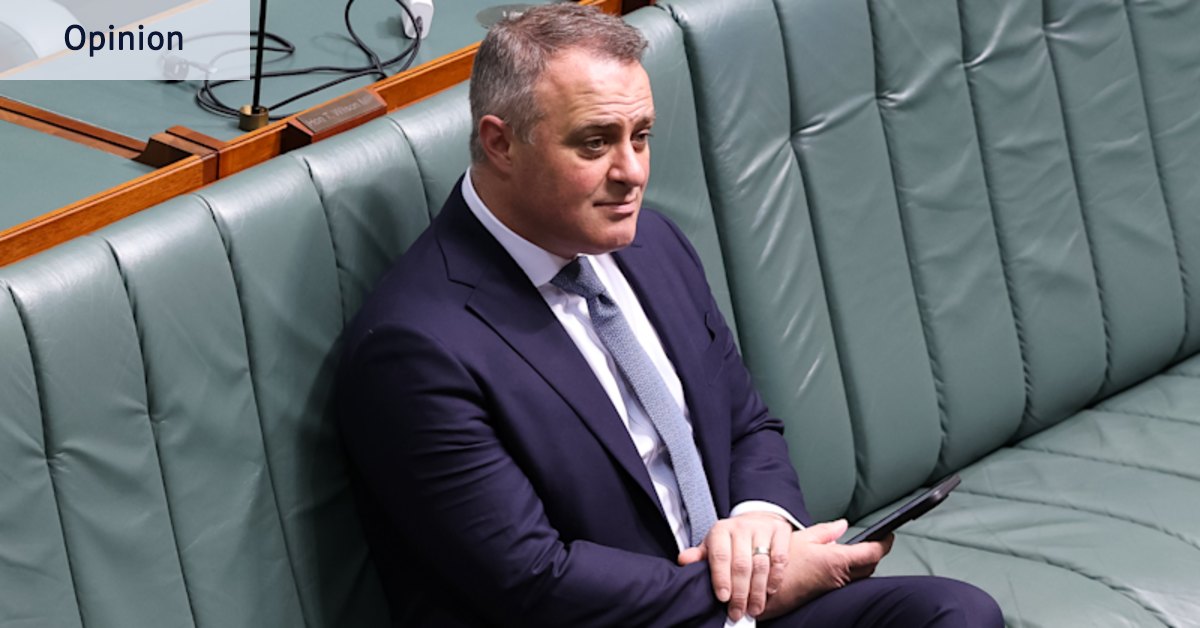
Shadow treasurer Tim Wilson says the opposition can be victorious in 2028, despite the fact it holds a record low 41 seats and Labor has 94.
“I absolutely believe this next election, we can win,” Wilson tells me. “The last election was an overstatement, I think, of public sentiment. It’s one thing to borrow people’s trust, it’s another thing to borrow it and drop a giant dung patty on it”.
Wilson rejects the suggestion that the lesson from Labor’s changes to Scott Morrison’s stage 3 tax cuts in the last term – which Albanese had promised not to change but then did – is that voters won’t mark down governments for breaking a promise. The difference, he says, is that the stage 3 broken promise created many more winners than losers. But this time, that isn’t the case.
“The problem with this one is the majority of people aren’t even winners. I don’t think the government understands what they’ve actually done and the scale of the damage they’re going to do. They’re not growing the actual pie [the size of the economy],” he says.
“I think he’s [Albanese] underestimating the damage he’s done to himself, and that you can’t be the lesser of two evils [in 2028] when you’re now known as a fake. I think that’s his core problem.”
Wilson is infuriating. He gets under the skin of his political opponents. He makes avoidable mistakes, like publicly questioning the judgment of the Speaker (a big no-no) and singing in the parliament. He delights in trolling Labor, even when the smart political play is to sit schtum.
But he’s also the shadow treasurer, he led the successful “franking credits” campaign in 2019 that helped propel Scott Morrison to an unlikely victory, and he’s the only Liberal to ever win a seat back from a teal independent. Last year, he defeated former journalist-turned-MP Zoe Daniel in Goldstein, a seat he formerly held.
So he knows a thing or two about campaigning. And he has no intention of allowing the opposition to repeat some of the mistakes made during Peter Dutton’s disastrous election campaign.
Even the prospect of Labor offering generous tax cuts in time for the 2028 election – an offer the government is already hinting at – does not faze Wilson, given the opposition has already promised to index the current tax brackets to inflation, which in itself is a generous (and unfunded) tax cut.
“They can offer sizeable tax cuts if they wish, but if everything is just being eaten away by inflation and you don’t address the root cause of the problem, then they’re going to double down on the problem,” he says, while conceding the failure to match Labor’s small tax cut offer at the 2025 election was a mistake.
“I think it’s part of the conversation, but I think you can overstate this. I think the bigger issue at the last election is it wasn’t clear what it was we were selling, and [next time] we will be going to the election with a very clear differentiation on policy,” he says.
Unlike many of his colleagues, particularly since the Coalition lost the seat of Farrer to One Nation in a byelection earlier this month, he is not too worried about the threat posed by Pauline Hanson’s party.
“I think it’s easy to get too exercised about the ‘orange paddock of despair’ [his nickname for One Nation] … I’m not saying I’m not concerned about it, but that it has a way to go in terms of its electoral efficacy,” he says.
He believes support for One Nation is a mile wide and an inch deep, just as it was, he says, for Albanese at the 2025 federal election.
His view on One Nation is far from universal within the Coalition and reflects the fact that Wilson’s seat of Goldstein, centred on affluent bayside Melbourne suburbs such as Brighton, is a Liberal-teal battleground, with few One Nation voters. Nationals MPs facing the biggest fight of their political careers, in particular, will not agree.
Wilson talks a big game. The prospect of the Coalition actually winning the next election appears remote. To do so, the Coalition will have to campaign with the relentless discipline of Abbott from 2010-13; it will require the opposition to win (at a minimum) 35 seats and not lose a single seat; and it will mean defeating both Anthony Albanese and Pauline Hanson.
It is an improbable task, though former Queensland premier Campbell Newman’s defeat in 2015 after just one term, when he lost dozens of seats and government, shows it is not impossible.
The Coalition is unlikely to win. But, as Wilson says, “A lot of people don’t really know about the complexities of these [tax] issues and that’s actually one of the biggest problems that the PM has … they don’t know whether it’s right or wrong, but what they do know is that he lied.”
Between now and the 2028 election, the Coalition will hammer Albanese every day for his broken promises on negative gearing and capital gains tax, just as Abbott – a close confidant of leader Angus Taylor and recently installed as Liberal Party president – did to Julia Gillard.
The 2026 budget drew the battle lines for the 2028 election. The next two years will be a fierce fight on ideological lines. Strap in.
James Massola is chief political commentator.
Get a weekly wrap of views that will challenge, champion and inform your own. Sign up for our Opinion newsletter.


