






Opinion


Suddenly, the Albanese government’s mighty parliamentary majority starts to look vulnerable.
Two developments have come together to unsettle the entire foundation of Australian politics. First is One Nation’s performance in the South Australian election. Labor Premier Peter Malinauskas won handsomely, of course. But One Nation emerged as a winner, too. Its new popularity in opinion polls has punched through into reality.
“Topline, the wave of populism we have seen washing through” the rest of the democratic world “has now arrived on our shores”, says Malinauskas. He takes it seriously. “It needs to be thought through very carefully by all mainstream parties of government,” he tells me.
One Nation never had done well in South Australia, a moderate, middle-class, urbanised, state, liberal by inclination and Labor by choice. It was the first state to allow women to vote and stand for parliament, the first state to decriminalise homosexuality. It isn’t a place where you’d expect to find a heaving hotbed of right-wing populism. At the previous state election, One Nation scored a trivial 2.5 per cent of the primary vote.
But last weekend, Pauline Hanson’s party shouldered the Liberals aside to emerge as the party with the second-biggest vote share. It made a ninefold gain to take 22 per cent of the primary vote, with about two-thirds of the vote counted. The Liberals managed just 19 per cent. They have been all but drummed out of Adelaide; they hold just one electorate in the capital city.
On the count so far, the Liberals appear set to retain the title of official opposition, just. With Labor winning 33 seats in the 47-seat lower house, the Liberals seem likely to emerge with five or six. One Nation seems to be in line for four.
In a pretty sensible state, with a super-popular Labor premier and economic growth outpacing that of NSW and Victoria, one fifth of the electorate chose Pauline Hanson’s racist ratbag outfit. This is a shocking result.
‘One Nation threatened the Labor vote in the outer suburbs. They need to worry about that.’
Psephologist Antony Green
“It’s not just a protest vote,” Hanson told Sky News on election night. “There is a movement and there is an undercurrent, and it is people saying we’ve had a gutful, we want our country back.” They’ve had a gutful? This is, surely, the very definition of a protest vote.
And there is about to be a lot more to protest about. The Great Oil Shock of 2026 is the second transformational event. The SA election was held in the early phase of the oil panic, three weeks into the Iran war.
Malinauskas says it was starting to weigh on voters already: “There was frustration about the cost of petrol almost doubling overnight. If people want to express their anger, they’re not going to vote for a party of government. They’re going to vote for a protest party.”
As they did. Labor suffered, too, but marginally. One Nation did appear to take 2 per cent from Labor’s share of the vote as well as 16 per cent of the Liberals’. “One Nation threatened the Labor vote in the outer suburbs,” says noted psephologist Antony Green. “They need to worry about that.”
A highly popular Labor leader such as Malinauskas might have been able to withstand One Nation, but Green wonders about more mortal Labor leaders. “With a less popular premier or prime ministers, does One Nation pick up votes from Labor as well as the Coalition? It will test whether One Nation is more of a threat to Labor than to the Coalition,” he says.
The answer will crystallise in the next state to go to the polls – Victoria – says Green: “One Nation did a search-and-destroy on Liberal seats in South Australia; they now need to turn their search-and-destroy on Labor, and the place to do that is Victoria,” where Labor enjoys a big majority and also acute problems.
“The Liberal Party have been unable to win any Melbourne seats north and west of the Yarra this century.” But where it might be too much of a stretch for a Labor voter to switch to Liberal, One Nation could provide a less wrenching way to dissent, poses Green: “The Libs got nowhere but One Nation opens a new channel for protest voters.”
OK, that seems plausible. The Victorian election is due in November. But the next federal election need not be held until 2028. Two years is an infinity in politics. Donald Trump will tire of the war one day, or Iran will capitulate. Won’t the oil start to flow again? Surely the oil shock will have faded into the distant past, providing a circuit breaker?
Unfortunately not. As International Energy Agency head Fatih Birol told the National Press Club on Monday, at least 40 energy assets across nine countries in the Middle East have been “severely or very severely” damaged by the hostilities. They can’t be patched by a few blokes with superglue and a blowtorch.
Even if combat ends today, repairing the facilities will cause disruptions to global supply chains that will linger for years, according to independent energy research firm Rystad Energy. It points to a backlog of orders for critical equipment and a lack of qualified personnel.
It’ll be the timing of such repairs that determines when the Gulf recovers to pump at full capacity – not the reopening of the Strait of Hormuz – says Rystad.
Trump says oil prices will “drop like a stone” as soon as the war is over. Markets don’t believe him. A barrel of Brent oil, which cost about $US70 ($101.60) before the war, will still cost roughly $US90 in six months and over $US80 a year from now, according to futures contract prices, based on the current state of play.
Beyond oil and gas, Birol points out the ripple effects: “Some of the vital arteries of the global economy, such as petrochemicals, such as fertilisers, such as sulphur, such as helium. Their trade is all interrupted, which would have serious consequences for the global economy.” Not to mention that most fundamental commodity – food. Whenever supply is disrupted, prices will rise.
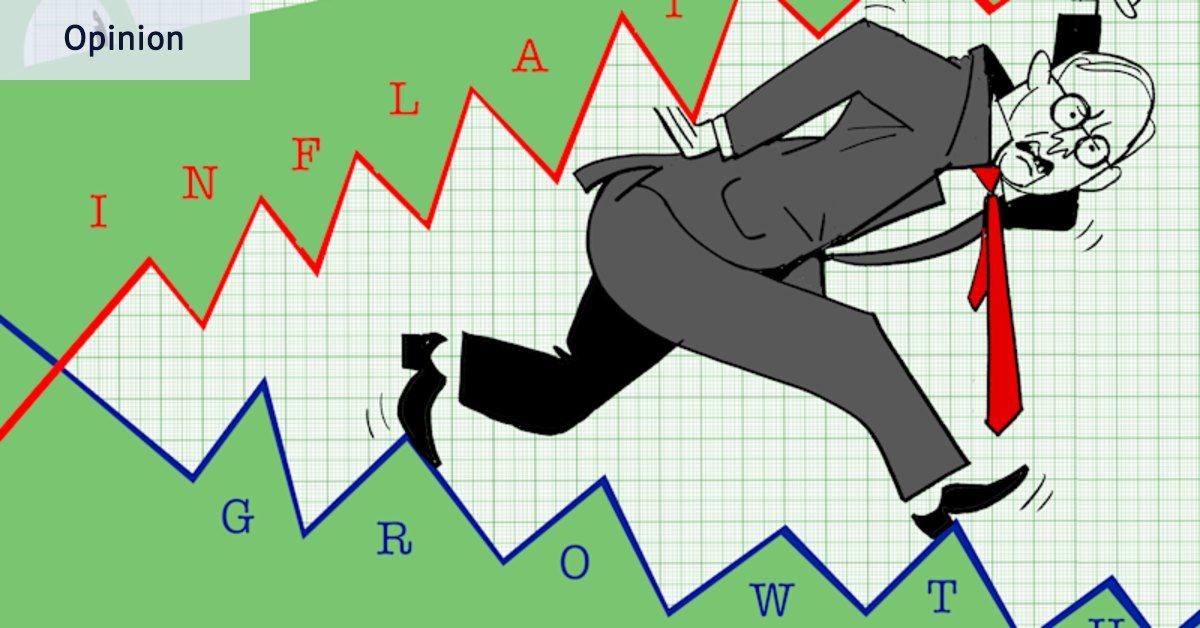
In sum, the war has pushed the world across a threshold into a new era of inflation. Treasurer Jim Chalmers last week spoke of various economic scenarios sketched out by the Treasury. Its pessimistic version envisaged inflation in Australia, currently 3.7 per cent, peaking later this year about 5 per cent.
But that was so last week. The Treasury now fears that it will go considerably higher, closer to 10 per cent. If so, that means the Reserve Bank is obliged to raise interest rates to painful levels. An economic downturn, possibly a recession, is in prospect, as Michele Bullock allowed even 10 days ago.
We can only hope that the world proves more adaptable than we currently understand. Because the world we are now walking into will present untold riches of resentment for protest parties to mine.
So, if One Nation is winning more votes than the Liberal Party in today’s relatively benign economy, what might it be able to conjure in a new phase of higher inflation and lower growth?
We know how Hanson sees the effect of her rising influence on Australia’s parliaments. On election night in South Australia she said: “I’m leaving you some landmines; they’re called One Nation members of parliament … don’t step on them because they will explode.”
Oil prices are beyond the control of an Australian government. The parties of government can control a few things, however, if they want to hold that status. On Monday, Albanese will usher in a more visibly active role as crisis manager when he convenes a national cabinet meeting with the premiers and chief ministers.
The federal and state governments have to do what they can, intelligently, to manage the effects of the global oil shock.
But they also need to address the pre-existing sources of One Nation’s appeal. Peter Malinauskas’ lessons learnt? “Clearly immigration is the biggest issue, and what sits underneath that is concern about housing,” the re-elected SA premier tells me.
This, in turn, generates a further worry, he says – the death of the intergenerational compact, “the aspiration from one generation to the next that they’ll be able to own their own home. People are right to be angry about it. It represents 30 years of federal and state policy failure”.
While the Albanese government is cutting immigration, it must also make the case that judicious immigration is an absolute necessity, says Malinauskas. And “it won’t work if you don’t have housing pumping”. This Rubik’s cube of immigration-housing-intergenerational compact must be solved as several parts of a single interlocking problem.
Second, says Malinauskas, is culture. He sees “a cultural revolution happening to reject woke-ism”, which he thinks is just as bad as the “woke” movement that provoked it.
Which helps explain why he thinks Australian leaders should talk about patriotism and pride of country in a unifying way. “Not progressive patriotism,” he says, pointedly rejecting the Albanese formula, “not conservative patriotism”, the One Nation version, “but patriotism we can all share”.
And, self-evidently, the parties of government need to squarely confront the parties of protest. Labor already does this. But the Coalition has to figure out a way of challenging One Nation before it utterly consumes the Liberals and the Nationals.
The times suit Hanson. She need do nothing but harvest discontent and offer to reward it with bitter chaos. The old duopoly of Labor and Liberal is under challenge to win support by solving problems – at a time when problems are fast rising, uncontrollably, from abroad. Otherwise, Australia will become a continent of landmines.
Peter Hartcher is political editor.


