










It started with a few lines of legalese and one of those simple tick-a-box consent forms. But the Australian workers who clicked yes say they had no idea they were setting themselves up for – being recorded in their homes via their laptop microphones for long periods, in some cases for up to 10 hours a day.
The Financial Review reported the employees at Australian training company Safetrac first realised the extent of the surveillance via secretly installed software on their laptops when the company’s CEO talked about being “up all night” watching videos of their meetings. Staff and their families seeking privacy took to whispering in their homes or stashing the laptops in their closets. Victoria Police has launched an investigation and an employee has been granted compensation after developing anxiety and depression. The company says that all the monitoring was consented to by employees.

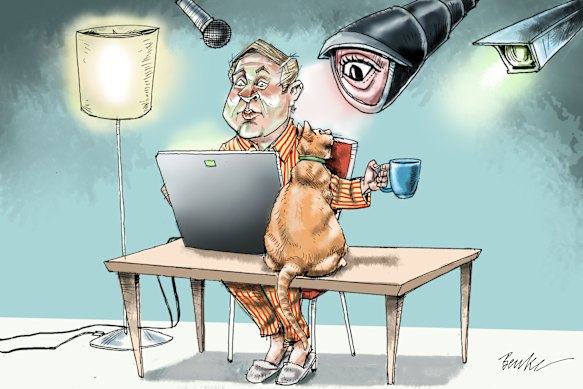
Credit: Joe Benke
This level of surveillance might sound like something out of Stasi-era East Germany, but it reflects a new workplace battleground, between employers worried about employees who might be slacking off, and worker rights to privacy in their homes, even when they’re “on the clock”.
Not all employees act in good faith. I’ve seen extensive “time theft” that only surveillance would reveal while employees are allegedly working from home. Examples include an employee doing six weeks of home renovations while on the clock, another streaming pornography daily (even during work Zoom calls), and one building a popular OnlyFans business during working hours while employed as an executive assistant. Following forensic investigations, these employees were lawfully dismissed for breach of the duty to serve their employer diligently and in good faith.
When everyone was in the office, it was easy to see who was present, engaged, or collaborating. Now, managers struggle to know what people are doing, where and when. Some employers think the solution is electronic monitoring on laptops and phones – devices that they provide and workers willingly carry with them everywhere.
Loading
Secret recordings carry a stench of distrust, but there is a place for some monitoring of staff, if there are safeguards. This isn’t about the employee who takes a short break to vacuum between tasks or ducks out briefly to do some shopping while working from home. That’s normal and reasonable. I’m talking about employees who abuse flexibility — fudging timesheets, disappearing for hours, delegating their work to others, or prioritising side-hustles during paid time. In those cases, employers are entitled to know where their workers are for significant parts of the day, especially where there’s a history of performance concerns or misconduct.
Surveillance of employees isn’t entirely new. In 2003, postal service in the UK was exposed for covertly filming workers, sparking union disputes. In 2007, a US retailer monitored staff calls and emails. And in 2020, a UK financial institution secretly tracked computer use, even bathroom breaks. Each case had one thing in common: employees felt spied on by their boss, not trusted.
But is surveillance legal? We’re all familiar with the customer service warning that “this call may be recorded for training and quality control purposes” but according to the Office of the Australian Information Commissioner, Australia’s Privacy Act “doesn’t specifically cover surveillance in the workplace”. What the act does say is that it may be reasonable for employers to monitor some activities “to ensure staff are doing their work and using resources appropriately” if they have been informed in advance.


