


Benedict Smith
Washington: Since Fidel Castro swept to power in 1959, Cuba’s communist regime has weathered CIA assassination plots, American blockades and even a US-sponsored invasion.
The Castro family still controls Cuba more than six decades later, but its grip on power is slipping. This could be the moment the United States is able to quash what it regards as a communist irritant right under its nose – and it could be Castro’s grand-nephew who lets it happen.
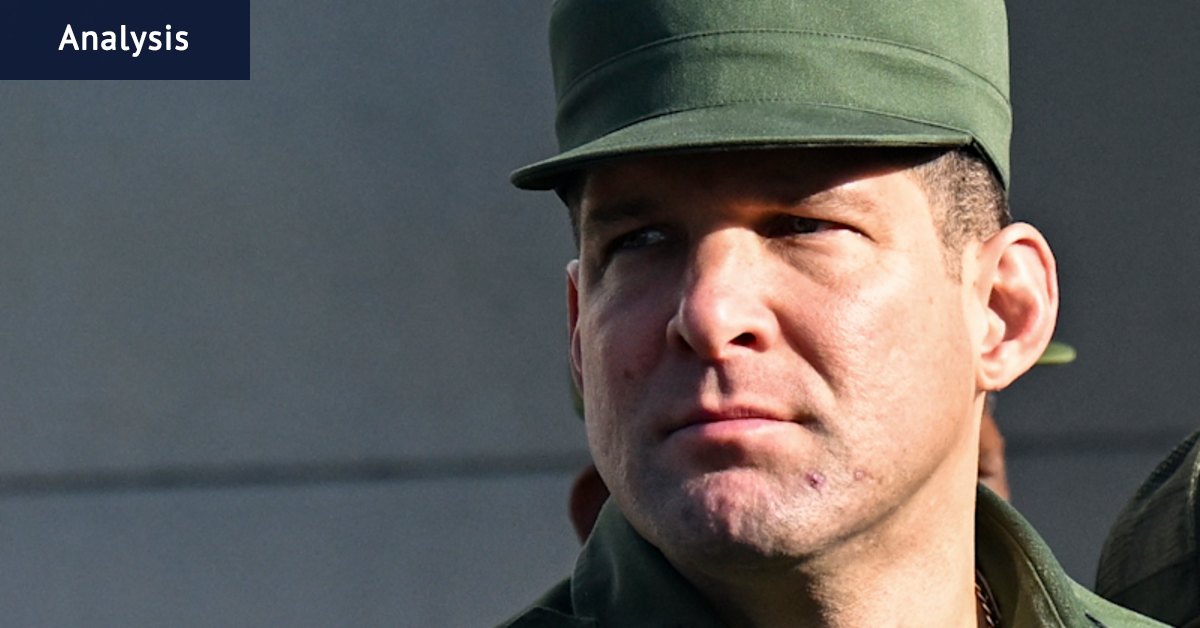
As the grandson of Cuba’s de facto ruler, Raúl Castro, some refer to Raúl Guillermo Rodríguez Castro as Raúlito or “little Raúl”.
To others, the hulking figure is El Cangrejo – “The Crab”, a derogatory nickname for such a powerful individual, referring to the fact that he was born with six fingers on one hand.
But now the 41-year-old is emerging as a force in his own right. As the regime teeters on the brink of collapse amid a US stranglehold on oil imports, US President Donald Trump’s administration has opened talks with him.
“They’re looking for the next Delcy in Cuba,” one source said, referring to Delcy Rodriguez, the Trump-approved leader of Venezuela who took over after Nicolás Maduro was detained.
US Secretary of State Marco Rubio has reportedly opened back-channel communications with Rodríguez Castro. US officials are also said to have met him on the sidelines of the Caribbean Community conference in St Kitts and Nevis in late February.
The Cuban media now calls him “the Crab who moves forward”.
This third-generation Castro is shaping up to be the man who could end his family’s decades-long stalemate with the US – and perhaps the Castro dynasty altogether.
Rodríguez Castro is the son of Raúl Castro’s eldest daughter, Débora Castro Espín, and Luis Alberto Rodríguez López-Calleja, head of the Cuban military conglomerate Gaesa.
According to a cousin, he attended military school before studying accounting and finance at the University of Havana.
He reportedly moved in with Raúl Castro from the age of about 11, and their close bond survives to this day. When his grandfather took over as Cuban president in 2008, he became a constant presence at his side, effectively serving as his bodyguard.
In many photographs of the former president, the younger Castro can be seen lingering in the shadows.
In 2016, Rodríguez Castro was formally appointed head of the Dirección General de Seguridad Personal, in effect a praetorian guard to protect Cuba’s leaders.
Beyond that, he maintains strong links to the military, is thought to own nightclubs in Havana, and is a fixture on the island’s party scene.
In 2023, one woman claimed to Peruvian media that she was run over by Rodríguez Castro while she was driving a horse-drawn carriage in Holguín, leaving her unable to walk, according to CiberCuba. The same report said he was known for his life of “luxury and dissipation”.
Cuban-Venezuelan political scientist Miguel Alonso said Rodríguez Castro, like the descendants of Cuba’s other ruling families, represented an emerging oligarch class.
“They have enriched themselves by plundering the public treasury,” he said. “If this new and emerging social group resembles anything, it’s the Russian oligarchs descended from old leaders of the Russian Communist Party and their families.”
To his critics, Rodríguez Castro is used to the blunt exercise of power but lacks political finesse. His prominence in the regime comes from the fact that he controls access to his 94-year-old grandfather.
“He’s a big man who is used to the unlimited exercise of power,” said Sebastián Arcos, a Cuban human rights activist and director of the Cuban Research Institute at Florida International University. “He’s not the sharpest knife in the drawer.”
Now, as the Castros’ grip on power seems to be failing, The Crab has sidled into the foreground.
Many Cubans believe the regime is closer to collapse than at any point in its 67-year history, as it is slowly throttled by the US’ blockade of cheap oil from Venezuela. It emerged on Sunday (Washington time) that the US is planning to let a Russian oil tanker dock in Cuba, giving it enough fuel for about a week, though Trump said that “Cuba is finished … whether or not they get a boat of oil, it’s not going to matter”.
Protesters are taking to the streets, uncollected rubbish piles up on corners, and power blackouts regularly plunge the country into the dark for hours at a time.
Furthermore, Trump has appeared only too willing to exert American muscle in South America, sending special forces to capture Maduro, the Venezuelan leader, from his Caracas compound in January. Cuba, he says, “is next”.
But Rubio reportedly sees Rodríguez Castro as representing the younger, entrepreneurial class of Cubans who believe communism has failed.
As Raúl Castro’s favourite grandson, The Crab also has the trust of the man widely considered to be Cuba’s real leader.
In March, Rodríguez Castro appeared at two public events alongside Cuban President Miguel Díaz-Canel, Raúl Castro’s hand-picked successor, who is widely seen as a figurehead.
Quite how the 41-year-old found himself at the heart of talks that will determine the fate of Cuba is unclear.
Some believe it is simply that Raúl Castro put his grandson’s name forward as a trusted channel of communication.
Jorge Javier Rodríguez, reportedly a friend of The Crab, was detained by US immigration agents in July 2025, raising the prospect that he could have been used to pass along a message to the security chief.
A White House official told London’s Telegraph that Cuba was “a failing nation whose rulers have had a major setback with the loss of support from Venezuela”.
“We are talking to Cuba, whose leaders want to make a deal and should make a deal,” the official claimed.
Venezuelan political analyst Joelvin Villarroel believes Rodríguez Castro could balance the demands of the current regime and the US, as the Trump administration seeks to turn Cuba into a “client state”.
“The Americans are aware that they hold ample leverage and that current geopolitical circumstances would favour armed intervention,” he said. “The Cubans will negotiate in order to survive such changes.”
Others are more sceptical. José Daniel Ferrer, a Cuban human rights activist who has been arrested dozens of times by the regime, was released from prison in October at the request of the US and now lives in exile in Miami.
When he met Rubio in November, the secretary of state hailed his “courage and resilience” in the face of oppression. Ferrer, for his part, told the London Telegraph that Rubio is “the best friend of the Democratic family of Cubans”.
Citing trusted sources in the administration, he said the US goal was “to eradicate the regime” and believes this will probably require a military intervention as Cuba’s leaders attempt to cling to power.
Arcos believes Rodríguez Castro is simply a convenient channel of communication to Raúl Castro, who remains the ultimate authority on the island.
“He cannot be a Delcy Rodriguez,” he said. “He is not qualified to be a transitional figure. He is not a politician. He is not even a technocrat. He is a thug.”
Rodriguez, the Venezuelan president-elect since January, has skilfully walked a tightrope since she took power.
She has managed to make overtures to Trump – the president refers to her almost fondly in his monologues – while keeping onside the other powerful Venezuelan families who will move against her if it appears she is turning them into a vassal state.
But Venezuela is not the same as Cuba, where the system of power is more hierarchical and opaque, making it difficult for Rubio to identify and cultivate a new leader.
Alonso noted Rodríguez Castro did not have a formal role in any of the island’s traditional power bases: the historical leaders such as Raúl Castro, the government’s public faces such as Díaz-Canel or Gaesa.
If Washington can use a Rodríguez Castro to prise Cuba from the grips of communism, it will be a sweet victory after decades of defiance.
But if betting on The Crab fails and the regime proves intractable, then another military intervention looms.
The Telegraph, London
Get a note directly from our foreign correspondents on what’s making headlines around the world. Sign up for our weekly What in the World newsletter.
