








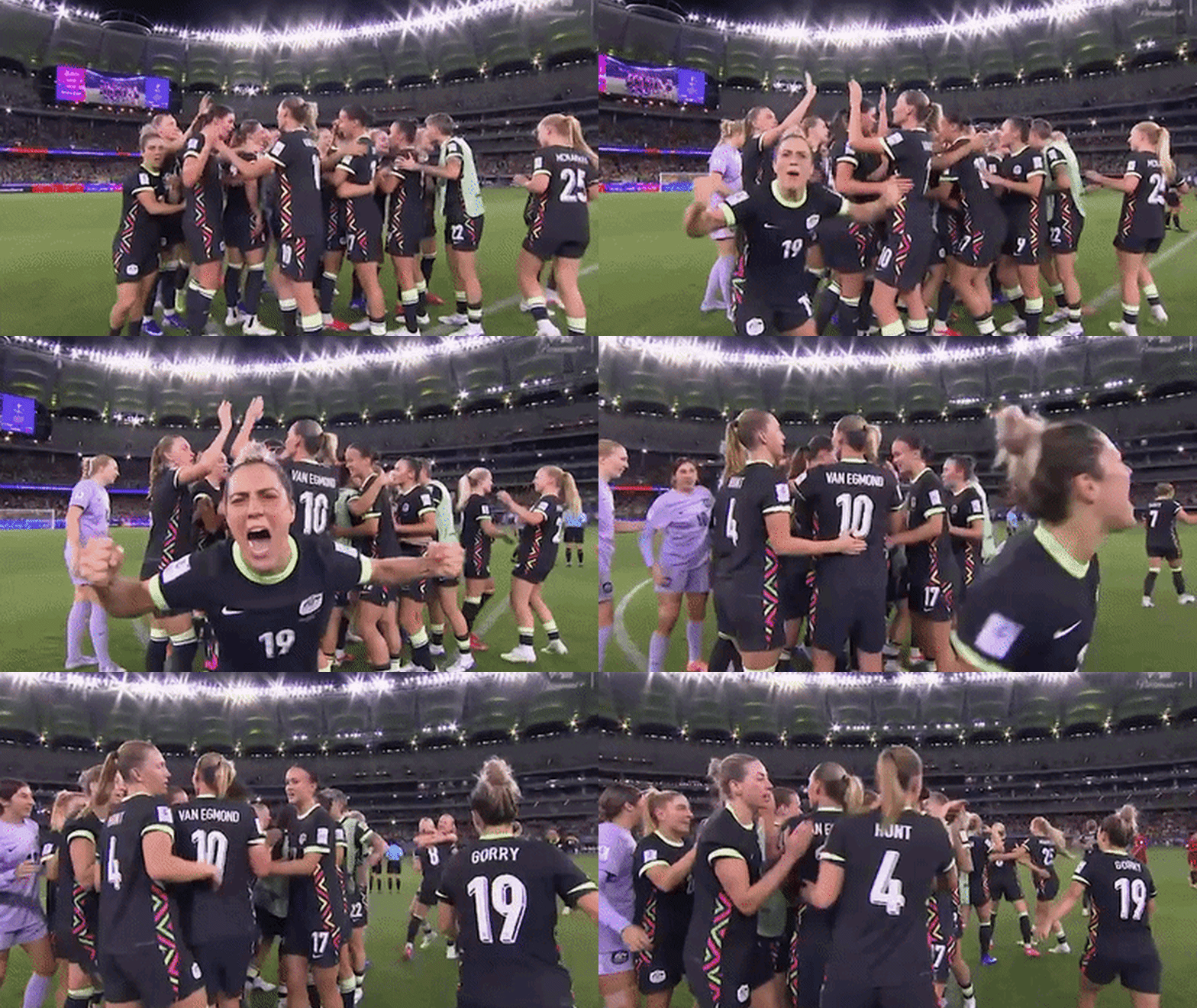


When the Matildas run on the Stadium Australia pitch at 8pm tonight to play in the Asian Cup final, they will be met with a roar from more than 60,000 adoring fans. Millions more will be cheering on from their loungerooms.
Sam Kerr. Mary Fowler. Caitlin Foord. Alanna Kennedy. Ellie Carpenter. Many of the veteran players have become household names, their images adorning cereal packets and Parisian runways. Apart from diehard fans, who could name players from the current Socceroos squad?
Matildas fever is a joyous example of what women’s sport can be. The Australian players have been star achievers over many years, memorably reaching the semi-finals of the World Cup in Sydney in 2023, watched by a national TV audience of 7.13 million.
But beyond the admiration and adulation are some uncomfortable truths. Most of these players earn a living in England and continental Europe. Thirteen of the Matildas squad have day jobs in the Women’s Super League in the UK. Although salaries in Europe still lag those of the men, they are miles ahead of anything Australia could offer. As Frances Howe reports today, although young gun Mary Fowler earns less in wages than her boyfriend, Nathan Cleary, who is probably the NRL’s best player, her sponsorship income would dwarf that of her Panthers partner.
Professional Footballers Australia released a report in January highlighting the failures to capitalise on Matilda mania after the 2023 World Cup.
The domestic A-League women’s competition is in dire straits, with minimal salaries and small crowds meaning it has only semi-professional status. If you are a young, talented player, you are forced to go overseas. Only three of the current Matildas squad come from this league.
Beyond the world of soccer, women’s sports have made huge strides in recent history but remain underfunded and under-supported compared to men’s.
Despite being in their 10th and ninth seasons respectively, players in the AFLW and NRLW competitions don’t have international profiles and neither are fully professional, meaning most are forced to juggle sport and a day job to make ends meet.
The Opals, in basketball, are one of the most successful Australian sports teams of all time, winning nine major medals (Olympics and World Cups), including the 2006 FIBA world championship gold, and bronze medals at the 2022 World Cup and 2024 Paris Olympics. Despite this, the minimum salary in the Women’s National Basketball League domestic competition is $29,465. In the US, the WNBA is in the process of signing a historic deal that will grant players a greater share of revenue than ever before.
We can’t expect every women’s sporting team to garner the same popularity as the Matildas when they don’t play full-time, when they still have day jobs or play in semi-professional leagues.
The onus to fix the disparity between women’s and men’s sport must be shared by government, industry bodies and sponsors making long-term investments in women’s teams – not for an immediate return, but because they know there is a market there and the understanding that women’s sport are worth capitalising on.
If women’s sport in Australia is to experience more widespread success, the players need to be properly paid, and they need to be properly promoted. We clearly have brilliant, talented and internationally competitive players, as the Matildas and the Opals have shown. The challenge is to use these successes as a springboard for across-the-board advances in domestic competitions.
Jordan Baker sends a newsletter to subscribers each week. Sign up to receive her Note from the Editor.


