









It is a clear, crisp morning on the St Kilda foreshore. The suburb’s after-dark excess has been replaced by runners in Lycra and dog walkers pounding the path on the water’s edge.
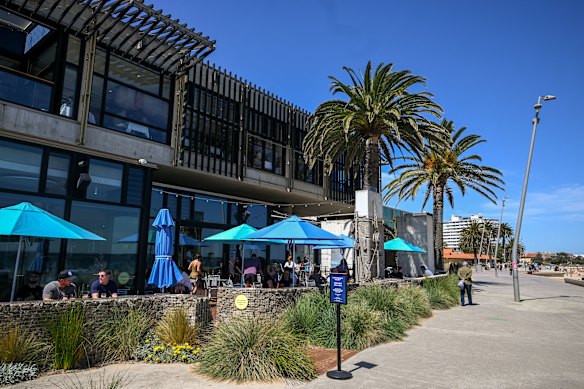
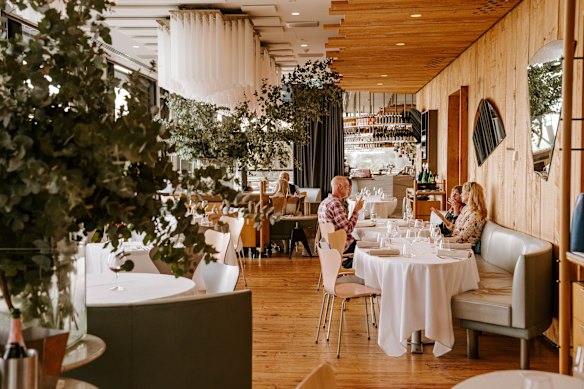
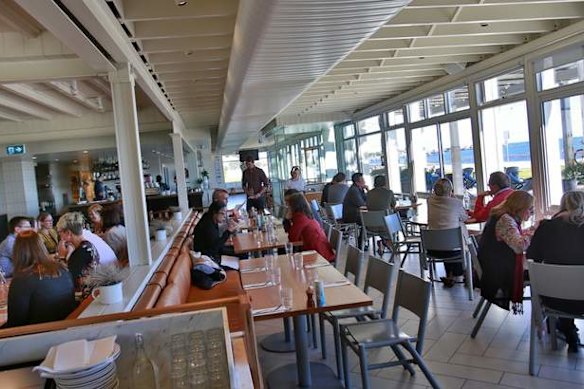
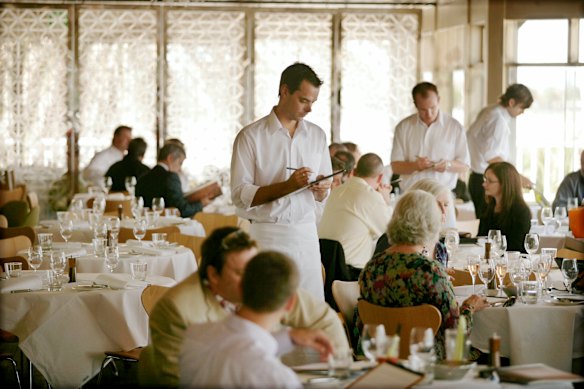
Inside Stokehouse, the modern concrete-and-glass restaurant on the edge of Port Phillip Bay, light rebounds off crisp white tablecloths being set for pre-Christmas catch-ups that will stretch into the afternoon.
For some (lucky) Melburnians, this ritual is seasonal and generational. Birthdays, engagements, anniversaries and Christmas catch-ups have made the bayside brasserie a stalwart.

For 35 years, Stokehouse has been more than a restaurant that people simply like – it’s an institution. Not the hot new venue that diners rush to discover, but one they return to for life’s celebrations.
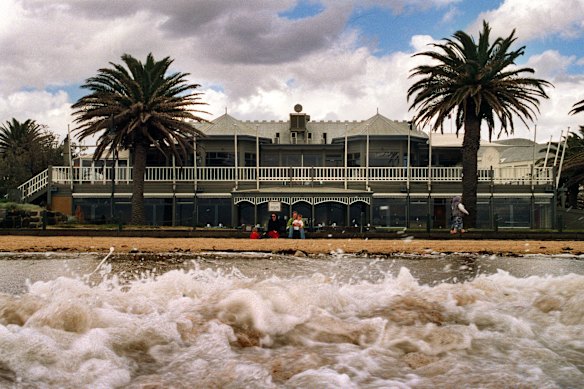
Managing director Hugh Van Haandel describes his venue as a “quintessential Australian beach house”. But perhaps that description is better reserved for the original weatherboard venue that burnt to the ground in 2014.
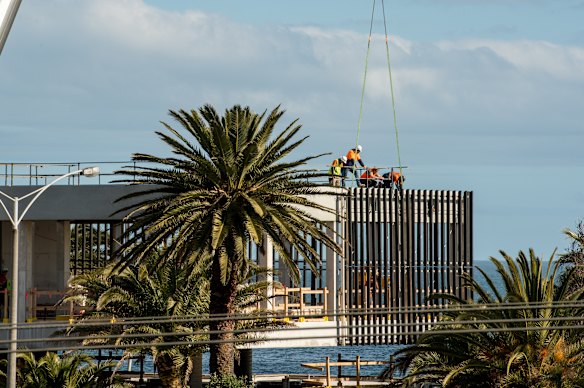
Its replacement, a modern, six-star, energy-efficient structure on Jacka Boulevard overlooking St Kilda Beach, is almost a brutalist design, yet still welcoming. Inside, the mood remains distinctly breezy and beachy, a place for long lunches and celebrations.
In a city addicted to the next big opening, the hottest new chef or the latest Instagrammable food craze, Stokehouse’s appeal lies in familiarity.
The menu – seafood, dry-aged steaks and pasta – is built for occasion, but steers clear of the complex language that can alienate some diners. Hugh avoids the language of “fine dining” altogether. “We’re on the beach,” he tells me. “You can’t take yourself too seriously.”
Food writer and former MasterChef host Matt Preston argues that this balance – serving coconut chilli prawns alongside “bougie fish and chips” – is key to Stokehouse’s success.
“It has always been a finer diner with a popularist touch. I think that is the secret and when you land on a format like that you keep going,” he said. “It’s accessible, it doesn’t scare anyone”.
Preston describes it as “an old friend you are really happy to catch up with”.
“Every city needs to have restaurants that are clubs. Stokehouse is a club the same way that France Soir is a club and the Flower Drum … people have been going there for generations, and it’s more than just the food, it is the proximity and the history that you put into that space.”
“These places, once they have been around for a long time … they become a link between generations.”
But the attachment that has sustained Stokehouse for more than three decades also carries an obligation. The quiet pressure of stewardship when a restaurant becomes a part of a city’s fabric.
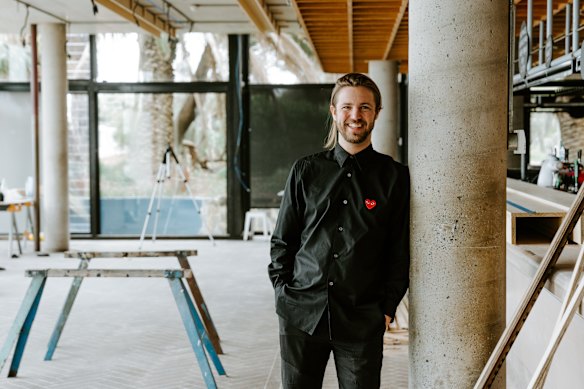
Much of that responsibility now rests with Hugh, the son of Stokehouse owner, Frank Van Haandel, who has stepped back from the day-to-day running of the restaurant.
Hugh also sits on the board of the new industry association The Australian Restaurant & Cafe Association (ARCA).
In a dining scene dominated by large personalities, Hugh is an unusual powerbroker.
Thoughtful and measured, he operates quietly, with a self-assurance shaped by a lifetime spent in and around food and restaurants, learning the trade through osmosis from the day he was born.
Hugh is the third of the four Van Haandel sons and, at 38, only a few years older than Stokehouse itself, coming of age alongside the businesses.
Raised inside a hospitality dynasty, his apprenticeship started in childhood, long before he formally chose to enter the business.
Just as the children of doctors struggle to watch medical dramas without a running commentary from mum and dad, or the children of journalists rarely read a newspaper without critique, meals out for the Van Haandels were lessons in scrutiny.
Hugh recalls his father, Frank, scanning restaurant floors, clocking lights that were too bright, noting sloppy uniforms or drinks that took too long to arrive.
“The inherent nature of growing up in a hospitality family is that observations don’t stop when you are out of your family’s restaurant,” Hugh tells The Age.
“My memories of restaurants as a kid are always my old man Frank pointing out that the lights were too bright, or that he could see the bins … little touchpoints – all those little nuances.
“Hospitality has always been about attention to detail for me.
“Whenever you are out,” he adds, “you’re always observing and looking.”
Hugh did not always plan to follow his father into the family business. In another life, he says, he might have pursued architecture or furniture design. He began an industrial design degree at Monash University before switching to business management and marketing, while working on the floor at Stokehouse.

“I didn’t really know what I wanted to do,” he tells me. “I enjoyed working, having a job, and some independence.”
In his early 20s, as a young employee at Stokehouse, Hugh never introduced himself as the owner’s son. He preferred to be assessed without preconception. Another member of staff eventually discovered his relationship to Frank and asked why Hugh was working there at all. The answer was simple: he was a student and needed the income.
Hugh’s role in the company has grown organically. When COVID-19 hit, Hugh’s remit expanded by necessity rather than design. As restaurants shuttered, Frank began stepping back from the day-to-day operation, accelerating the generational handover.
Recently, Hugh shifted from the role of general manager to managing director, overseeing a brand refresh and quietly preparing the business for its next chapter.
He is wary of expansion divorced from context. Last year, the group started exploring a new opportunity, briefly securing a site in Carlton North’s Rathdowne Street before withdrawing.
The calculus, he suggests, is not whether something can be done, but whether it should.
“You just have to be respectful to the identity of the brand and maintain its reputation.”
In a city where restaurants often trade on proximity to celebrity and the Instagram crowd, Stokehouse has taken a more sustained approach.
That’s not to say it doesn’t benefit from being close to money and fame. It has always attracted high-profile guests. Margot Robbie, Jensen Button, Jannik Sinner, Justin Timberlake, Paris Hilton, Robert De Niro and Jason Statham have all dined at Stokehouse.
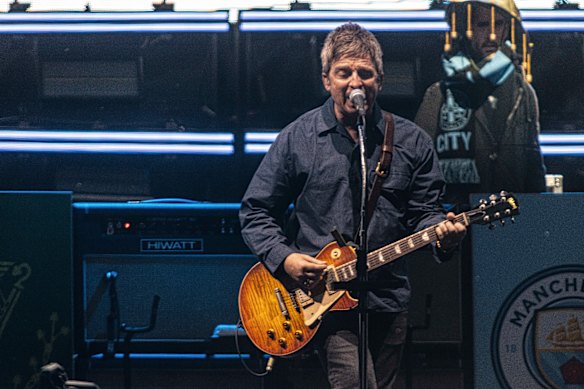
And many have arrived unannounced. That was the case in early November when Oasis songwriter Noel Gallagher dropped in for dinner during the band’s recent Melbourne tour. Anthony Kiedis, lead singer of the Red Hot Chili Peppers, also stopped by unexpectedly in 2023.
The Gallaghers, he says, were “very quiet”.
“When you’ve got high-profile people in the building, they just want to be treated normally. I just want them to have an honest interpretation of what we do.”
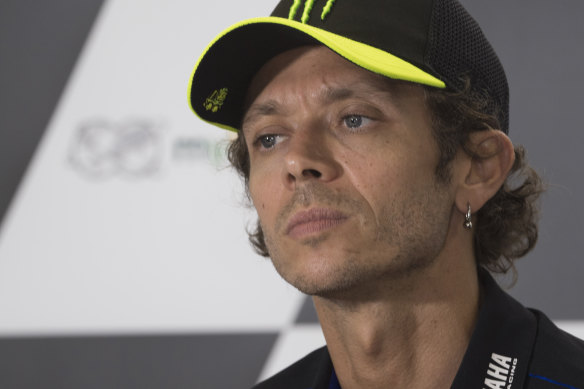
On one occasion, seven-time MotoGP champion Valentino Rossi arrived without a booking, dressed in tracksuit pants and his trademark jewellery. He was turned away at the door, unrecognised, until an Italian chef spotted him outside and intervened.
The Obamas, of course, were different. The Secret Service profiled the restaurant and its location days in advance, arriving with police escorts and security detail. Even then, Hugh insists, the principle held.
“In order for them to have a good time, all the tables throughout the restaurant need to be having a good time as well,” he says.
“We have been known in reviews as having the glitterati of Melbourne in here. I don’t see that as an accurate representation.
“We do get very high-net-worth, high-profile people [but] … you give respect, you get respect. As soon as that tips, I tend to shut down and shut off.”
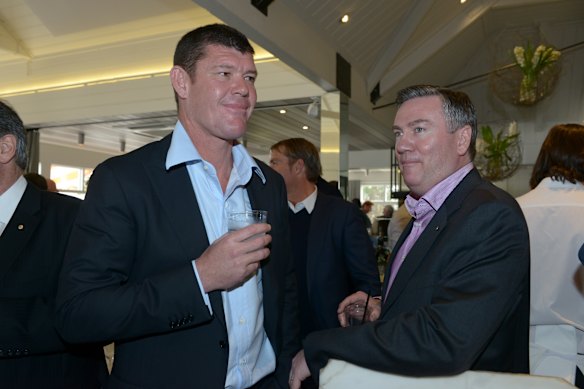
That instinct – to protect the room rather than bend to the demands of high-profile patrons – reflects the view that celebrities will come and go, but familiar faces return year after year.
The Stokehouse story is inseparable from the Van Haandel family. The restaurant was founded by two migrant brothers, Frank and John Van Haandel, from the Netherlands. Raised in regional Victoria, the pair started with a modest cafe in Warrnambool in the 1970s.
From there, they expanded to Bendigo where they opened the landmark Clogs restaurant on Pall Mall, which itself became an institution for the regional city long before it developed its “foodie” tag.
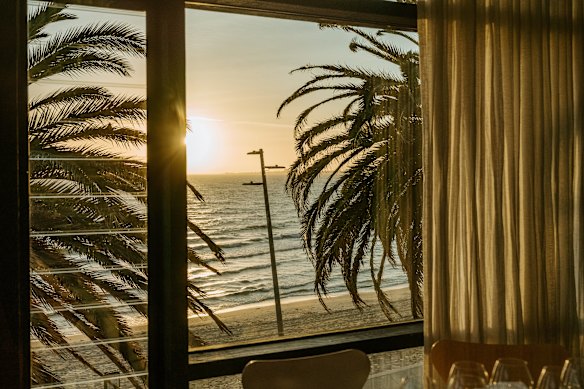
Then, in the mid-1980s, the brothers arrived in Melbourne to run South Yarra’s Pronto on Chapel Street.
“The move to Melbourne was the start of our restaurant career,” John told The Age.
During those busy five years building Pronto, John said he would return to Melbourne and wonder why people weren’t eating outside, embracing the Australian climate and the beach.
“Couldn’t the beach, the view, the space be enjoyed by all without sandy feet.”
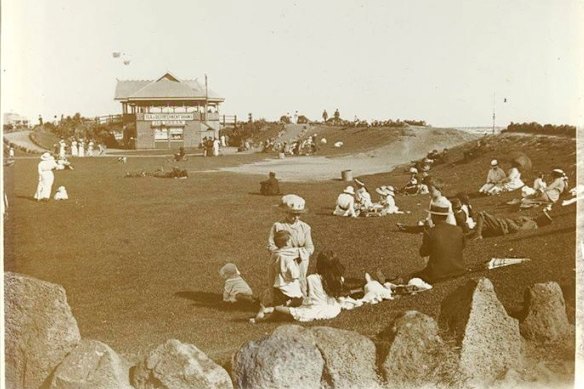
In 1987, after repeated visits to the old Pavilion on St Kilda beach, they successfully tendered to lease the run-down beach pavilion that became Stokehouse, overhauling the former tea house into one of Melbourne’s most enduring big-name brasseries.
“With my wife Lisa and brother Frank we worked crazy hours, seven days a week. Blood, sweat and tears,” John said.
“But creating Stokehouse … was a labour of love. Good food, great service, wonderful people, warm hospitality: we catered to the thousands celebrating and having fun. So many stories; we were having fun,” he said.
Together, they built an empire that reshaped Melbourne’s dining scene with an enviable list of eateries, including Stokehouse, Circa at the Prince of Wales, Comme, Carousel and the landmark St Kilda hotel, the Prince of Wales. At their peak, their hospitality and property holdings were valued at more than $100 million.

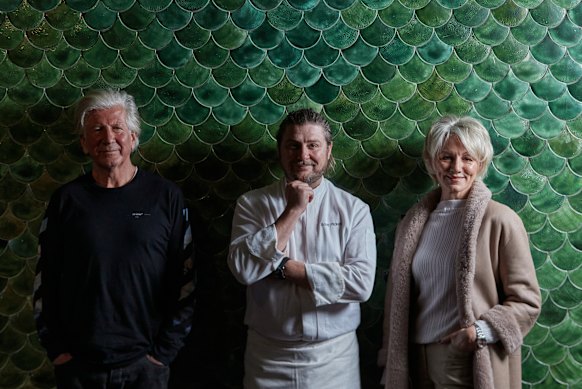
So the breakdown of their 25-year partnership wasn’t just commercial; it was personal and public.
“Brothers falling out is nothing new in the restaurant scene. It happens constantly.”
Matt Preston
According to hospitality sources, the brothers’ relationship started to deteriorate in early 2003, triggered by differing views about the direction of their empire.
By 2007, the spat turned into a public legal dispute, with allegations and counter allegations of bad behaviour and personal attacks aired in court.
By late 2008, the partnership was formally dissolved and the hospitality empire was carved up. John took control of the Prince of Wales and continued his interests in Carousel and Longrain. Frank remained in control of Stokehouse.
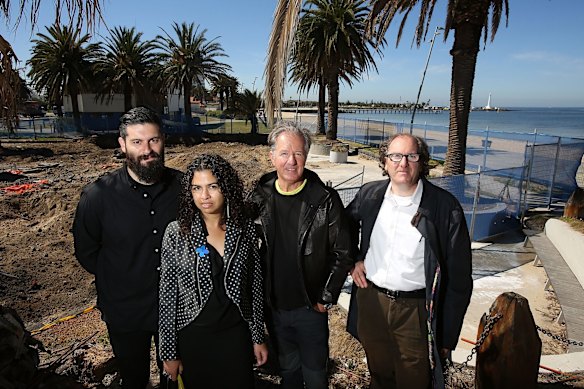
In a joint statement released at the time, the brothers downplayed the feud, partly blaming sibling rivalry for their split. They claimed their respective families would sit down together to enjoy a Christmas turkey.
The reality was more severe.
Hugh will not discuss the fallout, but industry sources confirm the brothers no longer speak. The fallout sits as a reminder of the risks of family dynasties.
The rupture is reminiscent of another high-profile family dispute in Melbourne’s hospitality scene between Fabio and Yuri Angele – the brothers who run the Brunetti chain of cafes. That feud was blamed on family tensions and differing ambitions.
“Brothers falling out is nothing new in the restaurant scene,” Preston told The Age. “It happens constantly.”
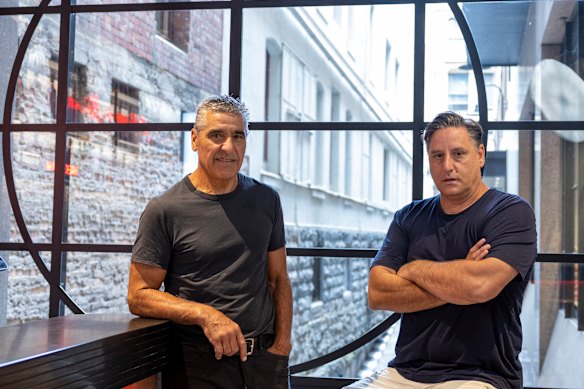
John told The Age that Stokehouse has an “eternal place in our history and our hearts”.
“At the end of our 25-year partnership, Stokehouse stayed a family business with my brother and my nephews,” he said.
“It will always be an extraordinary site, a feature in Melbourne dining and an institution.”
Hugh Van Haandel’s tale of succession has not played out as a blunt contest of wills. In contrast to the family rupture that came before it, this generational shift appears to have been an organic transition, with Frank slowly loosening his grip on the day-to-day running of Stokehouse.
As part of the shift, Hugh chose to elevate the role of executive chef Jason Staudt, to be on an equal footing with him.
“The handover period has been like a slow thing where Frank has just gone on longer holidays and he has just not checked in quite as much as he normally does,” Staudt said.
“I still talk to him a couple of times a week, but previously I would see him four times a week.
“He has kind of just left it to Hugh and I, and I feel lucky that I have been brought on that ride.”
For Hugh, his succession is grounded in a personal closeness to his father.
“I get along really well with my dad,” he says. “We have very similar standards, we have a very similar approach and expectation.
“We have a very similar eye for detail and design, and a way of responding to stress and people.”
Passing an institution like Stokehouse from father to son carries as much risk as romance. In Melbourne’s hospitality scene, such succession is unusual. Instead, restaurants often close when founders retire, or fracture under competing visions.
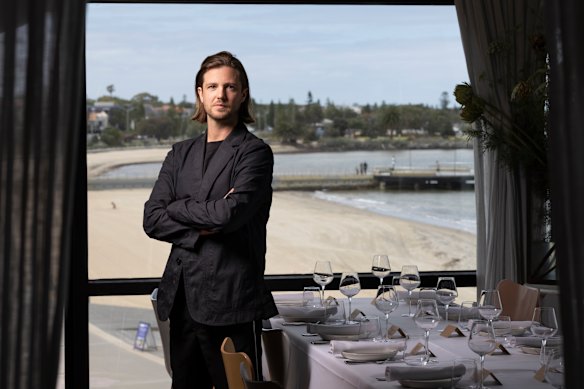
“At times, there are definitely points of difference, but one thing I do think is a positive … is we are both very left of centre in that we always find a creative workaround for something, and it’s generally different to what other people think,” Hugh said.
“While I have the full trust [of Frank], I will never not get feedback on the little bits and pieces I’m missing or an idea I haven’t thought about. There are a few little ‘nod and smiles’, but I am sure that goes both ways.”
Staudt says the dynamic between father and son is not without friction – but that tension is productive rather than destabilising.
“That tension does happen, but it’s a beautiful tension, it’s positive, it’s because there is that older generation and a younger generation,” he said.
“Trust is everything.”
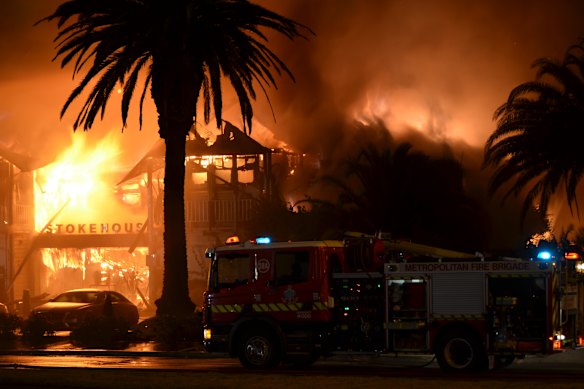
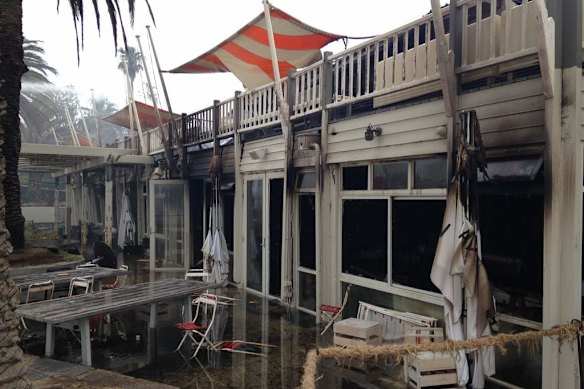
Few restaurants survive for almost four decades in Melbourne; fewer still endure a family split. But it was a far more existential threat that threatened to destroy Stokehouse for good in January 2014.
Hugh was at home in Carlton when images began circulating on social media of his father’s business on fire. Moments later, his dad called and told him to come down. The restaurant was burning.
Driving to St Kilda, Hugh recalls the smell of smoke circulating through his air-conditioning as he passed The Shrine on St Kilda Road.
“It was devastating,” he says. “But you have to look at what you can make out of it.”
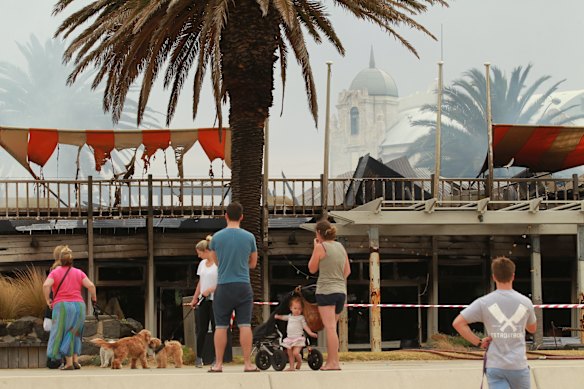
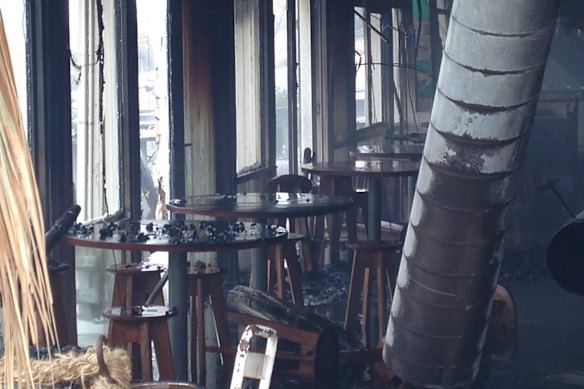
The destruction forced the family to decide between rebuilding the venue in deference to memory or accepting the destruction, creating something monumentally different instead.
“To his credit, he has tried to build something bigger and better than what it was before. Something that will be around for generations to come and stand the test of time,” Hugh says of his father’s decision.
“The hardest thing would have been to try and recreate what it was, and I think everyone had beautiful memories of what it was, but it never would have been the same. He took the opportunity to be bold and striking.”
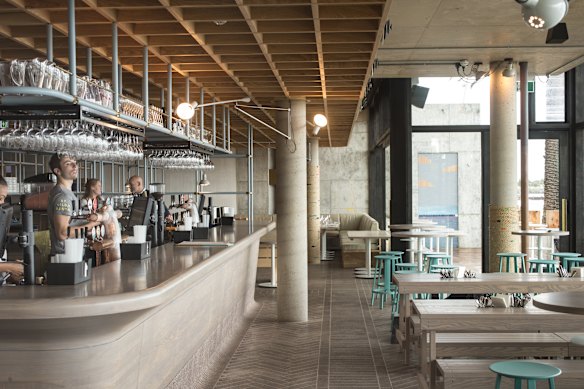
The rebuild wasn’t quick, nor was it universally welcomed. It was held up by delays and criticism from some locals who feared the modern design would overwhelm the foreshore.
Matt Preston believes the rebuild was critical to its success.
“Frank managed to rebuild the space and maintain the essence,” he told The Age. “There are certain places that have a vibe; it’s what the kids say, it’s all about the vibe, and Stokehouse has had the vibe for 35 years.”
He also attributes much of the restaurant’s durability to Frank’s eye for talent. Over three decades, he attracted and supported a series of young and talented chefs – including Michael Lambie, Oliver Gould, Lauren Eldridge and Anthony Musarra – ensuring what Preston describes as constant renewal in the kitchen.
Staudt recalls Frank putting him through a lengthy recruitment process which lasted for almost three months. Unlike more commercial ventures he has been involved with, Staudt said he had to “earn his voice within the family and within the business”.
Now a custodian of a place that belongs, in part, to Melbourne, Hugh says he takes an incremental approach to change. He compares it to seasonal menu updates: small shifts over time.
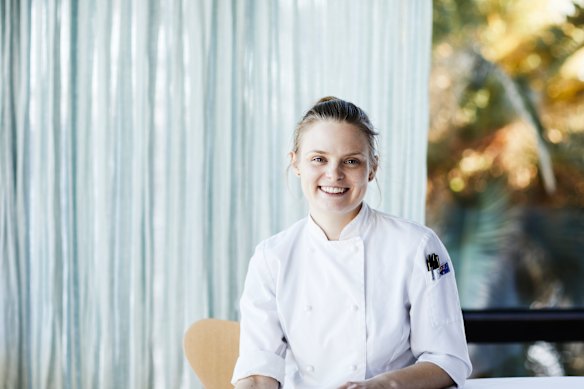
And he doesn’t make any changes without consulting his team, Staudt, general manager Lee Smith and head sommelier Wil Martin.
The group has been on the lookout for a new business opportunity for the past 12 months, inspecting about one commercial property each week to find the right fit for their next venture.
“We have looked everywhere, from Byron to Noosa to Melbourne CBD.”
He hints at the possibility of another Stokehouse-branded venue that aligns with the beachside DNA, like Stokehouse Q. in Brisbane which closed during the pandemic.
In 2014, the Van Haandels had to pull out of another interstate expansion, a residence at the Opera House in Sydney, after the devastating St Kilda fire.
Van Haandel says the emphasis is on fit, not footprint.
“Our model has always been a constant, gentle improvement,” he says, contrasting the approach with larger hospitality groups that scale quickly across cities and continents.
“I’d like to think there were new opportunities on the horizon for the group,” he says, but tempers it with caution. “Time will tell.”
His more conservative approach is driven by an awareness of what is at stake when Stokehouse carries 35 years of accumulated memories.
“There was once a preference to do Melbourne, Sydney, Brisbane, LA, Bali …for me, I’d like to keep it localised.
“It’s the constant gentle pressure and maintenance of the current brand.
“There is such a community buy-in with this business, a brand of 35 years, everyone’s got a memory, an engagement, a wedding … there are so many stories and nostalgic memories.”
Start the day with a summary of the day’s most important and interesting stories, analysis and insights. Sign up for our Morning Edition newsletter.


