


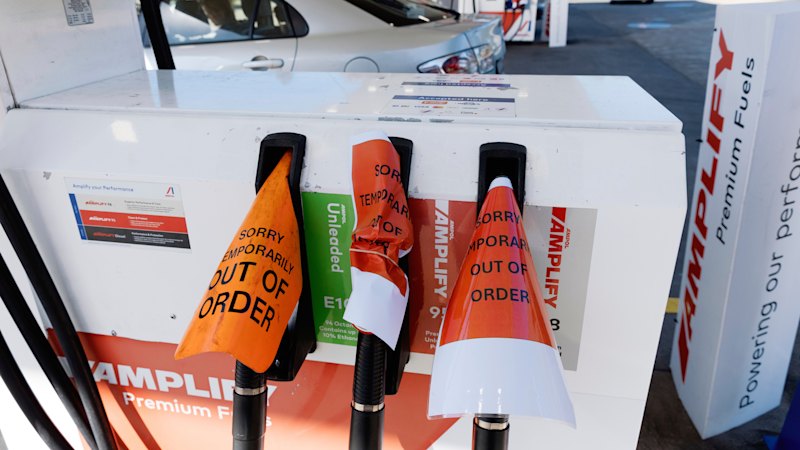
The NSW government is using reams of commercially sensitive data from fuel companies to assess whether the state’s supply will be significantly disrupted by war in the Middle East and to prepare for possible “further action” to ensure petrol reaches critical regional areas.
With NSW experiencing the greatest diesel and petrol shortages of any state, the government will announce on Tuesday that all major fuel companies have complied with a direction from NSW Energy Minister Penny Sharpe to provide an urgent stocktake of supplies to allow for contingency planning in the event of a significant shortage.
The notices sent last month required businesses to outline how they would “work with the NSW government to support the supply and distribution of diesel and petrol, particularly to regional areas”, the government said. It included handing over information on fuel storage and stocks, as well as sales and orders.
The Department of Energy was now using the data to assess whether the supply of liquid fuel to NSW “has been or is likely to be significantly disrupted” by the conflict, and build a clearer picture of the supply chain from import terminals to customers.
The data, obtained under existing NSW laws, was also being used to “support planning and preparation for further potential actions if required, such as maintaining supply to regional communities”, the government said.
The development comes a day after federal Energy Minister Chris Bowen revealed NSW was, proportionally, hardest hit by the crisis, with the long weekend travel rush coinciding with the diesel-reliant seeding season for farmers.
Service stations without fuel and diesel by state and territory
On Monday, April 6:
- In NSW, 142 service stations are without diesel, 39 service stations are without fuel
- In Victoria, 51 are without diesel, 30 are without fuel
- In Queensland, 38 are without diesel, 32 are without fuel
- In SA, nine are without diesel and five are without fuel
- In WA, 19 are without diesel and 29 are without fuel
- In Tasmania, seven are without diesel and seven are without fuel
- In the ACT, four are without diesel and two are without fuel
Bowen said 3.4 per cent of the country’s bowsers were without diesel on Monday. However in NSW, that figure was 5.91 per cent, with 142 stations not stocking diesel – three fewer than the Easter Sunday count – and 39 out of petrol.
As tens of thousands of drivers across NSW return home from travels during the Easter long weekend, diesel supplies in the state are being redirected to regional areas so farmers can power machinery used during the crucial seed-sowing season.
“The biggest challenge has been in NSW, where it’s sowing and seeding season, where the farmers are getting their seeds in and fuel companies have rightly been prioritising them to make sure they get the fuel,” Bowen said.
“That means our service station number outages in NSW have been much higher than in other states, but they’ve come down substantially.”
The federal government has now secured fuel to last until “well into May”, Bowen said, an extension of current stocks which were due to run out by the end of April. The price of fuel has soared since the war, with diesel in particular rising more than $1 a litre in a month, leading the federal government to announce a three-month cut to fuel excise and heavy vehicle duty.
Prime Minister Anthony Albanese last week used a national address to urge Australians to try to go about business as usual but also warned the economic consequences would be felt for months.
NSW Fair Trading inspected 75 per cent of petrol stations across the state by the beginning of April and had issued 93 penalty infringement notices carrying a $1100 on-the-spot fine to fuel retailers, including 23 in Sydney.
A spokesperson for Fair Trading Minister Anoulack Chanthivong said about 70 per cent of the notices were for price mismatches, where prices on the government’s FuelCheck app did not match those at the bowser – a legal requirement.
Natasha Mann, the state’s fair trading commissioner, said: “NSW Fair Trading is significantly increasing its compliance activity to make sure motorists get accurate price information every time they fill up.
“If consumers see a price mismatch between FuelCheck and the bowser, they should report it via the app or website to NSW Fair Trading.”
The Fair Trading compliance blitz comes on top of work by the Australian Competition and Consumer Commission, which warned retailers to pass on savings from the federal government’s fuel excise cut “as quickly as possible”. A spokesperson for the agency declined to answer questions on whether it had found any cases of price gouging.
Start the day with a summary of the day’s most important and interesting stories, analysis and insights. Sign up for our Morning Edition newsletter.
 Anthony Segaert is the Parramatta bureau chief at The Sydney Morning Herald. He was previously an urban affairs reporter.Connect via X or email.