









Some Australians are stocking up on essentials as uncertainty remains around war in the Middle East, but experts say most consumers aren’t resorting to COVID-era panic buying.
In a market update on Thursday, Australian food and beverage manufacturer SPC Global said there was some evidence of customers stockpiling certain non-perishable goods, but that the company does not believe the conflict in the Middle East will have a “material impact” on its financial results.
“Weeks four and five of the conflict evidenced the potential increase in demand of certain products, with sales of tomatoes, baked beans and packaged fruit increasing between 12 to 20 per cent across major retailers,” it said. SPC noted it had secured additional stock to ensure sufficient supply across the next 12 to 18 months.
SPC chief executive Robert Iervasi told the Financial Review people have been buying some additional goods to stock their pantries.
“It’s one or two tins when they go shopping, they are topping up,” he said. “It’s not really panic buying, but they are definitely buying extra.”
The latest monthly household spending data from the Australian Bureau of Statistics showed that in February, food was among the categories with the biggest increase in spending.
Fred Harrison, chief executive of the Ritchies IGA chain with more than 80 supermarkets across NSW, Victoria and Queensland, said there was a slight increase in purchases of non-perishable and long-life products a few weeks ago.
“There was a slight uptick in purchases of toilet rolls, around 15 to 20 per cent, although not as much as during COVID,” he said, with higher spending on long life foods and drinks such as canned vegetables. “People weren’t panicking, but they were buying one or two more [than they usually might].”
However, Harrison said that uptick in spending had “backed off” more recently as customers turned to other priorities such as spending on making the most of school holidays.
Independent economist Saul Eslake said he could understand why some people “panic buy” in circumstances such as during the pandemic or when wars break out.
“It is a classic case of what might be perfectly rational behaviour for individuals being quite irrational from the standpoint of society as a whole,” he said.
Eslake said the best remedy would be for governments to say and do things that would persuade people that they don’t need to stockpile.
“That’s easy for me to say and harder for governments to do,” he said. “But maybe if people more generally trusted governments to ‘do the right thing’ most of the time – which they clearly don’t – the instinct to ‘look out for number one’ in these circumstances wouldn’t be so strong.”
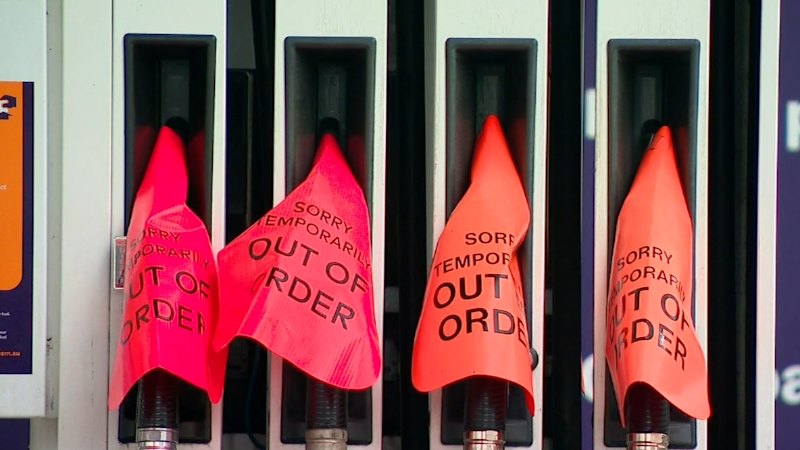
On Sunday, the federal government rolled out a $20 million campaign to encourage Australians to reduce driving, take public transport and conserve petrol.
Mindful of the impact regular press conferences had on public confidence during the COVID pandemic, the federal government initially took a low-key approach to its handling of the fuel shortages.
Prime Minister Anthony Albanese was widely criticised for his recent address to the nation, which he delivered on the eve of the Easter weekend, in which he urged calm, told people not to cancel their holiday plans and asked for people to try and use a little less fuel by taking public transport, for example.
Critics argued that Albanese’s address had been unnecessary but within government the view was that the prime minister’s short address had caught the attention of people who don’t typically read or watch the news, and that it had reassured people.
Since the address, panic buying and fuel supply shortages have eased and cuts to fuel excise have brought down the price of petrol, and to a lesser extent diesel, and the address is judged to have been a success in calming the public mood.
In a research note last week, Jarden analyst Ben Gilbert said while spending on groceries fell in early March as households spent more on fuel, there had been a re-acceleration in grocery spending in recent weeks, partly driven by pantry-stocking.
Westpac chief economist Luci Ellis said while there was some evidence of customers pulling forward fuel purchases earlier in the year.
“We did see some pre-purchasing of fuel in March, and there will always be people who are preppers, but we’ve not seen any evidence in the overall spending data of people stockpiling groceries or anything like that.”
Start the day with a summary of the day’s most important and interesting stories, analysis and insights. Sign up for our Morning Edition newsletter.


