


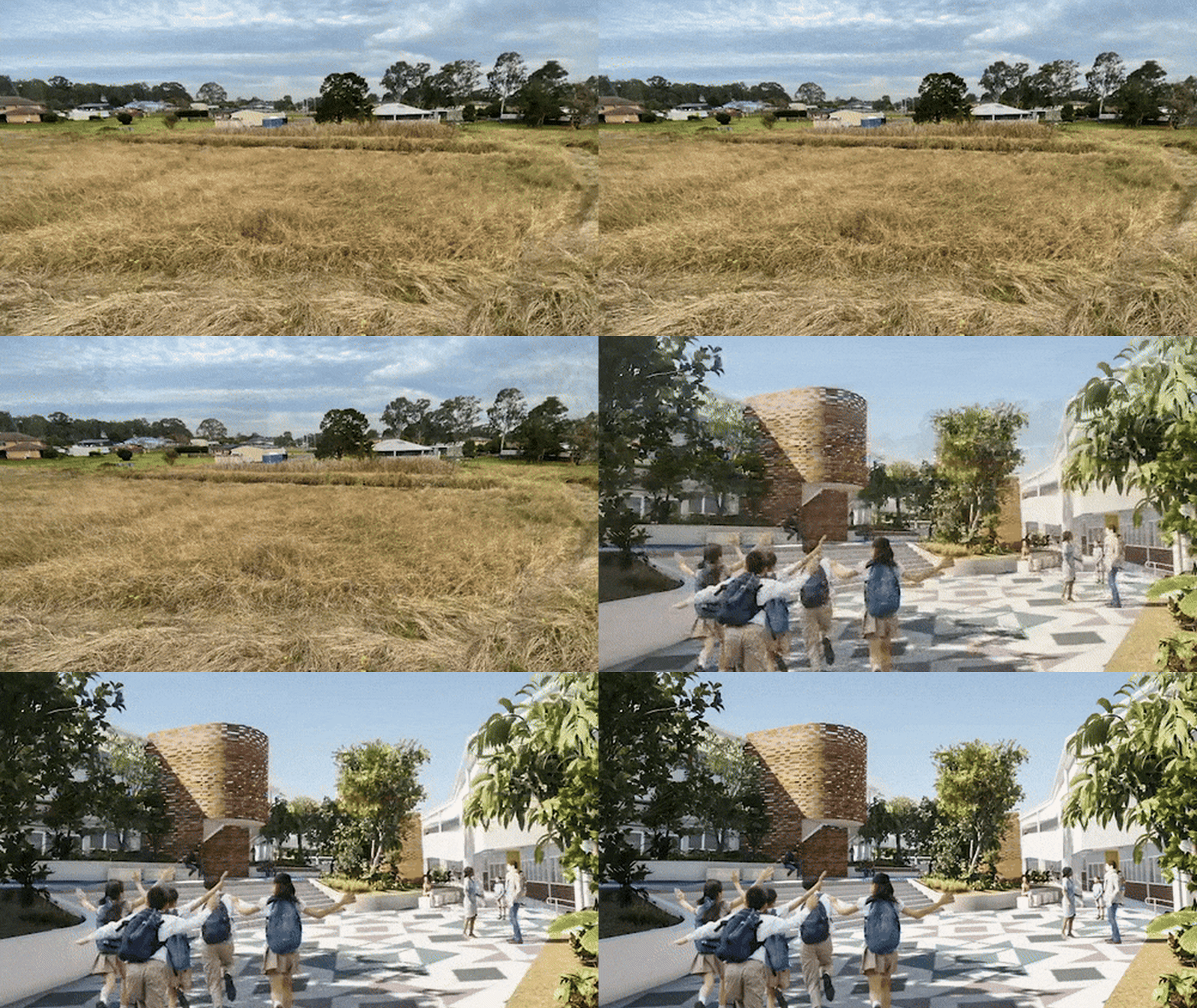

A $123 million proposal to build a new school on a rural paddock in Sydney’s south-west has ignited a heated dispute between planners, residents and councillors, exposing deeper tensions over how growth is being managed on the city’s outer fringe.
The Independent Planning Commission is assessing a state-significant development application by Minarah College to establish a kindergarten-to-year 12 campus for up to 980 students at Catherine Field, within Sydney’s south-west growth area.
While supporters say the project would help address a severe shortage of school places in one of Australia’s fastest-growing regions, Camden Council and many residents say the proposal is premature and fundamentally unsuitable for the site.
Minarah College, an independent Islamic co-educational school, has operated from Green Valley, 18 kilometres to the north-east of Catherine Field, for more than 20 years. It says its existing campus has reached capacity and cannot expand further.
Principal Abdul Shariff told an IPC meeting the school has 1185 student enrolments and no remaining space to grow.
“Demand has continued to increase,” Shariff said.
“At the end of the 2025 school year, around 150 students were placed on a waiting list, many of them siblings of existing students.”
He said without a new campus, the school would be forced to reduce kindergarten intake in 2027, leaving more families without access to places.
Shariff described Catherine Field as the most suitable option for expansion, saying the proposed campus would relieve pressure on the Green Valley site and respond to genuine community demand.
However, Camden Council unanimously resolved in November not to support the application, citing that the land remains zoned for rural and primary production use and has not been released under any precinct planning framework.
Camden Council manager of statutory planning Jamie Erken told the commission the site was unsuitable for a development of the proposed scale.
“Although the land sits within the south-west growth area, it has not been released for rezoning and it will remain rural for the foreseeable future,” Erken said.
“In our view, the proposal seeks to take advantage of comparatively cheaper rural land ahead of precinct planning, providing a private commercial benefit at the expense of broader community planning outcomes.”
Infrastructure concerns have emerged as a central issue in the debate, particularly the lack of road, water and sewer services.
Resident Cynthia Meta described Catherine Field Road as a narrow, deteriorating rural road with no footpaths, no street lighting and no confirmed upgrade plans.
“Building a school on rural land without wastewater and road infrastructure is simply poor planning,” she said. “It’s detrimental to the community.”
Residents also said the proposed student population of 980 would equate to about one-third of Catherine Field’s current population of about 2600 people.
Development plans show the absence of existing service connections would require a 35-kilolitre potable water tank and an on-site wastewater management system. Camden Council has raised concerns about whether the system would meet performance standards, particularly during wet weather, and it has said the project should not proceed without access to reticulated sewer services.
Supporters of the proposal say the school would help address a critical lack of educational infrastructure in the region.
Camden’s population is forecast to grow from 127,000 to more than 240,000 by 2036, placing increasing pressure on schools.
Mohammad Yasin described Sydney’s south-west as an “educational desert” and another supporter, Ziyaad Ali, said families moving into new housing estates were struggling to find schools with available places.
“Schools are full and the population is growing faster than the infrastructure,” Ali said.
Planning consultant Alaine Roff, director of Urbis, told the commission that while Catherine Field had not yet been released for planning, development pressure in surrounding areas was intensifying.
“There is a significant lack of social and educational infrastructure, and the school is hoping to help address that gap,” Roff said.
Some submissions also say that developer-funded road upgrades associated with the project could deliver long-overdue improvements without cost to ratepayers.
The proposed campus would include a 60-place early learning centre, community accessible sporting fields and a multipurpose hall. It would be delivered in staged phases between 2026 and 2037.
For residents, the decision will shape not only the future of the school, but the character of Catherine Field itself.
“Residents chose to live in the area for its rural atmosphere, space for families, and peace and quiet,” said Robert Cecere, who has lived in Catherine Field for more than a decade.
“If this development adds to already stretched infrastructure, the question needs to be asked: what purpose will it serve our community?”
The Independent Planning Commission has yet to make a determination on the application.
Start the day with a summary of the day’s most important and interesting stories, analysis and insights. Sign up for our Morning Edition newsletter.
 David Barwell is an urban affairs reporter for The Sydney Morning HeraldConnect via email.