


As clubs prepare to outbid each other for restricted free-agent stars Zak Butters, Zac Bailey and Ben King, the length of the contracts set to be offered has become as controversial as the dollars involved.
King may sign a two-year deal with Gold Coast to retain flexibility, but he will receive long-term offers from Victorian clubs, while Butters and Bailey are certain to field offers of seven years and beyond.
Such seven-year offers have become standard since Richmond locked in Dustin Martin in August 2017 as North Melbourne shook up the market with long-term offers to a suite of gun players, including Martin.
Now there are 20 players contracted until the end of 2031, with Collingwood the only club without a player locked in beyond 2030. Gold Coast signed Mac Andrew on a long-term deal with an option to extend until 2034.
The benefit of longer-term deals for clubs is they can move money into different years or back- and front-end payments to suit the rest of their list needs, while they can also result in more investment from a player with security. However, the downsides are obvious: players can get complacent or too comfortable, can lose form and not play up to their contract level, and injuries (particularly concussion) are an ever-present threat.
The official list of unrestricted and restricted free agents came out this week, presenting the latest group of players bound for sometimes-bloated and lengthy deals.
As one list manager, who spoke on the condition of anonymity, told this masthead, the climate has changed so much that many prospective free agents these days – a decent chunk of them non-stars – expect, or at least ask for, six- or seven-year pacts. Another list manager, also speaking anonymously, said: “clubs don’t like long-term deals, but the market dictates that we offer them”.
Of course, players give up something in return for tenure, with many accepting their financial reward will be reduced due to the security on offer, and the guaranteed money offered in long-term deals (some seven or eight years into the future) often drops away significantly in their final seasons.
Players will have a lower base pay in the final years of their contract, with incentives based on awards or games played allowing them to earn a high salary if they maintain high performance in the twilight years of their careers.
There is a push from some quarters for rules to be introduced to ensure the best players get the best deals. NBA players in the United States, for example, can earn “super-max” contract extensions worth about a third of a team’s salary cap.
There is a view in clubland that a similar approach could work in the AFL, whereby players need to be All-Australians or achieve a certain best-and-fairest result to receive longer than five-year contracts. However, the AFL is unlikely to introduce such a scheme in the short term.
Money Talks has rated the best and worst current long-term deals in place:
TRACKING WELL
Tristan Xerri (North Melbourne)
North Melbourne refused to grant him a trade to St Kilda in 2021 – or at least not cheaply – and then watched Xerri transform into one of the club’s most important players. He initially signed a five-year extension until the end of 2029 before adding two more years last June. Xerri will turn 32 in the last of those seasons, meaning he should still be performing at an adequate level.
Nick Blakey (Sydney Swans)
In 2023, the dashing Swans defender signed a seven-year extension through to the end of 2031 and his consecutive-games streak that started midway through 2022 now sits at 90. His best-and-fairest finishes since that deal were second, fifth and seventh. At age 26, Blakey has already played more than 150 games – and is tall and versatile enough to be switched into other positions if coach Dean Cox needs to change things up. This won’t be Blakey’s last contract, either.
Jai Newcombe (Hawthorn)
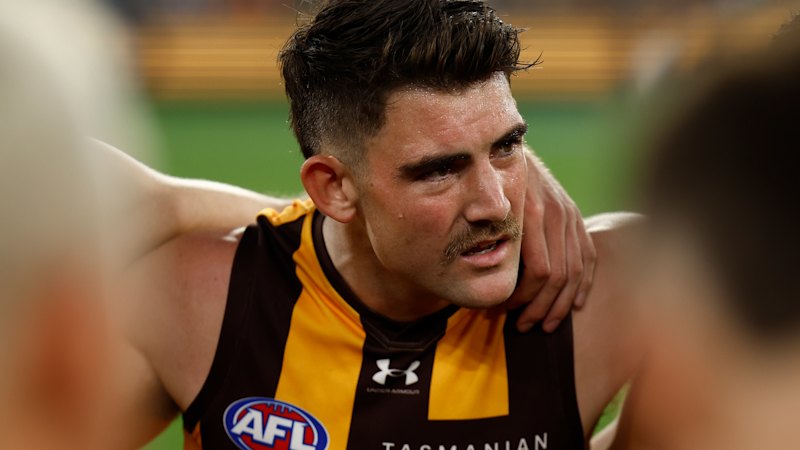
Newcombe won the club’s Peter Crimmins Medal in 2024, has proven himself in big finals, and was elevated to the co-captaincy this year alongside James Sicily. His six-year extension in July ties him to the brown and gold until the end of 2032, when he will be only 31.
Aaron Naughton (Western Bulldogs)
The Bulldogs’ hand was forced when the Swans came knocking, but he is delivering in a multipronged attack, averaging three goals per game over his past 14 matches, standing up as future star Sam Darcy develops.
DANGER SIGNS
Max King (St Kilda)
St Kilda’s key forward inked a six-year extension in October 2024 that tied him to Moorabbin until the end of 2032 – but has not played since. He earned between $1.4 million and $1.6 million last season but his deal averages out at about $1 million per season. He is the missing link in the Saints’ attempt to become contenders, with the club still hopeful he can get going once he returns from a troublesome calf injury.
Brent Daniels (Giants)
An excellent player but a watch as he has played just six matches since the start of 2025 due to an unusual abdominal strain after signing a six-year deal at the end of 2024. A hamstring injury has delayed his start this season, but he is not alone on that front, with bad hamstring injuries keeping his teammate Sam Taylor (contracted until the end of 2032), Adelaide’s Callum Ah Chee (2031) and Port Adelaide’s Connor Rozee (2032) sidelined for the first half of the season.
THE BAD
Clayton Oliver (Melbourne)
Oliver will go down as an all-time Demons great, given his status as a premiership player and four-time club champion. However, the seven-year extension the midfielder signed nine months after Melbourne’s drought-busting 2021 flag win became an albatross around the club’s neck. Oliver’s form slipped significantly, and he endured personal issues that became a distraction. The Dees eventually traded him to the Giants last year for a future third-round selection, while agreeing to pay a good chunk of his remaining $1 million-plus annual deal.
Locked in to the next decade:
2034: Caleb Serong (Fremantle), Sam Walsh (Carlton), Kysaiah Pickett (Melbourne).
2033: Josh Worrell (Adelaide), Hayden Young (Fremantle), Tom De Koning (St Kilda).
2032: Sam Durham (Essendon), Connor Idun (Giants), Sam Taylor (Giants), Jai Newcombe (Hawthorn), Luke Davies-Uniacke (North Melbourne), Connor Rozee (Port Adelaide), Noah Balta (Richmond), Max King (St Kilda), Aaron Naughton (Western Bulldogs).
2031: Callum Ah Chee, Darcy Fogarty (Adelaide), Cam Rayner, Hugh McCluggage, Oscar Allen (Brisbane Lions) Jacob Weitering (Carlton), Andrew Brayshaw (Fremantle), Bailey Smith (Geelong), Brent Daniels (Giants), Tristan Xerri (North Melbourne), Justin McInerney, Nick Blakey (Sydney), Brandon Starcevich (West Coast).
A short-term Tassie deal
Western Bulldogs midfielder Ryley Sanders is closing in on signing a two-year deal, which would lock him in until 2028. This would give him the best of both worlds as the sign-on bonus available to potential Devils recruits would remain open, while he gives the premiership a shake at the in-contention Bulldogs.
Keep up to date with the best AFL coverage in the country. Sign up for the Real Footy newsletter.
