


“Safety is, and always will be, Virgin Australia’s number one priority,” said Snook. “These updates are part of our ongoing commitment to maintaining the highest levels of safety and compliance with international aviation standards.”
Qantas said it introduced the restrictions after a safety review.
Geoffrey Dell, the head of aviation safety for the AMDA Foundation, said the ban was “understandable because there have been multiple fires globally, a couple serious, at least one resulting in loss of aircraft.”
In January, the overhead luggage compartment of an Air Busan plane in Busan, South Korea caught fire because of a power bank. It resulted in 27 injuries.
Virgin will require devices over 100 watt-hours and up to 160 watt-hours to be approved prior to travel. Power banks that exceed 160 watt-hours will be prohibited, Virgin said.
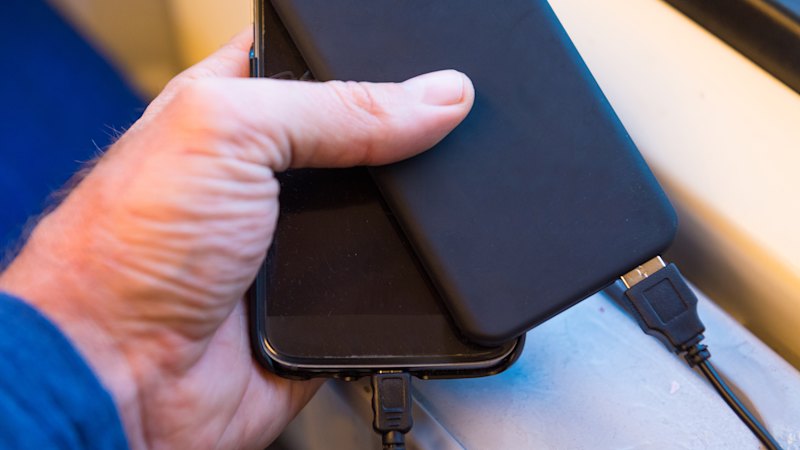
“People don’t realise how much energy is stored in these things,” said Dell. “They can deliver more electrical current [in a short period of time] than your house supply can.”
And while they are “generally reliable”, he said, what’s important is the way “they’re used and maintained”.

A fire breaks out on a Virgin flight.Credit: Credit: Pulse Tasmania.
“So if there are problems with terminals from misuse, which can lead to wires coming loose and short-circuiting, when that happens you can’t stop the energy flow until it drains.”
“There is no way of knowing just by looking at them what condition they’re in,” said Dell.
Loading
A spokesperson for the Civil Aviation Safety Authority said Australia’s safety regulations for travelling with lithium batteries – including power banks – “align with international standards” which “require that power banks, spare lithium batteries, e-cigarettes and vapes must be carried in the aircraft cabin”.
“Individual airlines can choose to introduce additional procedures, based on their operations or aircraft types, and we support operators making sound decisions based on safety risk assessments,” a spokesperson for CASA said.
Qantas said in a statement: “Due to the growing use of power banks by travellers and the associated safety risks of damaged or defective lithium battery-powered devices, the changes follow a comprehensive internal safety review in recent months and work with other industry representatives including Virgin Australia, the International Air Transport Association (IATA) and Oneworld carriers.”
Despite the growing attention placed on power banks in aviation, many passengers don’t realise the potential for fire risk the devices can present.
Half of airline passengers incorrectly believe packing small lithium-powered devices in checked luggage is safe, according to a poll released in October by the International Air Transport Association.
Nearly one half of those polled – 45 per cent – think packing power banks in checked luggage is safe, while one-third think there are no limits on the number of power banks or spare batteries a passenger can travel with.
The Business Briefing newsletter delivers major stories, exclusive coverage and expert opinion. Sign up to get it every weekday morning.
