


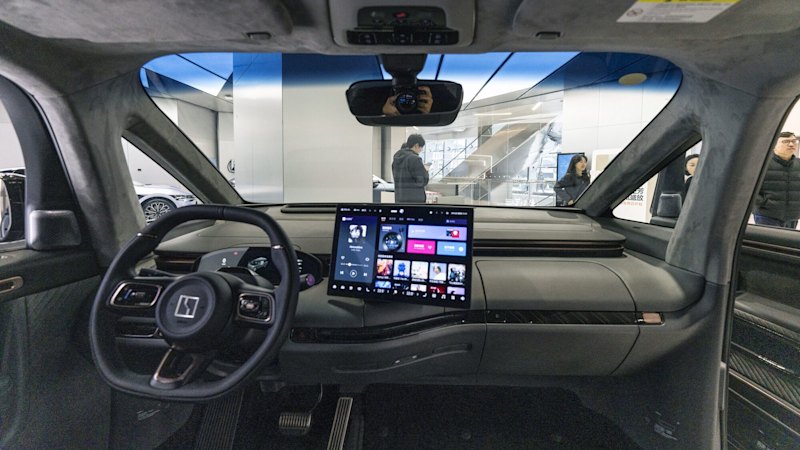

Australia’s privacy commissioner has launched investigations into two carmakers over potential breaches of privacy laws, as fears grow about the abuse of personal information, like voice, location and images, being collected by cars with internet connections.
Privacy Commissioner Carly Kind revealed to a Senate estimates hearing in Canberra on Tuesday that her agency, the Office of Australian Investigation Commissioner, had two official inquiries underway. Kind said a further two investigations were dropped, with the low chance of successful prosecution a factor.
“We have open investigations against two separate entities. We conducted further preliminary inquiries against two separate entities, but did not decide to take them forward,” she said.
Kind was responding to questions from Nationals senator Bridget McKenzie, who demanded to know if the car companies were state-owned entities based in China. Officials declined to name the companies, except to confirm that they are located in Asia.
Most new vehicles are connected to the internet with built-in modems or paired with mobile phones to provide services such as navigation.
A spokesperson for Attorney-General Michelle Rowland said Australians’ data should be respected.
“The government is now progressing a second tranche of privacy reforms to ensure the Privacy Act is fit for purpose in the digital age,” she said.
Kind said in May that connected cars could access vast amounts of sensitive personal information pose “significant privacy risks” and warned that companies’ overcollection of data was a significant security risk to individuals.
“By collecting so many data points, connected cars provide as many opportunities for malicious or rogue actors to access and misuse that information,” she said in a speech at the University of NSW.
McKenzie had unsuccessfully sought a response from government about its action on connected cars in previous Senate estimates hearings and said the privacy commissioner’s eventual confirmation of the investigation revealed a lack of urgency.
“Australians will be shocked to learn that their connected vehicles are being used to collect personal information beyond destinations by foreign-owned car companies. It’s not just about listening to conversations, these vehicles are able to collect information from smartphones, and that is a shocking breach of privacy,” she said.
McKenzie said the government’s response revealed its conflicted position on connected cars, a category that includes electric vehicles.
Nationals first raised the security concerns in a 2024 estimates hearing when asking about Home Affairs Minister Tony Burke’s use of a Chinese-made electric vehicle. The department confirmed it had instructed Burke to take “appropriate precautions”.
In January last year, the US banned the sale of Chinese and Russian-made technology due to concerns that connected cars were a national security risk.
The transport sector generates about 22 per cent of the nation’s emissions. According to analysis from the Climate Change Authority, electric vehicles must comprise half of all new cars sold in the next 10 years for Australia to reach its climate target to cut emissions at least 62 per cent by 2035.
“On one hand, you’ve got Climate Change Minister Chris Bowen wanting to see 50 per cent of new cars by 2035 to be electric and therefore have this type of technology that is in direct conflict with the Attorney-General’s Department acting quickly to protect and secure Australians’ privacy,” McKenzie said.
eSafety Commissioner Julie Inman Grant said in December that connected cars were being used by domestic violence perpetrators to track their travel, block their journeys from certain routes and lock them out of the vehicle.
Disgraced businessman Enrico Pucci was accused of using the Tesla app to harass a woman and faced court in December on a range of charges including one count of using a carriage service to menace, harass or offend.
A spokesperson for the Office of the Australian Investigation Commissioner said on Tuesday afternoon that the investigations would probe whether manufacturers were collecting more information than they needed to, and using the information without consent.
“The investigations are anticipated to have a broader application for the Australian community,” the spokesperson said, adding that the inquiries would likely take 18 months.
Cut through the noise of federal politics with news, views and expert analysis. Subscribers can sign up to our weekly Inside Politics newsletter.
 Mike Foley is the climate and energy correspondent for The Age and The Sydney Morning Herald.Connect via email.